Showing posts with label video game books. Show all posts

Wednesday, December 21, 2011

Kindle version of HG101 Guide to Classic Graphic Adventures 50% off for limited time, plus KDP select


Just for the holidays, from now until Wednesday, December 28th, the Kindle version of The Guide to Classic Graphic Adventures will be 50% off. That means $4.99 for US buyers, and assorted similar discounts for other regions based on whatever conversion metric Amazon is using at the moment. This is only going for a week, so it's a good time to pick it up, especially if you get a Kindle this holiday season!

Additionally, the book is also enrolled in the Amazon KDP Select program. This means that if you have a Kindle and Amazon Prime, you can borrow the book, for free, although you're limited to one title a month. Keep in mind though that when they mean "Kindle" they mean "an official Kindle device". I only own mobile decides that run Kindle software, and this doesn't apply if you're using an iPhone, Android or the PC reading software. I made the mistake of purchasing my own book to test it out, and based on the refund numbers, it seems like at least one other person did too. Sorry! It's a neat program although initially a little vague.

Finally, the book has always been available in America, the United Kingdom and Germany, but Amazon has expanded its Kindle store to include Italy, France and Spain, so do check that out as well.

Thursday, May 19, 2011

The Guide to Classic Graphic Adventures - Now available at Amazon

Hardcoregaming101.net Presents: The Guide to Classic Graphic Adventures is now available at Amazon. For right now it's only on the US store, although I'm told it'll feed over to the UK one "eventually". This happened much quicker than I expected, so hooray! The Kindle version, I'm still working on - it requires a bit more reformatting to look right, plus it needs lots of linking for the table of contents to show up. And since there are easily over 350 different things to link...

I can't update the main pages until later today, but I'll be putting up some more adventure game related content shortly, so please keep your eyes open.

Tuesday, May 17, 2011

Now Available to Order: Hardcoregaming 101.net Presents: The Guide To Classic Graphic Adventures


After two and a half years, it's finally done - Hardcoregaming 101.net Presents: The Guide To Classic Graphic Adventures is now ready to order!

As of current, the book is only available through the Createspace Store, and should be showing up on Amazon within a week or two, since it takes a little bit of time for them to register with the database. Since one of the reasons I wanted to use Amazon was due to its cheaper shipping, I've enabled a coupon code - use DN84NDUU for a $3.59 credit, which will cover the cheapest shipping to the US. It will ship internationally, and the prices aren't too bad - it looks to be about $7 to Europe or so, before the discount. I'll update to links to Amazon when they become available. The Kindle version isn't yet available, since the whole book requires drastic reformatting for it to look proper - it uses tables for the "info boxes" with the box cover, which unfortunately the Kindle seems to hate! But it will be available soon!

At any rate, I'm extremely excited to offer this book to you guys. It's taken a whole ton of work, but the book's absolutely massive (772 pages, over 390,000 words) with hundreds of screenshots, reviews of over 300 games - ranging from quick capsules reviews to fairly in-depth analyses - and is essential reading to anyone who grew up on LucasArts, Sierra, or other similar games and wants to learn more about them. I hope you enjoy it, and hopefully you will be seeing more books from HG101 in the future!

Wednesday, May 11, 2011

Down From the Top of Its Game: The Story of Infocom - Book Review


A few days ago, I mentioned a book called Down From the Top of Its Game: The Story of Infocom. I had seen it published by Rolenta Press (which has put out a couple of other cool video game books like Phoenix: The Fall & Rise of Videogames in 2010, but what I didn't know when I bought it is that it was actually a reprinting from a college paper back in 2000. This doesn't really offend me - it's a really good paper and I'm happy to support the small press on topics like these, of which books are rare. The central thesis of the book is that Infocom's downfall was not solely caused by the development of Cornerstone, the database software that massively flopped and drained substantial resources from the company. Personally, I didn't even know that was an argument - I guess maybe some interactive fiction fans were incredibly annoyed that the company was diverting so much of its resources away games and putting them towards boring business software, but I think in retrospect, most people realize that text adventures were simply falling out of fashion, and Infocom was doing a poor job adapting to new marketplace. Of course, there are many more reasons than that, which this book handfully illustrates. Indeed, the executives seemed to realize that Infocom's games might eventually go out of fashion and sought to diversify, which was where the idea for Cornerstone came from. Of course, that didn't quite work out in practice, for reasons which are, again, well explained. My favorite bit is this advertisement, teasing the likes of Sierra and other adventure game developers for their awful graphics.


It's a great, but with a few fundamental issues. Mostly, much like GET LAMP, it does a fantastic job illustrating the history of the business and (to a lesser extent), why the genre is so fascinating...but it largely glosses over the games themsevles. It talks about the creation of feelies for Deadline and a bit of about Floyd in Planetfall...but bairly mentions any of the rest of their titles, other than that they exist? I know this was initially a history paper and such criticism would have originally been beyond the scope...but the result is that the book is just way too short, considering it's only 50 pages worth of content and sold for $10. I haven't done thorough word count comparisons, but I think the Zork article in the upcoming HG101 adventure game book is longer than this entire production. Indeed, I've got at least a half a dozen ideas for a follow up book, one of which is one focusing on interactive fiction, including a comprehensive look at Infocom titles. It's been a long time since I've been into them personally - I played through Leather Goddesses of Phobos and The Hitchhiker's Guide to the Galaxy for the book, but haven't touched others since I was in high school. (I actually wrote some UHS hint files for the likes of Trinity, Bureaucracy and Infidel some fifteen years ago.) Indeed, if you've got any interest in the subject and would like to contribute, please drop me a line and we can hash out some details.

But, oh, right, this book? The gist of it - great read, you should support the press and the authors by buying it, but it really is way too short.

Monday, March 28, 2011

HG101 Presents: The Guide to Classic Graphic Adventures

So, in the past I've made passing references to a book I've been working on, putting out calls for submissions and sticking up a placeholder page. Well, after two and a half years of work, we're putting the finishing touches on HG101 Presents: The Guide to Classic Graphic Adventures. It's an ode to one of the oldest genres in electronic gaming. It is over 760 pages in length, covers nearly 300 games and includes a number of interviews with classic game developers. It is an expansive tome, jam packed to the brim with history, criticism, and trivia. If you've ever asked the question "If I like LucasArts and Sierra games, what other games should I play?", then this book should be your bible.


As of current planning, the book should be available by late April. The physical copy will cost $27 from Amazon (and qualifies for free super saver shipping), while an e-book for the Kindle will cost about $10. For right now, the physical copy is only technically available on the US Amazon site due to constraints with Createspace, the print-on-demand publisher I'm using, though copies tend to filter to international sites like Amazon UK over the course of a few weeks. The Amazon US site should ship overseas, though.

Please check out the HG101 Presents: The Guide to Classic Graphic Adventures page for a full table of contents, as well as some history behind the project, what our goals were, what it entails and why the coverage was shifting towards adventure games (and PC titles) for quite a while. Hopefully this will be first in a series of gigantic catalogs of retro gaming! Here is a sample PDF of roughly 30 pages or so.

Saturday, January 29, 2011

Some Video Game Books

1001 Video Games You Must Play Before You Die
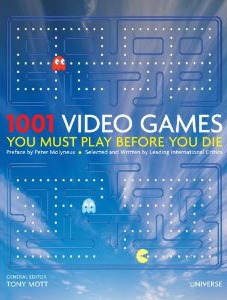


I saw this book at Borders the other day and thought it looked pretty cool. Apparently it's part of a "1001 _____ You Must Do Before You Die" I haven't previously heard of, but it's an absolutely huge full color manual of essential games as determined by some of the folks at Edge Magazine. The retail price is a bit on the high side (fixed by ordering on Amazon or taking one of those 30%+ coupons to Borders, but there's a ton of content and it's quite nicely written. Some of the Amazon reviews are slightly critical of their choice of games, but it's quite broad and it works well. The only thing that stuck out in my mind is the inclusion of Cruise for a Corpse when there are far more interesting adventure games to choose. Then again, the recent Retro Gamer also featured the same game in its excellent "best adventure games that aren't made by LucasArts" article, making me think it just must be a European thing.

100 Videogames (BFI Screen Guides)
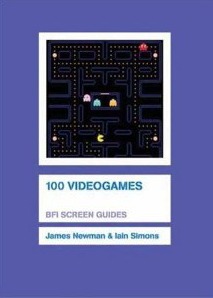


This book is a few years older and isn't quite as broad. It's shorter and in black and white, but the articles themselves are longer, and usually fairly interesting essays. They aren't marked as "essential" or anything, just 100 games that the author thought were interesting and worth writing about.

The Video Game Archaeologist


A series of self-published books focusing on a variety of retro subjects. There's a Sega Master System Game Guide as well, although it appears to mostly focus on US releases, as far as I can tell. I haven't picked these up myself but you can check out the author's website at http://www.thevgatv.com/ for some samples.

Graphic Adventures
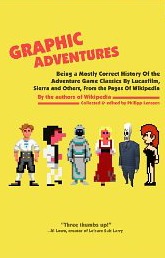


This book on graphic adventures largely consists of re-compiled Wikipedia articles, but there are a handful of original interviews that are quite good. You can also download the whole thing for free at the author's site, although part of the profits for the book are being donated to the Wikipedia foundation.

Art books

Udon's been putting out some absolutely fantastic art books lately - my favorites are the Mega Man Complete Works and SF20: The Art of Street Fighter. It's worth keeping an eye on Okami Official Complete Works too, as it seems to go in and out of stock regularly, and the jackasses on the second hand marketplace immediately quintuple the price any time Amazon runs out of copies. A couple new books have cropped up lately too, to be released in the coming months:

Valkyria Chronicles: Design Archive



I've seen the Japanese version of this book at conventions and it's brilliant, filled with both character and mechanical designs. Given the quality of Udon's other art books, they'll probably be translating the many interviews and design notes, too.

Atelier Series: Official Chronicle



I'm not really a fan of the Atelier games, but some of the artwork, especially in the more recent games, is quite pretty. I'm not sure if this is published by Udon or not, and information appears to be slim at the moment.

I may as well solicit suggestions for any other decent video game book that's been published recently. There's still too few them in an era where book stores have shamefully devoted whole shelves to "supernatural romance" sections.

QUICKIE EDIT:

Oh, Gamespite Vol 7 is out now too!

Sunday, December 26, 2010

Hardcoregaming101.net Presents: The Guide to Classic Adventure Games


Awhile back I talked about the adventure game book I was working on. It's still under progress but I figured I'd post a quick update on its status.

First off, the cover image is almost completed, which you can see a version of above. It still needs to be Photoshopped, cleaned up and reoriented, but this is pretty much what it will look like. My initial concept was to feature a whole bunch of homemade replicas of items from various adventure games, designed by a few friends of mine and inspired by the feelies from the Infocom games. They look amazing (they're all from relatively popular games - try to guess what they're all from!) but figured those alone would be a little too obscure. So, I took my computer and surrounded it with a bunch of games from my collection, to display just a bit of the breadth of content covered. The back cover image isn't completed, although it does feature the Roberta Williams framed photo.

Second, the Table of Contents has been updated to reflect a more finalized list of reviews featured. There are still a few more I have planned but just need to sort things out with contributors and so forth. I've also posted a sample in PDF format with approximately 50 pages of snippets from various articles, including a few reviews that aren't yet posted on the main site. Please note that these are still in draft form and the final versions will differ slightly, although the basic format will still be the same.

Third, my old pals at The Armchair Empire conducted an interview with me about the book, so please read up on my goals and why I decided to undertake this project.

And finally, the release date and price is still up in the air. I'm shooting to have it done by April, but I'm always planning on anything possible going wrong, so that may shift. I still want to hit the $25 target price, but that will all depend on the final page count, which is looking to hover around at least 650. More news will be posted as they emerge!

Wednesday, November 24, 2010

Let's play Street Fighter 2


I love it when I can give a post a title that doesn't sound like it belongs on this blog. But we're going to play the game in DOS - not the Ocean conversion, but an interesting homebrew port.


Before you complain to me for saving the screenshots in low quality jpeg, let me explain: A young Korean programmer named Jung Young Dug decided shortly after the release of Street Fighter II, that it would be awesome to play the game on PC. (Apparently the game by Ocean wasn't available in Korea.) But all he had to work with was his SNES version and a TV capture card. That's how he got the graphics for his game.


The game is based on the very first release of SF2, The World Warrior. It has a few shortcomings, though. The bosses are not in the game (a few normal character backgrounds are replaced with boss stages), and when selecting Dhalsim for some reason it just loads Ken. Dhalsim's stage and portrait are in, so maybe it's just a bug. Some special moves can also be done in mid-air, like in those cheap bootleg hacks. The version I have is labeled "Beta Version", don't know if there is a more complete one out there. The game files also seem to have been meddled with by third parties...


It runs a bit choppy, too, but the controls are simply the best I've ever seen in a DOS-based fighting game. Would have been cool to see Jung work with a professional team on an original fighter, that could have been awesome. Some of the issues might be caused by DOSBox, as the game doesn't work too great with it. Sometimes when I made a screenshot, the game just crashed.


It also allows mirror matches, but the colors for the second player are really weird. The game also allows for some really odd options. You can set a fight to 99 rounds that all run for 999 seconds each - when you set both character's attack level to zero and defence level to maximum, some rounds can even take that long.


The music is all rearranged in midi, the tunes range from barely recognizable to surprisingly awesome. The fighters have additional voice samples when they win a round. Some are ripped from action movies, but others clearly recorded by Jung himself and sound very goofy.

Have a listen:
Music

Voice Sample


I would also upload a video, but the game runs really slow when DOSBox is recording. But I've got something better for you. Here are the game files for download:

Street Fighter 2 Homebrew DOS Port


When releasing the game, the programmer had the decency to reference to Capcom and Nintendo in, but in August 1994, a book was published boldy titled "Game Programming with the Creator of SF-2" - The author was Jung Young Dug.


Friday, September 10, 2010

Computer-Spiele


Took me a while to get to the second book...


Sopart's book is much lighter on the gaming strategies part, but of course it has to deal with a much broader market than Video Spiele covered two years before. The book not only introduces a big number of home computers, which had by then taken control of the market, but also consoles, LCD handhelds, "Mini Arcade" tabletops, even chess computers and the like.

While Videospiele gave me the impression that it was aimed at "gamers", Sopart has to spend 7 pages explaining "How he computer plays with humans".

Strictly speaking, computers are not ideal playfellows. From their makeup they bring neither intelligence nor flexibility, which are requirements for a good playfellows. But how could these devices became partners more demanding from the player than a human counterpart?


Picture with the funny caption "game for two", while the screen and the boxes above clearly show office applications.

Sadly, a lot of space is wasted with manual-like descriptions of stuff, but there are a few interesting points that kept being issues for many more years or even decades. So there's the reoccuring complaint about crappy boxes, evaluating plastic clamshells similar to VHS boxes (the winner here) vs instable cardboard boxes. Anyone who thought pro-gaming was a recent phenomenon is put into place by this argument in the joystick buyer guide: "Passionate gamers will be glad to hear that there are even joysticks that ship with interchangeable handles. Slowly, the industry is becoming more active for professionals."


Kinda defeats the purpose of a "wireless" controller, doesn't it?


From the chapter "Pictographs or cinema quality?":

You know them from so many images: The famous computer people. They are pictographs, stylized depictions. Computer games are still identified with pictographs. (...) Why?

Especially with the transition from pictographs to almost realistic figures [don't forget: this is 1984!] it becomes visible, how quickly computer games have developed [yes, perfect tense].

(...) Some of the things we get to see on our screens nowadays really almost look like movies [talking about home computers, so probably not even meaning Dragon's Lair. As it goes on:]

What does that mean for the computer gamer? He should know that these pictographs actually already belong into the realm of history, even if they're sometimes still sold.


And, most interestingly for retro gamers:

Game cassettes with pictograph-esque visualizations could, as scene insiders assume, become bestellers again already in a few years - as computer antiquity. For that one has to recognize, that we're still living in the beginning days of the computer industry, and thus also of computer games. In few years we will experience the same effect as with shellac records. Those classics from the founding years of the music industry are now en vogue. (...)

A similar phenomenon could soon become evident with computer games. Therefore, it is advisable to archive old games that don't satisfy the desired standards and quality today. This not only under an economic aspect (...), but also under consideration do be able to get a "notalgic effect" out of them in a couple of years.


On "war games":

There is no doubt: The bad reputation of computer games in some social strata is mostly due to the games, that contain elements of war. But there are differences world wide. In the USA war games are less strictly rejected by most of the population than in Europe and particularly in the Federal Republic [of Germany]. Yes, one could even say in the USA a greater group developed into downright fans of these kind of games. The special situation in Europe and most of all in Germany resulted from the experiences from two world wars.


In case you wondered how to get the best high scores:

Whoever wants to become a good or great gamer also has to be an adept with the joystick. So it's necessary to make exercises to strenghten the hand's musculature. Thereby, the hands tightly grasp an item [no, not what you're thinking] - a candle, for example.


"In this posture, you'll hardly achieve maximum performance on screen."


The book even has a chapter on game programming, but it doesn't do much more than listing a number of basic Basic commands...

Monday, September 6, 2010

Study the past to learn about the present.


Digging deeper into the history of non-English video game journalism, today we're unearthing two of the oldest German monographs that deal with our favourite hobby.

Peer & Ulrich Blumenschein co-wrote Videospiele in 1982. The team of father and son made sure that the book was written well (Ulrich Blumenschein had worked for rennomated magazines such as Spiegel and Stern) but also knew what it was talking about. I only recently found this book when I decided to write about the other one ...

... Computerspiele, by Christa-Maria Sopart. This is from 1984, but I got it sometime during the early 90's at a bargain bin for 1 Deutsche Mark.

It's astonishing to see the many aspects where we've come an incredibly long way during the last thirty years, and even more astonishing to see how some things never change.


Videospiele was focused on Arcade games and home console, and understood itself mostly as a playing and buying guide. Even the introduction sounds like an economy advisor:

Gratulations ...

... dear reader! The few bucks you've spent for this paperback volume are well invested. For if you use these guide properly, you can save more than the price of the book in a short time. That applies to the young Arcade-Freak as the family dad, who plans to buy a video game console for home use or even a new cassette for his son.


So after ten pages of video game history (interesting how the book already saw the decline of the American industry in favor of the Japanese) it goes on with strategies for the most popular arcade games at the time. Today this section mostly delivers entertaining value for the German paraphrases to the English game titles and a few funny drawings of game scenes. A few examples:

Asteroids: Gefährliche Reise durch den Raum (Dangerous Journey Through Space)

Galaxian: Überleben is alles (Surviving Is Everything)

Defender: Entführungsdrama auf dem Planeten X (Abduchtion Drama On Planet X)

Berzerk: Der üble Otto (The Evil Otto)

Phoenix: Hitchcock im Weltall (Hitchcock in Space)

Donkey Kong: Der Affe und die Jungfrau (The Ape and the Virgin)


Oh, and not to forget the Seven Golden Rules of arcade gaming (These have longer text explaing the rules, I'm only translating the catchphrases):

Rule No. 1: Select a game that appeals to you and that still gives you joy after a few test rounds - and specialize to that game!

Rule No. 2: Assemble your own list of Questions while watching others play, and don't stop watching until it seems you've answered all your particular questions!

Rule No. 3: Examine the machine before you start! [this warns of inferior rip-offs with similar titles and the condition of the conrols]

Rule No. 4: Training brings Score!

Rule No. 5: Let others help you, when you can't cope with a difficult situation in your game.

Rule No. 6: Concentrate while playing!

Rule No. 7: Keep cool while playing!


After that follows a comparison of the four consoles available in Germany at the time and their games - Atari VCS, Intellivision, Phillips Videopac Computer G7000 (that's what the Odyssey II was called here) and the German console, Interton Electronic Video Computer VC 4000. It seems the latter was already out-of-date by the time the book was published, as it is rather neglected. There's no picture of the hardware, and no single screenshot of any game (only one picture of a game box).


For each available game there's a review, if you want to call it that, with a description of the game's mechanics, a sentence about "What caught our attention" and two scores, Spielwert (Game Value) and Gesamturteil (Overall Assessment), of which I don't quite get what's the difference, although the latter is sometimes one point below the former. The unit are once again german school grades.

"What caught our attention" is once again good for chuckles:

"Once again Atari didn't even manage to find an understandable German title for the game." Yars' Revenge (Die Rache der Superfliege)

"The spookhouse can be really frightening, you shouldn't give it to your kids in the evening." Haunted House (Das Spukhaus)


Not so scary: Haunted House

"Simple as Pong. The coloring is very nice." Super Breakout

"You'll need strong nerves." Astrosmash

"It pays to win; the explosion of the enemy battlestar is worth to see and hear." Star Strike

"When playing for a long time, the trigger finger starts to hurt." Weltraum-Armada

"If it wasn't only three field players per team, the illusion would be perfect" Fußball

"Funny how the spectators turn their heads after the ball." Tennis

"Not suited for a small screen. Only with 60-cm color TV are the details on the map overview properly recognizable." Flotteneinsatz (Sea Battle)

"Pong in 2D" Tennis


Interesting in a historical sense is an article on the future of video games, surprisingly cautious with wild speculations, but rather focusing on technologies that were in development at the time or new trends in the US, mentioned are talkie peripherals and Subroc-3D, the first "real" 3D arcade game based on similar technology as we know from the Virtual Boy. On the rise of independent developers (here meaning not what we call indie games today, but 3rd party developers like Activision):

For the video gamer this are of course great perspectives. He can more and more feel like the reader [of books], who is able to read any book with only one pair of glasses. Or with other words: he isn't pressed for a decision between this or that hardware system when buying his basic equipment.


But of course there also had to be:

It seems we are not far from laser light to create spatial images (Holograms) or language controlled computers in Telegames, anymore.


An early announcement for ET the game?
Atari has already teamed up with Steven Spielberg, the man who raised the science fiction film to a new level with his "Star Wars" series (sic!) and [Spielberg] made a contract with Lucasfilm Ltd., the best special effects studio in the world, which created the phantastic scenes for films like "Star Trek II", "Poltergeist" and "ET". Goal of the cooperation is to create novel Video-Games, that appear like a movie at the cinema, with life-like characters in realistic surroundings.


(Almost) at the end of the book stands the eternal question: "Video Games - A danger for young people?"

Question: Are video games addicting?

Answer: (...) Of course there are gamers that overdo it.
One could compare them to buyers of season tickets to the Fußballbundesliga [premiere league of soccer]. No one accuses them of any addiction.

(...)

Question: Shouldn't the young arcade machine fans spend their money for better things?

Answer: (...) There are many temptations in our sparkling, pluralistic world. Cigarettes. Bubble Gum. Pot ... video games seem to be a lesser evil here.

(...)

[after an answer mentioning the learning effects of video games]
Frage: I hope this learning effect doesn't apply to those "War Games"?

Answer: Whether anyone plays "War" is first of all a question of good taste. Parents should definitely make sure not to draw in again that kind of war toys through the back door that has long been banned and disappeared in other places. Program cassettes like "Blowing up dams" are certainly not suited as gifts for a child's birthday or christmas.


Yeah, Germany had/has a rather troubled relationship with the topic "war".

The video game companies are well-advised to follow the example of Mattel Electronics, who didn't even bring a game with the title "B-17 Bomber", that's freely available for home use in the US, to the german market. The task in this game consists of flying bombing attacks on a mass of land that clearly recognizably shows the shape and characteristics of Europe.


By the way the definition for "War Games" by the federal ministry of youth, family and healthcare quoted in the book is: "Entertainment games without profit opportunity [not sure how to translate that, it means no gambling], with which cruelty or acts of war are depicted or where technical appliances are used to simulate bursts [meaning lightguns]."


When watching and questioning real Arcade-Freaks in Hamburg or Munich, it quickly becomes evident that in case they should encounter a green man of Mars on the street after leaving their Arcade, they'd prefer to go have a beer with him instead of putting him down with a laser gun (where to get such a thing, anyway).


Oh, this is getting really long, and it's getting really late. Going to bed now, there'll be a closer look at Sopart's book in a few days ...


Atari Advertisement