Showing posts with label localization. Show all posts

Sunday, September 18, 2011

Snatcher recording session

Jeremy Blaustein recently posted this incredible photo on his Facebook page, from recording Snatcher, which he has given permission to be shared elsewhere online. It's such a great snapshot from an interesting period in history (the change from cartridge to CD-ROM), that I'm reposting it here. Click the photo for a larger image.

.
.
.
Jeremy Blaustein said:
---
The only Snatcher recording session photo. 1993. Historic. Most people agree this is the first video game ever made with good voice acting. — with Lucy Childs, Jim Parks, Jr., Ray Van Steen, Michael Blaustein, Susan Mele and Jeff Lupetin.
---


The Facebook page had tags, so I've had to add letters for ease. For a detailed character gallery, check out out THIS PAGE.

A - Lucy Childs (Metal Gear; Female Employee)
B - Jim Parks, Jr. (Random Hajile; Napoleon; Jean Jack Gibson; Ivan Rodorigez)
C - Ray Van Steen (Benson Cunningham; Harry Benson; Elijah Modnar; Chin Shu Oh; Narrator; Ramen Guy)
D - Michael Blaustein
E - Susan Mele (Jamie Seed; Fortune Teller)
F - Jeremy Blaustein
G - Jeff Lupetin (Gillian Seed; Snatcher)


Although their names weren't tagged, I presume the two ladies in the background, next to Susan Mele, are Kimberley Harne (Mika Slayton) and Lynn Foosaner (Katrina Gibson; Lisa; Telephone Operator). Or possibly the other way around.


Photos like this, taken using actual camera film and then later scanned in, are great. The fashions, the lighting, the texture that genuine camera-negatives give a photo, all add to the atmosphere when conveying that moment in time. I often wonder why we don't see more such photos from such events - perhaps no one thought to take them, or perhaps they're sitting in a drawer somewhere? Regardless, it's excellent to see these things resurface years later.

Snatcher was a defining moment in games for me, from when I first saw previews of the original and then later when I saw previews in GameFAN on the PS1 update, to when I was lucky enough to find someone selling their Sega CD games in a local paper, and then playing it and describing it to friends, none of whom had any idea what I was talking about because no one owned a Sega CD and they were all about the PS1. Their loss I say. And as others have said, the acting really was top notch.

Also, is it just me or does Jeremy look a bit like Ryo Hazuki in that leather jacket? It's worth noting HG101 has a lengthy interview with Jeremy, including his work on Shenmue. Check it out HERE if you hadn't before.


Monday, April 25, 2011

Dragon Quest V for the DS appears to have been reprinted (and musings on RPG localizations)


So it looks like Amazon is restocking new copies of Dragon Quest V for the DS. You should probably buy this - even though they're $40, per its original retail price, it quickly went out of print, and most online places were selling used copies in excess of $60. (Granted, it's always been $35 at Gamestop, but they are difficult to find and may not even have the case/manual, due to some new policies of keeping them off the store floor to make way for 3DS titles.) It is definitely worth grabbing - it's basically the game that convinced me the Dragon Quest series in general was pretty good, and I still feel it's the best of them, even though the series overall is a little too conservative for my tastes. (Check out the review for a bit of gushing and very slight spoilers for the few hours of the game, of which explanation is necessary to convey why it's so fantastic.) (And apologies for not grabbing any English pics of the DS version of V, or for the DS version of VI at all - I just got the latter one myself last week.)

The case of Dragon Quest V is interesting in relation to how it got to valuable so quickly. Square-Enix prepped up Dragon Quest IV to be a relatively big title, but it looks like they overshipped it and the title underperformed, so copies can still be easily found for $15 and under. As a result, they printed substantially fewer copies of Dragon Quest V, even though that particular entry has a far greater reputation. It must've under sold too, since Nintendo took over marketing and distribution for IX and VI, but now since IX has gained some popularity, more gamers are looking back for the titles they missed, and V has the best word of mouth.

I think a lot of bigger publishers underestimate the power of word of mouth for RPG titles. The type of folks who play RPGs are also usually the types to hang out in forums and converse with other like-minded folk, and have a good idea of what's good and what isn't. If a particular entry in a series is bad, unfortunately, it then suggests that there's no interest in the series at all, cancelling further localization plans. Sure, Front Mission 4 flopped, but that's because it wasn't very good, not because there wasn't interest in Front Mission 5. And what about Valkyria Chronicles 2? It probably also stumbled, not only due to its downgraded release on the PSP, but the general reaction (at least in English speaking territories) of it being substantially inferior, but will that doom the localization of Valkyria Chronicles 3, even though it's purported to be better?

At any rate, buy Dragon Quest V. Show that there's SOME type of interest portable RPGs. I'd rather be playing my games on a TV or computer monitor, but I'd also play them on a portable over not getting to play them in English at all. (And while it's not on sale, you should also get Radiant Historia on the case of it being pretty damn good.)

Thursday, December 9, 2010

I love the Monkey’s Paw!


Monkey Paw Games are a relatively new online publisher, and despite only releasing about 12 games, I already love them. Their aim is simple: provide casual access to cool import games at a reasonable price. They are what I have hoped for, for the last 15 years.
.
.
.


I first heard of MPG about 6 months ago, with the claim they’d be bringing Japanese PS1 games to the US PSN. As most hardcore retro and import fans know, the Japanese PSN has hundreds of incredible PS1 games, whereas the US and UK equivalents have very few games, a lot of them crap. The US store has gotten better, but the UK one is still terrible. Japan gets Metal Slug, we get Winnie the Pooh.

So, like most hardcore gamers, when I got my PS3 I hooked myself up with a Hong Kong account which accepted my UK VISA credit card, and bled the store until they banned foreign credit cards. Then I went online and paid exorbitant prices for Japanese PSN cards, and made do with that. I quickly built up a large collection of games at usually a 100% mark up, due to swine on eBay charging double for Japanese cards.

At long last there’s a company to rectify this problem somewhat. Although the fine work that MPG is doing is a little too late for people like me who went and bought all this stuff already, it does allow those of you who haven’t yet tried importing, to dip your toes for only $6 a pop. I look forward with tremendous anticipation to what they intend to release in the future, since while they say they can’t acquire games from publishers such as Square (meaning no Einhander), there are literally hundreds of other games for them to bring out.


Their current release list includes:

Alundra

Arc The Lad

Arc The Lad II & Arc Arena Bundle

Blockids

Chou Aniki

Dezaemon Plus

Gaia Seed

Magical Drop F

Money Idol Exchange

Outlaws of the Lost Dynasty

Shienryu

Sonic Wings Special

Tall Unlimited


These are the types of games that HG1101 has always prided itself on covering. We’ve already cover Chou and Outlaws, plus in the next update there should be an updated version of the Gaia Seed article I put on the blog, with much more screens. I’m also currently working on a feature covering the entire Dezaemon series, and there’s other titles in that list which fellow writers have been working on for some time. So the fact that these are now available for cheap on PSN, and casually, is like a dream come true. (at least for the US, those of us in Europe still need foreign PSN cards, but at least US cards are cheaper on eBay than Japanese ones)

Which leads me on to a rant. MPG can do this. MPG has shown that they can release Japanese PS1 games, in Japanese, with Japanese manuals, and no English, and they can get it past Sony, and they can make enough of a profit after licensing to warrant their business model.

So here’s my question: why the fuck isn’t anyone else capable of doing this?

I’m looking at you Square. Why didn't Einhander come out two years ago? Why aren’t you releasing Einhander as an import? Why the hell is Europe stuck with PAL versions of Final Fantasy, with borders, and 50Hz slowdown, and all that crap, when a clearly more capable company is providing import titles from outside the market? Why haven’t other companies been releasing imports? Why is it that out of so many companies, only one company is willing to take my money? I mean, does Square, and Sony, and Capcom, and Konami, and all those others, do they not like my money? Is my money not good enough for them?

Why can’t I just give them my money in exchange for games – why won’t they let me do this? Why?

The fact that MPG has actually, physically done this, proves to me it’s not a Sony problem. It’s not about Sony saying No, you can’t do that. Because they have done it. Which means Sony said yes, you can do that. Are all you readers following my fairly simple childlike logic here? Because it seems a whole bunch of enormous, multi-global corporations aren’t capable of following such deliriously simple logic. The genie is out of the bottle now, and there really isn’t any excuse any publisher can give as to why they can’t be bothered to make easy money. Unless they just don’t like money.


It’s a Square problem. It’s a Konami problem. It's a publisher problem.

The problem is: they are all unmitigated idiots, with no desire for profit.


It’s not a complex mathematical equation motherfunsters. You provide the product, I provide the money, a little love making takes place, and WHAM BAM, everyone leaves satisfied with a grin on their face. It really is not that difficult to understand: give me the product, and take my money. No, really, I want the product, and I’m happy to give up this money, so why aren’t you making this work? MPG didn’t even develop these games, they’re just some middleman making it happen. Square on the other hand, developed their own games, and have offices in every country. Konami is the same. So if MPG can arrange for 10 import titles from various other companies, Square can damn well arrange for their own Einhander to come out.
So, while the rest of the world chooses to abandon basic capitalism, I’m going to be keeping an eye on MPG.

A further interesting note is that they’re publishing games previously published by Working Designs, which means they’re in the business of buying rights from defunct companies, which is even more exciting than imports. Because this means they can arrange for all manner of titles which were great, but the previous publisher is no longer capable of releasing on its own.

I’m going to be featuring a blog write-up on Dezaemon Plus in a couple of days, since I’ve been practicing with it, but for those curious there’s an English language guide on MPG’s website, which after you remove the superfluous stuff can be printed off on 6 pages. The game itself is pretty cool – it’s like an update to the SNES instalment. There’s about 8 or so pre-designed shmups on it, so if you don’t feel like designing you can just play (most were previous competition winners, so the quality is quite high). You can’t edit these competition winners, but it gives a good idea of what you can do. The available shooter that you can edit is based off the Daioh series I believe. As for the actual designing, it’s extremely versatile if you want to make a vertical shooter. I’m actually working on a hori shooter, since I’ve found a sort of workaround for this limitation.


The only snag with this is it doesn’t seem possible to use a mouse in PS1 mode, despite the PS3 recognising the mouse on the dashboard. If you know how to get a mouse working on PS1 games on the PS3, let me know!

Expect a full write up on the Dezaemon series in the new year.


Wednesday, July 21, 2010

Recettear - an RPG about running an item shop now in English

I’ve wanted to play Recettear ever since InsertCredit made an entry on it way back in 2007. So I’m overjoyed to find that Carpe Fulgur has not only taken on the task of localising and publishing it in English, but they’re promising to work on further such ventures.
.
.
.


The object in Recettear, a Windows based doujin release from 2007, is to run an item shop as the kind you’d find in many JRPGs. You choose what to stock, where to place it, and how much to sell each item for. Placing premium items in your window attracts more people, and as your reputation goes up you’re able to haggle over prices better. Items can be obtained from the guild wholesaler, town market, or by joining an adventurer as he pillages various dungeons. People will also sell you stuff, much like in a regular RPG. As you progress you make friends with different adventurers and start to recognise shop regulars. You can also raise your shop-master level which gives new abilities, and there's also a rival shop owner who appears in the second week. Plus presumably much more!

There’s a rather substantial demo available and, to put it simply, what I’ve played so far fulfils every hope I had for the game when I first saw it - and then some. I’ve grown weary recently of technical games, and while I’m not about to abandon shmups and fighters, I find I’m really enjoying slower, menu-driven games. Which isn’t to say this is casual - because it sure as hell is bloody not! If anything it’s a lot like Princess Maker, with many layers of hidden complexity presented to you via an intuitive interface and wonderful storyline/art direction. Easy to get into but hard to master.
There’s real satisfaction to be had from scouring for Super Antivenom and a classy longsword, placing them with prominence in your window, and then demanding such high rates they never sell. Or maybe I want to fill my central display with nothing but nutbread - I can do that! Recettear so perfectly targets the part of your brain that likes tinkering - it’s the same part which makes character building in ANY GAME fun; or arranging your crops in Harvest Moon; or dungeon building in any number of games from PC to PSP. Becoming the town’s biggest supplier of cotton shirts might not win me the game, but damn, if it doesn’t make me giddy simply by fact that I can do that, IF I WANT TO.

The corresponding adventuring sections (at this early stage) would appear optional, like they were in Princess Maker, but are such fun shouldn’t be overlooked. They’re simple, with a Zelda-esque combat system, but this is all part of the charm. Controls are slick and it supports USB pads off the bat, which I always appreciate. There’s some great music in the dungeons as well. The first adventurer I found was in need of help, so I provided him with free healing items while he took me along for the ride to steal as much treasure as we could. In-game you control adventurers directly.

Backing up the gameplay is some really wonderful anime designs and expertly written dialogue. I can’t vouch for how faithful it is to the original, but I don’t care. Carpe Fulgar’s script is witty, blithe, and absolutely hilarious in places. Reading their Q+A section there’s an entry regarding the Japanese voices, almost apologetically pre-empting anyone who might complain about lack of English dialogue. This shouldn’t be a problem, since the original voices adds some real charm to the game, and anyone likely to complain isn’t the kind of person who’d be interested in buying this anyway.

Recette, your archetypical and heavily moe orphaned-yet-numbskull-young-girl, contrasts superbly with the sharp and businesslike fairy Tear. Their constant banter throughout proved a joy to read, while the in-game sprite of Recette, showing her wide-eyed and wholly incapable of grasping anything Tear tells her, raised some genuine laughs. Despite her lack of ability, she pushes onwards valiantly, shouting her catchphrase: “Capitalism Ho!”
Speaking of capitalism, this appears to be Carpe Fulgar’s first commercial venture, and I hope they make sufficient money off it to continue. Though it saddens me to think that this is such a niche game, both in concept and style, no one will take interest. Certainly I don’t foresee EDGE, GamesTM or EGM covering it. GameFAN might, if they’re still around. But the other mags? Unlikely. Once out, and assuming my PayPal account is sufficiently stocked, I hope to bring you a typically comprehensive HG101 article on this little gem.

Also, let me add: there is NO DRM. That means no bullshit involving Starforce copy protection screwing your computer, and no need to be online when playing a single player game. EA and all those other scum publishers can get bent if they think I'll purchase a game with that stuff.

One final thing which I've left until the end: I have one slightly serious complaint regarding Recettear. The game doesn’t tell you how much you paid for an item from the guild. And what you pay doesn’t match its base value - meaning after buying a whole bunch of guild items, although the game told me what its base sales value was, it didn’t tell me how much I’d actually paid for them.

I’d like some kind of listing which says NOT what the base sales price is (which is irrelevant when I’ve bought it from a wholesaler), but what its going-rate is at the guild.

I realise this probably can’t be changed now - that would require recoding of the entire engine. But it is annoying. I guess I’ll be playing with notepad open on my desktop to jot things down!


ADDENDUM:
You know what this game makes me think? How awesome would an anime-styled, Japanese developed game about running a game store be? You could decide how many plastic models to have on shelves, how many imports to stock, how much retro, how big your second-hand area is, whether to put OSTs next to their respective titles or in their own section. Do you have the radio, regular band or OST music playing inside the store? Do you stock game mags, and if so, which ones? How about a section dedicated to anime and manga and related items of interest to gamers? Oh the possibilities!

Actually, this line of thought also reminds me of that PC game, where you played a movie director, and had to deal with all the aspects of film making, and how much that game made me want a game where you made games. There’s Segagaga, and it’s slowly being fan-translated, but man, this feels like such an untapped well of ideas. Games about the world of games. Amazing. Except games journalism - a game about that would be 110% concentrated lies, with minigames involving working for no pay, get screwed over by game publishers, becoming an alcoholic (at least 2 ex-colleagues fell into this), and then the final level would be you going postal and killing absolutely everyone. Ahem. Not that I’m bitter about my time as a games journo. It was sunshine and dandelions.


Friday, July 9, 2010

Ghostlight wants to know what to localise next

The European localiser of Agarest: Generations of War, a small company called Ghostlight, is asking which game Europeans would like to see it localise next.
.
.

Actually, it’s part of a competition to celebrate the release of 32 pieces of DLC (a lot of which is free) just the other week. The prize is one of those Agarest boob-mousepads and pillow, if that’s your thing. It’s also open only to European residents, but I thought HG101’s American readers would be interested in the news, and it could stimulate debate on the many, many great Japanese games which are unlikely to ever reach us. I entered not for the prize but because I maintain a naïve hope that some for of unexpected localisation may result from this.
I voted for Boku no Natsuyasumi 3 on PS3, and this blog post is really just an excuse to say I’ve started this rather fine little game using Playongo’s tips to help me along, and I should have the diary entries starting this Sunday (the game starts on Sunday 1st August 1975, and while I’ve no intention of waiting until August, it would be nice to match the week’s days up). I’m 5 days in and absolutely love it - the water-colour painted backgrounds are sublime, while the activities and storyline are really nice. Having always lived on or near farms, I can totally relate to the setting, despite it being in Japan.

A more important question, pertaining to this Ghostlight competition, is would we even want them to localise anything? On the one hand they kept the Japanese dialogue for Agarest, which was a good thing, but their text translation was too literal, very dry and wholly uninteresting. I played a few chapters and found it as captivating as reading transcripts of parliament. It desperately needed some Working Designs of Aksys Games style spice. The US localisation by Aksys, while I’ve not played it, appears to have really run with the almost-but-not-quite H-game mentality of the source material, even censoring promotional images which had nothing to censor in the first place.
If Ghostlight did localise something like Boku no Natsuyasumi 3, they’d probably keep the Japanese dialogue (good) and not try to reinterpret the text too much (also good). I could imagine another company trying to Americanise the setting somehow, or at the very least remove anything too culturally specific. There’s a section involving composing haikus, which if Sega localised it, would probably be cut completely. Though with a little effort the haiku mechanic could be localised to remain functional and interesting - whether the unwashed masses have the ability to appreciate it is another thing.

Furthermore, and this is what really pisses me off with Ghostlight, it took over 9 months to release the DLC content. After Agarest was released in Europe, several months went by after which it was released in the US, and almost immediately America received DLC, both free and cost. And yet nothing in Europe. Months went by and we’re finally getting the DLC content America got, despite receiving the game before you guys. My guess is that Ghostlight saw Aksys making money from DLC and did some kind of licensing deal to convert and then release American DLC content in Europe. Whatever the truth, it portrays Ghostlight as being fairly inept.

And yet that’s what you have to put up with when taking an interest in niche titles - because hypothetically speaking, who other than Ghostlight or some other tiny publisher might see the profit in localising an overlooked game from 2007? I’m impressed Ghostlight is even asking for recommendations.

If not Boku no Natsuyasumi 3 though, I’d be tempted to list visual novels for Ghostlight. The WAHP podcast has often said good things about Steins;Gate, which is something we’ll sadly never see in the West (and for mysterious reasons isn’t being released on PS3 in Japan despite high sales). Curiously I’ve read that an American X360 magazine snuck a demo of it onto one of their cover discs - which just boggles my mind. Other titles include 428, the Shibuya mystery game. Given time I could probably list 50 current generation games from Japan which would be worthy of localisation.

Vic Ireland in an interview said the last frontier of untapped Japanese games was visual novels - and there was some talk that Gaijinworks would be looking into this. I’m inclined to agree, visual novels have been seldom brought to the west, and when they are tend to be overlooked. JBox has a few which are work safe (sister site J-list is NOT work safe though) apparently in English for PC, but I never read reports on these in mainstream publications. I'd like to see EDGE/GamesTM/EGM/GameFAN tackle the subject of visual novels. Call it 8 pages looking at the past, present and future of the genre, in Japan and the west, in Japanese and English. The best, the worst, the most curious, the fan-translated.

Having recently played through Disgaea Infinite, the visual novel set in Nippon Ichi’s Prinny filled universe and involving SUPER MAGICAL PUDDING, I have an even stronger liking for the visual novel genre. Why western companies seem SO reluctant to tackle it is baffling. With no dexterity required, they’re the perfect thing to entice non-gamers to the hobby. Not all visual novels are smutty. Disgaea Infinite is aimed at young adults but is family friendly, and is very funny throughout.

Though I guess after NIS revealed that Sony has a tendency to reject anything which appears like a visual novel (how the hell did they approve Disgaea Infinite then? Regardless Sony are swine when it comes to approving stuff), even if Ghostlight did take an interest in localising visual novels, they’d never succeed anyway. Which takes us back to Boku no Natsuyasumi 3. I hope that my intended 31 daily diary entries will show someone that it’s worth considering. If a company marketed it as being akin to Animal Crossing, I think it could succeed. And even if no one pays attention, you can live vicariously through my photos.

After BnN3 I’m probably going to attempt a visual novel playthrough, since there are a few in English which look interesting. Unfortunately they’re not easy to get hold of...

Monday, October 19, 2009

More Troubles for Niche Games Localizations


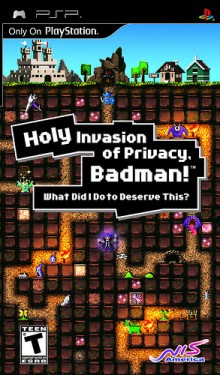
NIS recently opened pre-orders for a UMD version of Holy Invasion of Privacy, Badman! They say that pre-orders need to meet 1,000 or it won't happen, but I'm not entirely sure of that - they'll charge you right out the gate, not when it ships, so it seems to be a reasonably done deal. (Unless it's some kind of restriction with their e-commerce site - NIS hasn't exactly had the best track record with not screwing up lately.) I'm definitely going for this, because I immediately lost interest in the localized version once it was revelead to be DD only, but it more or less brings up another concern that I suspected - NIS had problems with retailers stocking the game, and going for PSN-only was the only way to get it published.


This isn't technically the first time this has happened. Nintendo published Elektroplankton as mail-order only for awhile, although it was eventually released in limited quantities to Gamestop. Same thing with the Korg DS synthesizer. Agetec also released a party game called LOL, only available through its website, although since it's essentially a glorified Pictochat.


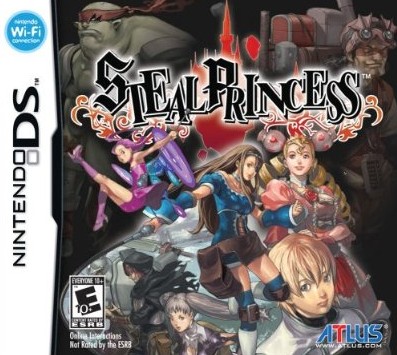
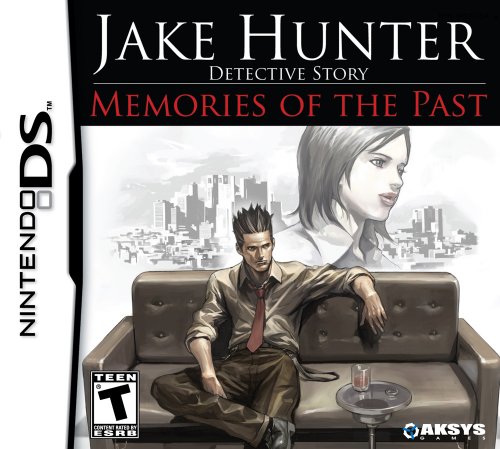
But these are all "non-games", more or less. A couple of other published games have had troubles penetrating into retail. Atlus' Steal Princess, for example. You won't find it at Gamestop - the only place you'll find it is likely on Amazon. Same deal with Aksys's republication of Jake Hunter. Its original release was famously botched, with cut content and a lousy translation. Aksys reconciled by releasing it again, with a new translation and everything restored - except Gamestop won't stock it either, especially since they still have new copies of the original release rotting on the shelves for $15. Why did Gamestop have so little faith in these titles in particular? Jake Hunter is easy to understand, but why Steal Princess? It certainly didn't get great reviews, but it's no worse than any other middling RPG that's come out lately. Maybe they got burned on stocking The Dark Spire?


Not knowing the ins and outs of video game retail buying, I don't know if this has been a persistent problem throughout the ages. Most of the time the blame for games not getting localized falls either on the publisher, or the console manufacturer not approving them. Now with the possibility of retailers not stocking games, there's a third wrench in the works. Given that we're already seeing excellent titles like 7th Dragon (as of current) passed over for localization, it's fairly troubling. If nothing else, it's probably time to break out the Japanese coursebooks once again.

Monday, September 14, 2009

The Scam of Konami Arcade "Upgrades"


I've been playing a lot of Konami arcade games recently, and I've been noticing a really weird trend. Most shoot-em-up fans are at least vaguely familiar with the story behind Salamander and Life Force. Salamander was originally released in Japanese arcade with a pretty standard item pickup system. When it was released in America, the game was renamed Life Force, and the graphics were slightly changed to give the game a biological setting. Life Force was then given a further overhaul and re-released in Japan, complete with the Gradius powerbar system (which totally didn't work given how the game flowed, but oh well.) This was the version that eventually got ported to the FC/NES.

I'm noticing that this kind of working - especially in between regions - is not unique, and I'm completely baffled for the reasoning behind some of them. A few are pretty minor - the levels in Ajax (the Japanese version) are in a different order than Typhoon (the world version.) That one's a bit weird. There are different versions of Akumajou Dracula (Haunted Castle) which only changes the difficulty. (All of them are still stupid hard, just to varying degrees.)

Some of them go much further than changing how much damage an enemy inflicts. The overhead shooter Trigon (the Japanese version) features a checkpoint system, while the world version, Lightning Fighters (the World version) doesn't. I can sort of understand this - I've never felt that checkpoint system really worked all that way in the context of arcade shooters. It's too punishing for a game that's supposed to let the player see as much of the game as possible for their money. In the process, they also removed a minor weapon, for some reason.


XEXEX got a similar, but even worse treatment. The Japanese version uses a checkpoint, with multiple lives and single hit kills. The World version gives you a single ship with a life bar, and instant respawn upon continuing. Okay. Except it strips out ALL of the extra weapons.

The Japanese version of Thunder Cross has an extensive array of weapons and options to grab. In addition to switching around the level order, the World version gives you full options at all times, and adds a bomb weapon, but completely removes all of the other weapons, PLUS removes the rapid fire ability. This certainly doesn't make the game easier - it makes it far worse.

Taking out features for no discernible reason seems to be pretty common. Certain versions of the Aliens arcade cabinet just don't have the first-person APC shooter segments, arguably the game's biggest draw. There are tons of other differences in enemy strengths and placement too. This makes me think that maybe this version was the initial release, and all other versions are simply revisions, so at least that MIGHT make sense.


The one that's most baffling is an extremely obscure game that was originally released as Devil World. It's Konami's take on Gauntlet, more or less, where two players take on hordes of near infinitely respawning enemies while navigating mazes, searching for keys, and finding the exit. Your characters, by default, are armed with crossbows, and obtain more weapons via another Gradius-style power bar.


A second, updated version, called Dark Adventure, seems like the same game, with the addition of third player to join in on the action. Instead of the crossbow, though, each of your characters starts with a sword. The powerbar is gone, and instead you pick up weapons and power-ups individually. Most of the projectile weapons are gone (the laser and flamethrower made the cut, at least) but instead there's a greater focus on melee weapons, like whips and spears. The game is not remotely balanced for close combat, with enemies closing in on any direction - it takes a deritive but playable game into a totally frustrating mess. Furthermore, it removes the linear levels in favor of a non-linear branching structure, which some levels having multiple exits. A neat idea, but it's also possible to go into circles, searching and researching the same areas to find the same keys to maybe try to make some kind of progress. The game is now a total mess.

So, really, what's the point of all this? How did it occur, and more importantly, why were these done from both a creative and a business perspective? These aren't just alternate modes, toggled with a dip switch - they're completely different ROM sets. They certainly aren't just "easy" mode releases either - in most cases, they're either dumbed down, or in the case of Dark Adventure, mangled to unplayability. Since a lot of these games are so obscure, I'm not really sure if these were re-released in the Japanese marketplace, as a way to pull a fast one on arcade owners (Hey! Buy this new game, even though it really isn't!) or they were for overseas release. If taken from that perspective, it's almost offensive, that a game would purposely be made worse for the gaijin. Or maybe it was just a misguided designer who decided to fiddle with the game balance and ended up with an inferior product. These questions are all rhetorical, of course, but it's something to ponder.