Sunday, June 3, 2012

Update 6/3 - Spacewar! Legacy, Zenko, Cobra Triangle, Engacho!, more iOS Shooters, Alex Kidd, and Guardians of the Hood

Spacewar! is one of the earliest known videos games in existence. Born of a PDP-1 mainframe, the consumer version was known as Computer Space, also known as the first arcade game. Derboo's massive seven page article covers not only the history of Spacewar! and Computer Space, but also its many clones and spin-offs, including a whole huge section devoted to Asteroids!, and its many clones and spinoffs. The influence of the series runs far and deep, and this article covers them almost all comprehensively.

Zenki was a fairly prolific manga and anime series in the mid-90s, spawning a number of video game entries, including one for the PC-FX. Cobra Triangle is a Rare-developed title for the NES where you pilot a rather daring speed boat, and also runs up against Battletoads (also of the same developer) as one of the most infuriating titles of the era. And Engacho! is an amusing gross-out puzzle game for the PlayStation and Wonderswan, featuring, at the very least, giant walking asses. The tenth installment of the iOS Shooters article includes reviews of Doodle Arcade Shooter, Jet Fighter Ace, Neocell Fighters Evolution and Mortal Skies 2, while our latest Metal Gear interview has a chat with Toshinari Oka, the programmer for Metal Gear 2: Solid Snake for the MSX2.

Sega has been releasing a slew of excellent Vintage Collection packs on the XBLA and PSN in the past few weeks, so out Spotlight Articles will be focusing on them for awhile. First up: Alex Kidd, who shows up bundled with Super Hang-On and Revenge of Shinobi on the XBLA for some reason, was Sega's old mascot before Sonic took over the reins. Your Weekly Kusoge is Guardians of the Hood, which has the bad sense to follow up on Pit Fighter, of all things.


Friday, June 1, 2012

AverMedia Game Capture HD review

A few weeks ago I bought AverMedia’s Game Capture HD box (about £120 delivered from Amazon). You plug your system into the box using the supplied Universal Component cable, plus the box into your TV via component cable, and then attach either a USB Flash Drive, a USB HardDrive, or install a mini HardDrive. Then you can either grab images or videos of your games, using the supplied remote control. It supports the PS3, PS2, Xbox 360, and Wii, and it’s actually rather brilliant!


Limp steps towards evolution - A review of Home

To be honest, I've bought Benjamin Rivers' Home without reading up on it much, mostly because of the "Old-School Collector's Edition". Not to have more fancy stuff lying around, but because I figured if an indie developer went through all the effort to produce maps and other feelies, they certainly would have put as much work and love into the game itself, right? Right?! Let's see...

(This review is the product of playing the game without having seen any of the goodies. The official home page recommends to wait for them to arrive, but as the Collector's Edition has already been sold out during the preorder phase, this is a moot point for anyone who might still be considering to buy the game, anyway.)

At the center of the Home stands a nameless guy who wakes up in an unknown house with a wounded leg. Just in the next room lies the mutilated corpse of a man. Trying to find his way out of the property, he soon stumbles over details about the house and its inhibitants, but also more gruesome facts and some unsettling connections to his own life.

The game calls itself "an unique horror adventure," and it sure draws on a lot of common horror tropes. The animations of opening doors from first-person view are known to anyone who has ever touched a classic Resident Evil game, and the whole game world is covered in darkness all the time, with the closest vicinity illuminated only thanks to the light of a lamp that is found all too conveniently just at the spot where the protagonist wakes. up There also is a handful of skillfully applied fake shock moments, like a cat jumping away as the player walks toward it, but the most essential element of horror - a sense of actual or imagined threat - is lacking entirely. The mechanics of the game make it clear very early on that dying is not an option, not the least because the game doesn't have any save function whatsoever.

Now that might sound terrible at first, but it's important to bear with Home at that point - a session of the game can easily be completed within an hour. (Don't worry about that short time frame, either. The digital download version costs no more than two bucks) The game sure could have done a better job at communicating this concept (after all it goes out of its way to tell players to turn off the lights and use headphones at the start), but the appeal of Home is the replay, to do things differently and see how they play out.

Most of the choices just consist of either taking certain items versus leaving them, or examining clues vs. missing them, but there are also a number of obstacles that can be passed in different ways, with the consequences sometimes determining how later situations have to be approached. In the beginning, for example, it's possible to jump down a broken ladder at the cost of the player character's hurt leg, but findign a different means to descend saves him the pain, preserving his agility.

There are no "wrong" decisions that make one get stuck, though. The changes are merely nuances in the narrative, and, ultimately, in what the player gets to know about what actually happened. Piecing together the clues found on the way (which the game mostly does for you in text summaries of each "chapter") is what Home is all about. It's clear a lot of work has been put into compiling alternative narratives to make decisions matter, but often the player has no clues whatsoever what kind or quality the consequences might be. With no proper fail- and success states and no logical framework to the choice-consequence structure, it becomes a matter of just limping through the game with whatever choices and then maybe get some other results by doing just the opposite the next time.

Also, at the end awaits a decision that just shouldn't be there, a twist that works less the more interactive your product is. It could have suceeded if gave things seen throughout the game a different meaning, but instead it caused many scenes to have no meaning at all. I really wish I could elaborate on this some more, but it's impossible without massive spoilers.

Unfortunately, Home is also plagued by a number of scripting bugs that spoil the narrative experience. In the most harmless cases, they're just annoying repetitions of text, but they can also cause plotholes to the current playthrough and confusion to the player. At the end of the first section, for example, the protagonist may voice his regret for not having picked up the gun he found, even when the player hasn't even examined the bar of pixels that constitute the weapon on-screen.

An often-made argument when discussing the merits of games is the claim that hi-tech graphics are not needed to make a compelling interactive experience. But in the case of Home, questions after the expressive power of blocky pixel graphics have to be raised. With the chosen look, gory views appear censored by default, causing a dissonance in any reactions the player can have and the disgusted descriptions of the protagonist. When hurting his leg worse, the protagonist seems to limp a little more (or is he? Might be just a psychological efect...), but otherwise animations are sparse, and he has no choice but to keep the same dopey look throughout the story, no matter what happens to him. This is not to say that it hasn't been that way in countless great classic games, but here they add to the conclusion that Home can never hope to get all that creepy.

The flashback-like narration of the protagonist appears in cut-away text panels, like in a silent movie. What sounds cool at first gets aggravating real fast, though, as they're painfully slow. The text scrolling can be skipped, but there's always a weird delay in the text appearing and the game cutting back to the main screen.

Regardless of its shortcomings, Home is a fine exercise in interactive storytelling and one can only hope that it gives other developers some hints in making the narrative the actual purpose of the game. It is not, however, a very good game. The official homepage quotes the Totally Rad Show praising the game as "King’s Quest meets Heavy Rain," but all it really would have inherited from King's Quest are the blocky visuals. The farthest extend of a "puzzle" are certain objects that are only found by holding the lamp aloft, or levers that have to be pulled more than once. While it might be true that the traditional approach to adventure game puzzles might not be the optimal way in telling an interactive story (as they almost invariably demand harebrained stories or a weird disconnect between game world and puzzles), but when there's really nothing "gamey" to replace them, the final product is not much different from a simple chose-your-own-adventure story. Author Benjamin Rivers is quoted on Adventure Gamers for his "desire for evolution in the adventure genre." He also talked about horror in games created by engaging the player on "that unique mental level," but he tries to do so mostly while ignoring video games' strongest tool to engange the player. Home does a honorable job in trying to make actual gameplay obsolete, in creating an interactive narrative that is engaging enough on its own, but in doing so it offers no true solutions to the old problem of marrying gameplay and story in a way that both can benefit from the union.


Wednesday, May 23, 2012

Bundle in a Box - Adventure Bundle

The latest indie bundle has been unveiled courtesy of Kyttaro Games, this one focusing entirely on adventure games. If you've read any of the book (or really, just the site's review of Runaway), a lot of modern "professional" adventure games are kinda bad, and it's really the indie scene that keeps the spirit of the genre alive. The games featured in this bundle contains some of the best titles released in the past few years, so skipping it would be the height of foolishness. For the price you get DRM-free copies, as well as Steam keys (and the ability to download it on Desura, an indie game distribution platform that's a bit more open than Steam.) Read more for the contents, as well as the site's reviews, where applicable:

Gemini Rue


Astonishingly good sci-fi/cyberpunk tale with a fantastic visual style and an excellent story. If enough people buy the bundle, everyone will get the soundtrack too, which I bought separately when it came out and was worth the $10 alone.


A duo of comedic titles starring Ben and Dan, two British adventure game enthusiasts caught up in ridiculous scenarios, at least one of which involves Nazi dinosaurs and mecha-riding Hitlers, per above. Sketchy graphics but some of the best written, funniest dialogue to come out of any game in the past few years. 

1893: A World’s Fair Mystery


Not super familiar with this one, actually! It's actually a pure interactive fiction game, which means full text entry with some supplementary graphics. It's also older than most of these, having been published in 2003. 

The Sea Will Claim Everything 


A brand new game from Jonas Kyratzes. Haven't gotten a chance to try it yet, but the art style is nice, and a brand new title in this bundle is a pretty decent deal. If you pay higher than average, you also get: 


A short game about a crime solving rabbi. That makes it sound sillier than it is, but even though there are bits of humor, it's actually quite a dramatic murder mystery, with some excellent writing and voice acting. 

Metal Dead 


Yes, yes, zombies are the "in thing" right about now, but Metal Dead is a much more cartoonish, far sillier take on the topic than even something like Shaun of the Dead. It's quite dark and violent though, of course, with a healthy sprinkling of heavy metal stereotypes.

At any rate, every title in this package (the ones I've played anyway) all come very much recommended, making this an almost absurdly good deal. The only really major indie adventure game that I can think of that's missing are the entries in the Blackwell series, but one of them just came out a few months back, making it a bit too new. (Some of the entries were featured in another bundle not too long ago as well. They're also definitely worth grabbing regardless.)

Monday, May 21, 2012

Update 5/17 - Final Fantasy Crystal Chronicles, Nightshade, Cave Noire, Magician Lord, Generation Xbox, Driller Tanks, Quest for Glory interview

Do you like Final Fantasy? We've already covered the main series, and SaGa, so our big feature this week looks at the Crystal Chronicles series offshoot. It goes in-depth with 8 different entries, the main cast of characters, plus a look at some of the merchandising. Still following the RPG theme, we've also got a feature on Cave Noire, a neat little roguelike for the monochrome GameBoy. It's fast-paced and great for those new to the roguelike genre, plus it's been fan-translated. Since it's a monochrome GB title, we should also introduce you to this page we made on the subject of GB filters - since the system had its own screen and distinctive visual appearance, there's been some debate among staff and readers for a while, about how best to showcase GB games. Have your say in our forum topic too.

There's been a lot of NeoGeo re-releases over the years, on digital download services, so it's about time we had a look at Magician Lord. It's an awesome but tough as nails action-platformer, and a refreshing change from the abundance of shmups and one-on-one fighters available for the system. For something with a slower pace, there's Nightshade on the NES, one of the few adventure games to find Western release on the system. It's full of charm and deserved to be better known.

For our regular pieces we have one of the last few Metal Gear interviews, with Ryan Payton from MGS4. A couple more and the collection will be finished. Ryan just last week succeeded with a Kickstarter for his new indie game project, so check that out too. There's also the next part of iOS Shooters, looking at Shmup, ISUD: Bullet Hell Action!, Techno Trancer, and Mortal Skies. Your Weekly Kusoge is Driller Tanks by Hudson, back when they still existed. It's not the worst maze game you'll find from around 1983, but significantly it shows how Hudson were able to learn from their mistakes, refine their designs, and go on to produce countless excellent maze games - until changing market forces killed them. We've also added a review of the new book Generation Xbox: How Videogames Invaded Hollywood, which tells the intertwining saga of books and videos games, starting with E.T. for the 2600 and ending up with motion capture's influence on James Cameron's Avatar. Please do check out the rest of our book section, since we still receive random Tweets from readers only just discovering that we also cover books. Recent additions are: Game Over, The Videogame Style Guide and Reference Manual, plus Video Kids.

Our featured article is on the Quest for Glory series, since the games were recently released bundled together for about $10 on Good Old Games. It also featured the interview with one of the developers, Corey Cole, which was previously on published in the adventure game book, which was published roughly a year ago from today!


Thursday, May 17, 2012

Magazine Reviews - Nintendo Fun Club #3

Well, way back in January of this year, I did a recap of Nintendo Fun Club Issue #2 - and then my course-load got kind of crazy (among other things), preventing me from doing further recaps. Well, now I am back, with my thoughts on issue #3.

Issue #3 - Fall 1987

This issue features our first proper front cover - with color art and everything. Fittingly, Nintendo's current big hit, The Legend of Zelda, graces the cover. We also have our first ad in the magazine - for some of Taito's upcoming titles, including Renegade, Arkanoid, Elevator Action, and Legend of Kage. These ads would continue over the rest of the Fun Club News run, but would not survive the switch to Nintendo Power.

We start off with an article on Metroid and, well, while the cover gets color, the interior of the magazine is an odd mix of black-and-white, red (or another color) and white, and full color. I kind of get the impression that part-way through putting this issue together they got the green light for color. This article also features the first appearance in the magazine of screen shots. While this issue isn't nearly as screen shot heavy as Nintendo Power would eventually become, it's a start. I'm getting the impression that the staff is slowly figuring out how they can get screen shots to work in the magazine. We also get a look at Kid Icarus, including a discussion of the sacred treasures and weapons.

Tuesday, May 15, 2012

199X Dispatch - Statmeister Meisterstat

199X Dispatch brings you the latest news on my progress through the Game Club 199X game(s) of the month. This month's games are Wonder Boy in Monster Land (SMS) and Dragon's Curse (TG16).


See that red tadpole in a loincloth? I'm gonna kill it.

I spent my last lunch break and the better part of Sunday afternoon beating up sunflowers in a desert. Why? I want stones. What are stones? I'm not sure, but for some reason they raise my "CP," which for some reason makes shopkeepers more interested in taking my money. Money, itself, comes very cheap. That's how things work in Monster World.

Whereas Wonder Boy in Monster Land was all about the making money appear out of thin air, Wonder Boy III is about charm. In this game, I have more than enough money to buy just about anything, as every other enemy drops a giant sack of Monster-Nickels.

Pretty tough looking. Except for that neckerchief.
The tedium of grinding is exacerbated by the game's transformation feature, which is as frustrating as it is clever. The wacky power ranger dragon-bot from the end of Monster Land, with its dying breath, cast the titular "curse" cast upon our hero, transforming him into a dragon. The hero must fight his way through a series of bosses, clawing his way back up to reclaim his human form, species by species. Although there is a way to change back into previous forms, in the early part of the game you are stuck as whatever you are.

My problem is that, in rushing through the last transmogrification (the tiny, round-eared lawsuit bait "Mouse-Man") I neglected to buy any stat-boosting gear. Now, as the hulking Piranha-Man, I can no longer reach those shops. It's like locking myself out of my apartment. Which I totally never do.

Want to know how much more charismatic you'd be draped in mithril? 12 more,
compared to being draped in what I presume is chain-woven goblin flesh.
This is bad. Armor and shields can boost various stats, as with many RPG-ish games. One of those stats  in Dragon's Trap/Curse is "charm," which has no effect other than making shopkeepers more willing to part with useful swag. Since I did not buy the "Dancing Shield" or some other nonsense, I now need to grind for charm-enhancing stones until I'm friendly enough to buy a vital set of armor. Without which, I cannot cross this vast lava field between me and the next objective.

The game is quite generous with healing items. If you're low on health, dead enemies are far more likely to relinquish hearts, big and little, as well as potions, which breath life back into our hero when he runs out of HP, just like the reserve tanks in Super Metroid. But there seems to be no reliable way of grinding for those little red stones. And thus, I am left to wander this desert, whacking snakes over the head, collecting rocks.

If you'll excuse me, I just raised my CP stat by another two points. Time to check if the one-eyed pig-man wants my money yet.


Saturday, May 12, 2012

Sega Graffiti Competition Results

You may recall I blogged about the competition before. The results are in. Sadly I did not win. In fact my entries aren’t even displayed on the entries page. Here is a video of those who did win. And for your viewing pleasure, here are my creations: Beardtrain, Moustache Udders (heading pic), and Mr Cassette. I’m not sure why the entry wasn’t even listed on the entries page – perhaps the sight of an anthropomorphic beard with cow udders was just too intense for Sega. Well done all who won!

EDIT: It's been revealed that actually my entry IS shown online. Excellent!

Wednesday, May 9, 2012

8 May - 194X, Alantia, iOS Shooters, Gunman's Proof, Wing of Madoola, DogDay, Chuck Ernst Metal Gear interview, Game Club 199X

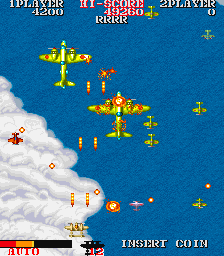
Our big feature this week is an epic look through the entire 194X series from Capcom, so that’s 1941, 1942, 1943, 1944 and 19XX, plus all the variants and offshoots for all the machines. If you like vertical shooters, then you’ve no doubt played at least one of them. In addition to this we also have part 8 of our iOS Shooter Coverage, examining Buster Red, Shoot the Magic, Lightning Fighter and Ultrablast. Our triple-whammy of blasting action finished off with Alantia, an unusual and very difficult anime-inspired Space Harrier clone for the PC-88.


Tuesday, May 1, 2012

Lost doujin games (NSFW)

Doujin = Japanese indie game (loose translation)

I’ve been sitting on this blog post for months now, ever since Megaupload went down, and have kept meaning to put it up. A look at how archives of doujin magazines were lost in the FBI raid, and some interesting homebrew titles which no one seems to have an archive of. Also, anyone who has seen these Doujin Soft magazines will know that a lot of them contain nudity – well there’s none in this blog entry... OK, so maybe there’s a little, but I censored it, and I only include it because there’s a non-existent Atlus connection.