Showing posts with label pc88. Show all posts

Tuesday, May 1, 2012

Lost doujin games (NSFW)

Doujin = Japanese indie game (loose translation)

I’ve been sitting on this blog post for months now, ever since Megaupload went down, and have kept meaning to put it up. A look at how archives of doujin magazines were lost in the FBI raid, and some interesting homebrew titles which no one seems to have an archive of. Also, anyone who has seen these Doujin Soft magazines will know that a lot of them contain nudity – well there’s none in this blog entry... OK, so maybe there’s a little, but I censored it, and I only include it because there’s a non-existent Atlus connection.


Saturday, June 12, 2010

Hydorah and other free shmups

Despite trying to work through a rather large PS3 backlog, my time has been taken up by three extremely excellent free 2D shmups of late (well, one excellent, one very good and one OK shmup)– read on for links and boobs!
.


The only real criticism I had with the recent EGM relaunch issue is its lack of obscure Japanese coverage, and lack of indie/doujin coverage. Indie games have never really been properly covered in the mainstream press, because whether they are entirely free or charge a small fee, none of them generate PR freebies or advertising revenue from publishers. And this stoic lack of coverage is a travesty because it means the public won’t hear about great games, such as Hydorah, unless they trawl forums and obscure blogs for snippets of info.

Does anyone else have the uncomfortable feeling that they’re missing out on hundreds of wildly awesome and free indie/doujin games, simply because no one talks about them? Yeah, me too.


HYDORAH
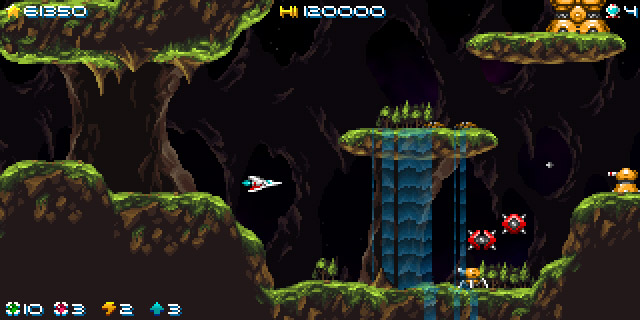
A tremendous labour of love, Hydorah took Locomalito three years to develop (with help for music). Nearing Cave Story-levels of time and dedication, the effort put into this shows. The production values are some of the highest I’ve seen for a free game – the level of detail in the pixel art (which is a dying art in the commercial world) and animation of sprites is astounding. Ignore those who say the art style is boring – later levels’ bio-mechanical armada is stunning. The few screens shown here don’t even remotely convey the beauty of the game in motion. Furthermore, the soundtrack by Gryzor87 is pretty-damn catchy in places, with some really cool 1980s-style synth. Plus there’s the insanely awesome vocalised music tracks (in what I presume is Spanish), and voiced power-ups! Special mention must go to the brief snippets of voice acting, which have Spanish accents. I love the idea that Spain would amass a giant space armada to defend the human race – it’s a refreshing change from the America/Japan centric story many shooters have.
I’ve always felt that hori-shmups, as opposed to overhead, are a little underrepresented in the overall shooter genre, so it’s nice to see Hydorah take a side-on approach. It’s very much a throwback to older-style shmups like Gradius, Axelay, Keio’s Flying Squadron, and so on, before hardware started allowing for near-infinite projectiles and increasing numbers of shooters adopted the danmaku (bullet curtain) approach. Someone on another forum aptly described Hydorah as an adventure – there are 16 stages laid out on a map with branching pathways (not quite Darius, but an appreciated effort) with 30 bosses of which I’ve only seen a fraction. This is coupled with a selectable weapons system where new weapons are unlocked in each stage, and all require levelling-up RPG fashion. Each stage has its own story and architecture to navigate, plus numerous clever ideas (even if some are borrowed), and overall it does an excellent job of balancing good shooting mechanics with ambience and story.
So many shooters in recent generations have had rather banal designs, focusing on complex patterns and score mechanics, but totally lacking that sense of exploration you feel, for example, when first penetrating the Bydo ship in R-Type. There are some great moments in Hydorah, such as flying above a planet surface during a sandstorm, which affects control, before delving deep into a forgotten enemy factory, or traversing a space graveyard populated by flesh-eating insects.
What I especially like is that Hydorah only has one difficulty level, ensuring that everyone has the same experience and that people’s skill with the game is easily compared (as opposed to discussing one’s ability spread over 3+ difficulty levels like most shups). This presents Hydorah as a singular, unified experience. I’ve heard that the difficulty actually augments itself depending on how well you’re playing, but I’ve faced bosses both fully powered and without anything, and their attack patterns seemed the same to me! Please correct if I’m wrong in this assumption.

In years to come I’d like to think that Hydorah will be a regular placement on those “essentials” lists for indie PC games that crop up on forums, alongside titles like Cave Story and Spelunky. It’s not as easy, but it’s an essential file to download. My only disappointment is that some areas of the internet have made trivial sniping criticisms about both the game’s art style and mechanics, all of which are unwarranted. There is a growing internet culture to criticise good things, especially when given away freely. Considering this cost me nothing to experience, I’m going to evaluate it in a totally different frame of mind to something which does cost money. Sincere creative love was put into this game, and despite being a very strongly and obviously influenced homage, there are moments of genuine, original genius.

Check out it out here


HEROCORE
Super Metroid meets Dropzone in duotone is the simple analogy for this one. You’re tasked with exploring a maze inside a giant asteroid filled with bio-mechanical enemies in order to stop an immortal war machine. The plot is pretty damn awesome, and pleasantly melancholy in the end. Increased map exploration is facilitated by acquiring ability-boosting items from defeated bosses. Lesser enemies are merely a hindrance and should be ignored, making it something of a boss-rush with added corridors to navigate.
What’s really awesome about this is that the different difficulty levels actually present different level structures, encouraging repeat playthroughs. As the author states:
“The Normal difficulty is about as tough as the first Hero, while Hard features a different game world and enemy patterns that will tax even the veterans.”

The minimalist graphics and super catchy chiptune audio all add up to a very retro-feeling shooter which is also tremendously fun. Plus it’s free! What more could you want?

Get it here.


STRIKE WITCHES
While listening to the entire back-catalogue of the uncomfortably excellent Warning! A Huge Podcast series, Shidoshi mentioned a Strike Witches game for the 360 and, seeing as I had been taking notes to later look things up, went Googling for more info. Turns out there were a lot of Strike Witches games either released, or in development. I also stumbled across a very old post on Sankaku Complex (definitely NSFW) detailing two doujin releases of SW for PC. The Hori shmup is too crudely made to interest me, but the vertical one has reasonably high production values.
The plethora of characters are mostly redundant, the game is extremely easy if you exploit the weapons and shields available, and the scoring system is impenetrable – I also still haven’t fully worked out the controls. But it reminds me of Axelay and has an awesome distortion effect. It’s also a lot of fun - especially if you have a biased predilection for anything shmup-based - with several neat ideas.

Get it here (be warned, site contains NSFW images)

You’ll need to click on the download link on the far left (second from the top).

Controls taken from elsewhere:
A - Shoot
B - Magic Shield (usable with the gauge at max, replenishes naturally, faster when not firing).
L - Speed up while button is pressed.
R - Speed down.

There’s also a button to activate some kind of score multiplier thing, but I’ve not used it much.
I just wanted to throw this out there because I’m sure it was mostly overlooked and is now forgotten amongst the THOUSANDS of free PC games available. It could probably do with an article, looking at the entire Strike Witches franchise (chicks as anthropomorphised battle planes, eh? Kinky!), but I’ll damned if I’m not too lazy to do it.


Monday, April 5, 2010

Pictures of Japanese computer games

Following on from a major article on Japanese home computers in Retro Gamer, I post all my unused images of insanely cool games you’ve likely never heard of.

Eight months ago, bored from the lack of Japanese coverage in Retro Gamer, I pitched a major feature on Japanese home computers. I was graciously assisted by the experts over at Tokugawa forums and, I hope, it will act as a permanent record of their sterling work when it comes to archiving English-language knowledge on the obtuse Japanese computer scene. It's also been emailed to HG101 central for later posting as a feature.

Anyway, the designer decided to focus the article on a series of hardware shots I’d accumulated (thanks to NFG for those), with maybe 3 or 4 screens dedicated to the actual games. I find the hardware ugly and mostly pointless thanks to emulation, so here are my original game screen-grabs with my original intended captions. They’re not spectacular, since I was on a tight deadline, and stuff like Edge is only superficially similar to Strider, but hey, it all adds to the mystique, right? Battle Gorilla might also be the most amazing strategy game I’ve never played. I gave it about an hour, barely scratching the surface due to the difficulty of the Japanese interface, but my impression is of something truly special. If any fan-translators want a challenge, I recommend they look into it.

These are in a random order, and the selection is based partially on what I like, what’s easily playable in English, what’s actually available to download (some are bloody tough to find), and what’s exclusive to the hardware or in some way especially interesting.

Many thanks to Ben, Danjuro, Peter and everyone else at the Tokugawa forums for providing so much expert help, photos and more information than we could ever print. Also, thanks to www.NFGgames.com and www.pc98.org and for use of images.


CLICK TO ENLARGE – the blog annoyingly shrinks them, losing the pixelised detail which I strived so hard to maintain when converting to low-colour gifs.


Technopolis
Technopolis was a slightly naughty magazine covering Japanese computers back in the day. Comiket coverage was often more than 10 pages, with a detailed floor-plan and listing of every single doujinsoft available.


Battle Gorilla
Format: NEC PC88
Year: 1988
By: Xtalsoft
Of all the games listed this is the most difficult to learn, but also the most rewarding due to its uniqueness (and that rockin’ music). Imagine a roguelike-styled, tactical version of Commando where bullets and enemies only move when you do – there’s nothing else quite like it. Using Numkeys, Space and Esc at the menu: 1) choose map, 2) stats, 3) free mode, 4) buy weapons, 5) check weapons, 6) start. During the game Space accesses the inventory and Shift shoots.


Night Slave
Format: NEC PC98
Year: 1996
By: Melody
What could be better than an action-packed clone of Assault Suits Valken crossed with the weapons system of Gradius plus (optional) scenes of graphic lesbian bondage? Not much, we’d wager. Although not the smoothest of games, Night Slave’s intense diversity makes it shine, with your mecha rampaging through rainy jungles, snowy wastes, alien bases (pictured) and more. The armaments system, with recoil physics, also has you permanently levelling up your various main- and sub-weapons in an RPG-like fashion using power-orbs.


Kagirinaki Tatakai (限りなき戦い)

Format: Sharp X1
Year: 1983
By: H. Ishikawa (Enix)
With non-mirrored, separately drawn sprites for the left-and-right walking animations, a diverse range of interesting enemies, fully destructible environments, a convincing physics engine, plus a for-the-time plethora of weapons, this could be the most revolutionary forgotten gem of its time. While carrying three weapons or more has been done by most games since (except Halo), and plenty have had destructible environments (except Halo), you must remember this was released in 1983 on cassette tape. Still, miles f***ing better than Halo. Known in Japanese as: 限りなき戦い.

Die Bahnwelt
Format: X68000
Year: 1992 (now freeware)
By: Glodia
Despite predating it by a year, this feels like a Japanese version of Chaos Engine. Anime cut-scenes, bizarre sci-fi plot (which is fan-translated!), plus different sidekicks with good AI whom you can chat with or order to adopt various tactics (conserve ammo, cover me, etc). As you wander the post-apocalyptic ruins there are plenty of weapons to collect, and they can be changed in real-time. Find items and maps, unlock doors and stockpile ammo. Just don’t forget to share with your partner!


Tatsujin-Oh
Format: FM Towns
Year: 1993
By: Toaplan
Although temptation was to go with Wrestle Angels for some girl-on-girl fun, a shmup seemed more appropriate (and Rayxanber sadly isn’t as good). Also known as Truxton 2, this was the only home version of Toaplan’s frenetic arcade shooter, ported by Ving. With relentless waves of enemies, screenshots can never convey how intense things are. A simple power-up system, plus super bombs, keep everything intuitive despite the high difficulty. Regarded by many as the system’s best shooter.


Aquales
[X68000] Thumping rock soundtrack, sumptuous graphics, multiple crazy weapons and Bionic Commando-style swinging: Aquales is absolutely essential.

The Scheme
[PC88] With music by Yuzo Koshiro and a design similar to Metroid, games like The Scheme are the reason for searching archives.


Hover Attack
[PC88] Flying mechas, maze-like levels, and missiles shooting everywhere – Hover Attack was the inspiration for Treasure’s Bangai-O.


WiBArm
[PC88] WiBArm has you roaming realistically rendered 3D worlds, fighting aliens in 2D and transforming from a mecha into a tank and flying jet! Utterly amazing, and also released for DOS in English.

Sorcerian
[PC88] Sorcerian is a magnificently complex action-RPG by Falcom, but if you’re not fluent in Japanese get the DOS version instead.

Rayxanber
[FM Towns] While not as good as its two successors, there’s only one machine you can play the original Rayxanber on.


Popful Mail
[PC98] Trust us on this one – Popful Mail, whichever system it’s on, will be the best gaming experience of your life... unless it’s the dull SNES version.

Genesis
[PC88] One of Square’s earliest games was Genesis: Beyond the Revelation, a post-apocalyptic RPG now fan-translated.

Touhou
[PC98] Developed by just one man, the first five games of the Touhou Project, a series of bullet-hell shmups, are only available on PC98.

Dracula
[X68000] Though ported to the PS1 as Castlevania Chronicles, the original Dracula version is still highly recommended.

Silpheed
[PC88] Silpheed was released after Game Arts’ Thexder, and both were brought to America by Sierra.

Thunder Force
[X1] Like a free-roaming Xevious, the original Thunder Force by Tecno Soft has little resemblance to later titles (better on the X1 than PC88).

Super Mario Bros Special
[PC88] Super Mario Bros Special is not a port – it’s a wholly new, sadistic, surreal and slightly insane take on SMB, by Hudson.

Edge
[PC98] Fancy some ultra-fast, futuristic, Strider-meets-Double-Dragon brawling? You’ll be wanting to play Edge then. Quick, someone call Langdale!


Farland Story
[PC98] All six of the Farland Story games have been translated, giving plenty of Shining Force-style strategic battles to work through – with mouse support!

Rusty
[PC98] Think of your favourite console game, and there’s probably a computer equivalent. Rusty mimics Super Castlevania quite nicely.

Briganty
[PC98] Hack away with swords, grapple with throws, or knock-em-out with kicks – Briganty proves to be quite an adept fighter.

Usagi Panic
[PC98] It’s a mad, crazy dash in Usagina Panic, to defeat enemies and collect carrots on the way to the exit, all while your health slowly ticks down.


Galt Rio
[PC98] A lot of cool games aren’t in Western general circulation. Galt-Rio was accidentally found on a Japanese blog.

Thursday, February 4, 2010

So What the Heck is Silver Ghost

In the latest issue of British mag games(tm) (or at least the latest on US store shelves - it's the one with Rare on the cover) has an interview with Hiroyuki Takahashi, one of the head honchos of Team Sonic (later Camelot), the folks behind the Shining Force series. It's a neat read, if mainly because it shows their strained relationship at the time, and how they jumped ship to work mainly on Nintendo properties (what with Mario Tennis, Mario Golf, and Golden Sun.)
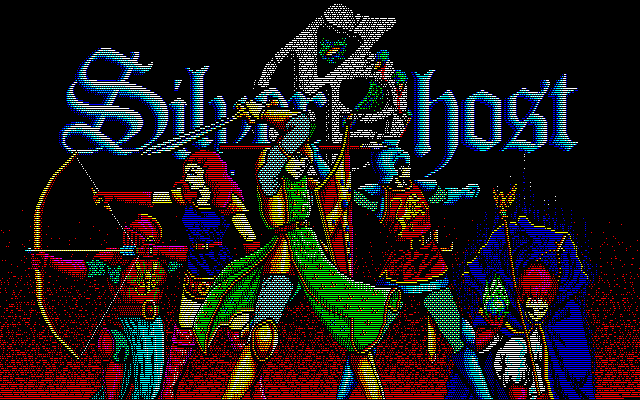


Now, most SRPGers view Shining Force as kind of a Fire Emblem-lite - the base mechanics are similar, but it's a bit simplified, and much more player friendly. Yakahashi claims that he hated Fire Emblem and its turn-based style, and instead pointed to a PC88 strategy game called Silver Ghost, by a now defunct Japanese company called Kure Software. I was curious about the connection so I booted up an emulator and gave it a go.
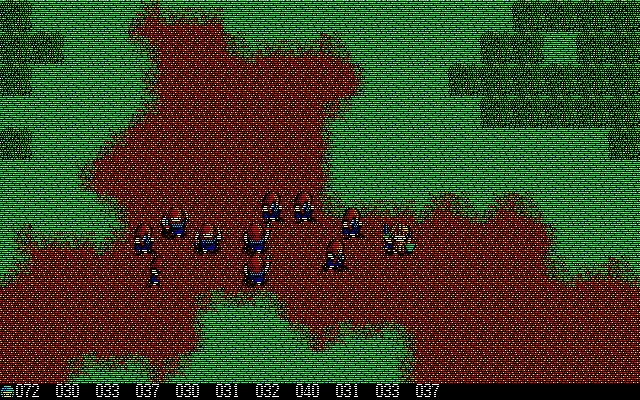


The main reason Takahashi pointed to liking Silver Ghost was due to its real time action and multi-character system. It's very similar to other Japanese action-RPGs of the time, like Ys and Hydlide, where you scamper around and ram into enemies to attack them. Instead of controlling a single character, though, you control an army of about a dozen people. By default, you control the leader, and the rest of your soldiers haphazardly follow you, engaging in combat with anything that comes close to them. You can switch to any other character at any time to take control of them, although your fellow soldiers usually won't bother following anyone beside the leader.
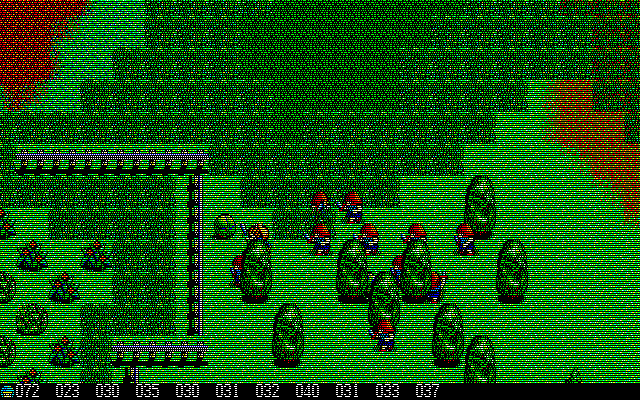


It's a neat little game, but just what, exactly, was the Shining Force connection? Shining Force was still turn-based and Silver Ghost plays nothing like it. I guess maybe the graphics and general style could've inspired it, but Silver Ghost doesn't really look all that much different from any other similar game of the time. Maybe it's just that Silver Ghost convinced him that strategy RPGs didn't necessarily have to be so boring, but he still want back to the genre standards when making his own console game? Shining Force is, as mentioned before, a lot friendlier, allowing you to talk around towns like standard JRPGs, and you control characters directly rather than pointing and clicking with a cursor, so maybe that mentality spilled over.
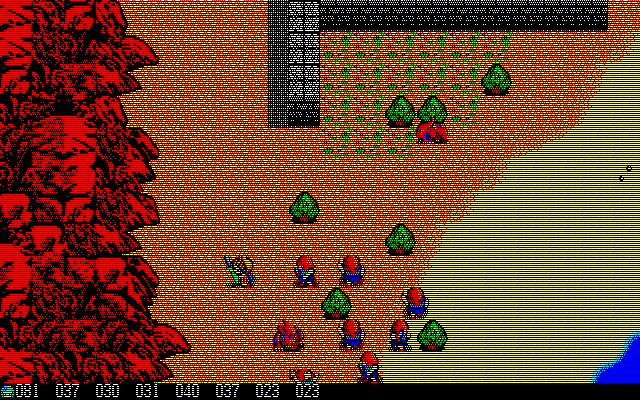


This brings up another point though. Shining Force III for the Saturn was the last true Shining Force game, because all of its spin-offs were crap lousy action-RPGs (not counting the GBA remake of the first game, or the recent JP-only DS game, which was outsourced to Flight Plan, which basically does nothing but SRPGs.) I always figured Sega took the series in that direction because the original staff was long gone, but as it turned out, the original staff really wasn't all that enamored with turn-based games anyway. So it's more a typical case of Sega being Sega and doing stupid things with their properties then.
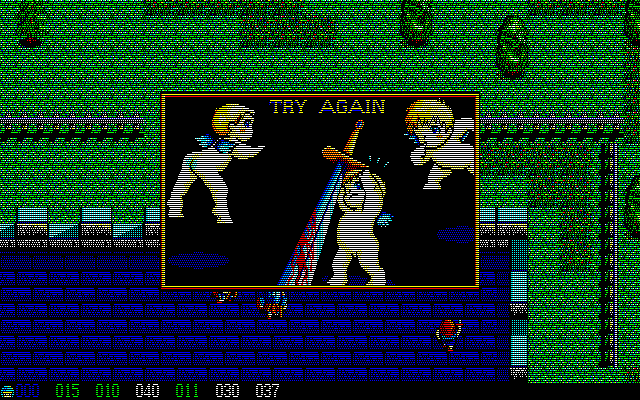


Anyway, you can download the disk image and give the game a shot, if you'd like, or check out this Japanese page for some in-depth info on it.