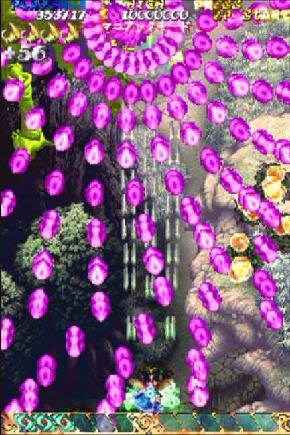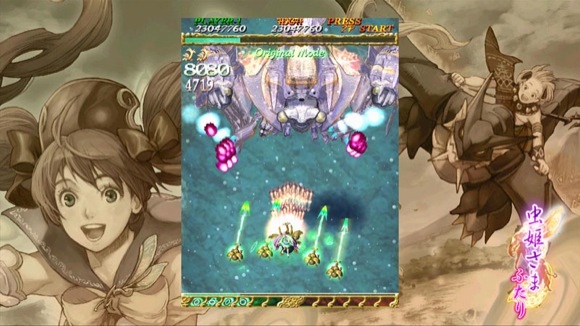
Showing posts with label cave. Show all posts

Saturday, January 14, 2012

Cave's Financial Issues - We Try to Help


According to Andriasang

Cave Lowers Earnings Forecasts
Publisher puts development of some content on hold and pours resources into social games.


Oh no! This is terrible! Sometimes we rag on Cave's design philosophies (which incidentally they've fixed a lot of with their 360 ports since I wrote that) or mock some of the more elitist members of their fanbase, but damned if we don't really enjoy their games. It would be completely terrible to see the company waste away into social nonsense, and then (probably) into oblivion. Therefore, we will be giving our armchair advice to help these guys out!


(1) Realize that you have an audience outside of Japan.

Actually most of the bits of advice revolve around this. If you are living in America, you can purchase Deathsmiles cheaply in the store, Guwange for $10 on the XBLA, or a handful of (extremely well made) iOS ports for about $10 each. There's also Deathsmiles IIX on Games On Demand, though it's $30 and still in Japanese, which is frankly a bit lazy. If you live in Europe, you can do all of this (except for Deathsmiles IIX I think), and also grab Dodonpachi Resurrection (and soon Akai Katana) for fairly cheap. So Cave games are certainly more accessible than they were a couple of years ago. They've even started an English blog and various fan pages.

But that's only a fraction of their catalogue. To get anything else, you need to resort to (A) expensive imports (the Muchi Muchi Pork and Pink Sweets double pack already looks difficult to get ahold of) or (B) emulation, and therefore piracy. This is a terrible situation! MAME supported many of these games briefly before being forced to take them down. Many people downloading these ROMs would probably buy a copy if one were made available - it's the awesome Valve "pirates are really underserved customers" logic. Which leads us to:


(2) Understand how digital distribution works, and embrace it.

Steam is ridiculously awesome. For as much as I prefer physical media, the outlet which it and other DD outlets can distribute independent software has drastically improved the breadth of games that can be published. So why haven't Japanese companies embraced it?

Exactly why is anyone's guess. The country has never been big on PC games, and perhaps they just don't see it as a viable gaming platform. In Japan that may be true, but it's definitely not the case in America and Europe. They also seem reticent to understand the economics behind it. Carpe Fulgur's upcoming Fortune Summoners is set at the relatively expensive price point of $25, primarily because the original Japanese developer requested it. (UPDATE: Though they've just lowered the price to under $20 to fall in line a bit more.) Never mind that the driving point behind DD sales is that their low prices (and low overhead) allow for substantially more purchases, usually enough to make up for the smaller profit margin per unit.

Here's my theory - the Japanese game industry is excellent at focusing on niches. They know that while some products have a very specific audience, that audience is very faithful, and don't mind paying premium prices for their product. That's why Cave games (and other niche products) are sold (or rather, used to sell) at full price, whereas anything over $30 outside of Japan would be unsustainable. Lowering the prices of their games would require them to break out of that mentality, which used to be a proven business model. You can already see shooter fans get defensive when you suggest that maybe $80 is too expensive for a 2D game - I'm sure that the same applies for the developers as well, as a matter of pride for not wanting to devalue their software. But the market ultimately determines the price, not the seller, and not understanding that could be fatal.

What all of this is saying is that Cave should work to port all of their back catalogue to something like Steam, and sell them for like $10-$20 each. Why not work with the MAME team to release them legally so people don't have to pirate your ROMs to play Ibara Black Label? And while getting on Steam isn't as easy as other PC digital distribution services, it's still much less of a hassle than the XBLA or PSN, which tend to get buried and are mired in bureaucracy.


(3) Exploit the market for tie-in goods. Even more.

Specifically, CDs. Cave games have outstanding music. They are taking full advantage of this in Japan! Typically their soundtracks sell out almost immediately and fetch high prices on the secondary market. Lately they've been reprinting them for retail price. Fantastic! Now, keeping with the digital distribution model, stick them on iTunes and make them available outside of Japan.

But much like with games, Japan's approach to iTunes is similarly baffling. Music CDs over there have always been ridiculously expensive - we complained about $18 CDs here, but they're typically about $25-$30 over there - and digitally released albums haven't gone down in price as much as they should have. The Radiant Historia soundtrack costs 3000 yen or so on CD, and 2400 yen on iTunes. That's not really much of a difference. That may work in Japan (somehow) but they'd also need to get in line with the rest of the market and price them at $10 for the Western market to make it viable.

As a tangent, Cave used to offer these reprinted soundtrack CDs to overseas customers on their international store. They're retail price and thus expensive, but I decided to bite the bullet and drop a few hundred bucks on my favorites. Except right when I was about to do this around Christmas time, they removed them from the store for some reason. (They've been sold out on the Japanese store for awhile, but they've since set up shop on Amazon Japan. Which won't ship them overseas.)

Anyway, I e-mailed them asking if they'd be back. Now, Japanese customer service is hilarious. In general, when given a yes/no question, a Japanese person won't directly answer "no", instead they prefer to subtly imply it and leave it for the other person to read between the lines. This is meant to be polite, but to an American, it seems insincere and dodgy. So when they say something like "We'll do our best to meet your product request", that actually means "No, we are not going to do this". If can't sell them to me (lots of other online Japanese stores famously hate non-Japanese money and refuse to ship overseas), just say so. At any rate, in the past few days the store has gone down for some reason, so it's just as well.

Maybe keep away from Windia's dark urine and the dakimakura though. Lots of people rag on Cave's recent obsession with female characters, lolita or others, which is one of those things that will just never cross cultural boundaries. Suggesting that they make their games less Japanese would be terrible though, because that's ultimately what makes them so unique. That hurdle will always be there for a lot of people, unfortunately.
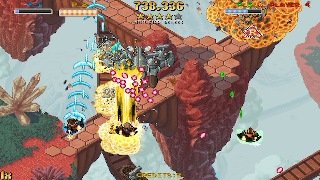


(4) Look at Jamestown.

I'm not a huge fan of Jamestown, and on a quality level I think it rather pales in comparison to Cave's library. But at the same time, it's also much, much, MUCH more approachable to the average person than any of Cave's titles. It's easy to understand, get into, and enjoy without needing to study superplay videos, peruse FAQS to figure out scoring systems, and spend the hours upon hours practicing in hopes to get anywhere near competent. All of the work to get into Cave games is usually worth the effort, but that's not immediately apparent to a lot of people, who only see huge insurmountable mazes of bullets and a fanbase whose slimier elements are quick to turn up their noses as so-called casual gamers.

I wouldn't want Cave to make a games just like Jamestown. But they should at least pay attention to how this game was developed, what it's doing, and attempt to implement them in maybe some kind of alternate game mode. The iOS version of Deathsmiles included an RPG-style mode where you could use gold, obtained from points, to buy new weapons and stuff. Compared to the Otomedius games, it was handled pretty well, and it was also totally separate from the main game, so it could be ignored if that wasn't your thing. Who knows if this actually affected sales, but keeping in mind less hardcore gamers, without watering down what longtime fans enjoy about your games, definitely could not hurt.

At any rate, I do wish Cave well. I have a feeling this all came about because DDP Black Label, Akai Katana and Instant Brain must've flopped. (The separate release of DDP Black Label especially - I think there was less than 1,000 entries on the leaderboards for Arrange mode, last time I checked.) I'd hate to see a favorite developer lumber and fall like so many smaller studios this generation.

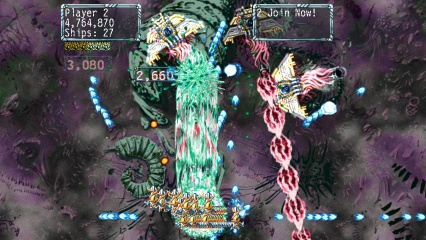

Thursday, November 4, 2010

Ten Best Game Soundtracks of 2010 (So Far)

Is it too early to talk about "Best of 20XX" stuff yet? Probably. But we're going to discuss the best soundtracks anyway, under the assumption that there's not going to be much better. The rest of the 2010 release seems to include mostly Western games, who are largely focused on bombastic Hollywood-style film soundtracks than legitimate game music, and I don't think there's too many big Japanese releases left. If something comes out and surprises is - it definitely could! - we'll append it down the road. So, without further ado, here are the Ten Best Game Soundtracks of 2010 (So Far):

VVVVVV (Featured song: Potential for Anything)


There are only maybe half a dozen proper songs in this soundtrack - fitting, since the game is only about two hours - but each of these tracks is pure SID-inspired chiptune bliss. You can grab MP3s of it the composer's website for a few bucks - unquestionably worth it.

Scott Pilgrim vs the World: The Game (Featured song: Another Winter)


Anamanaguchi was band I had only half paid attention to, because while their unique of guitar and NES chiptunes were kinda cool, their songs always felt long and meandering. When concentrated into the context of a 1-2 minute video game song, though, their talent for composition really shows through, resulting in a retro soundtrack that still has a distinctly modern edge.

Castlevania Harmony of Despair (Featured song: Invitation of the Crazed Moon)


My own big complaint about remixed music in Castlevania games is that they always drew from the 8 and 16-bit games, ignoring practically everything from Symphony of the Night and afterward. Harmony of Despair changes that, and features numerous songs from the portable Metroidvanias, all rearranged. They're all fantastic too, many being done by the same folks who redid the songs for Judgment. The DLC pack adds even more, and the handful of new tracks - including one of my favorites, Invitation of the Crazed Moon from Portrait of Ruin - are outstanding too.

NIER (Featured song: The Lost Forest)


This game kind of came out of nowhere to be really damn cool, and part of that appeal lied on its music, which took the took a tired musical trope - foreign-sounding chanting - and gave it new life. The dramatic strings and percussion pieces are even more outstanding, breezy and melodic, constrasting to the comparatively dull orchestrations that permeate stuff like Castlevania Lords of Shadows and God of War.

Ys The Oath in Felghana (Featured song: A Searing Struggle)


Is it fair to include this game? This was released in the US in 2010, but released in 2009 in Japan, which in turn was based on a 2005 release (again) in Japan only, which was a remake of Ys III, a game from fifteen years earlier. So, the music in The Oath of Felghana is hardly "new". But that's okay, because Ys III had one of the best soundtracks in existence, and remixes in The Oath of Felghana only improves them with live instrumentation. Props to the PSP version for including alternate versions from the old computer releases.

Ys Seven (Featured song: Mother Earth Altago)


The music in Ys Seven isn't QUITE as good as Felghana, but it's also the best original soundtrack in the series since Ys IV. Parts of it sounds remarkably like an upgraded PC Engine redbook track, which has always been part of the Ys appeal (at least, to the English speaking audience.)

Dodonpachi Daifukkatsu Black Label (Featured song: Vertex)


The soundtrack to DDP Daifukkatsu was kinda lousy, but the Black Label version doesn't rearrange it, it created a whole new soundtrack from scratch. It's much better, with some damn catchy electronica, and while it's not quite as trance-y as Espgaluda, it further establishes the parallel that Cave-brand danmaku shooters are the video game equivalent of an ecstasy fueled rave.

Dark Void (Featured song: Main Theme)


Usually we rag on Western game soundtracks for totally missing what we love about video game music. But we'll overlook that when it comes to Bear McCreary, the incredibly talented composer behind the reimagined Battlestar Galatica and its (now cancelled) spin-off Caprica. As a result, the soundtrack to this under-appreciated action game sounds much like his other work - which is to say, filled with fantastic orchestrations and lots of percussion. Bonus points for the Dark Void Zero soundtrack, which takes these turns and turns them into Mega Man-style NES music.

Final Fantasy XIII (Featured song: Blinded By Light)


On the Final Fantasy/Dragon Quest divide, I am usually staunchly on the side of Final Fantasy. FFXIII screwed up so much though, from the storytelling to the dialogue to the character development to the level design that it really did come up short. The only two areas where it excelled was its utterly fantastic battle system and its magnificent soundtrack. Styistcally Masashi Hamauzu is quite a bit different from series mainstray composer Nobuo Uematsu, as well as FFXII composer Hitoshi Sakimoto, but the man can use the violin like no other game musician out there.

Etrian Odyssey III (Featured song: Unrest - The End of the Raging Waves)


Even if you don't like grindy masochistic first person dungeon crawlers, everyone should appreciate these games for continuing to employ Yuzo Koshiro, one of the few prominent musicians from the 80s music scene that's still got it. This PC88 FM inspired sountrack is the best of the series, offering a wider variety of dungeon themes that alter between serene and foreboding, and numerous outstanding battle themes. The arranged album also borrows some instrumentation styles from Falcom, also making it essential for Ys fans.

Runners-up

Death Smiles (Featured song: Burning Halloween Town)


Not one of Cave's better soundtracks (better than Daifakkutsu though), at least the first level theme is pretty excellent, as are the boss and level select themes.

Super Mario Galaxy 2 (Featured song: Throwback Galaxy)


Catchy and eminently likable, with a handful of arranged songs from previous Mario and Yoshi games. Not enough of it really stands out to make the Top 10 though.

No More Heroes Desperate Struggle (Featured song: Philistine)


The "A Goddamned Philistine Since 2004" header on the main HG101 page is a reference to Margaret's song, a darkly silly little bit sung by the boss in question about how our hero, Travis Touchdown, is a goddamned pussy. Like the first game, the music selection is eclectic and ultimately not as consistently strong, some of the boss tracks are still outstanding.

Saturday, April 24, 2010

Why Shoot1up is one of the most interesting shooters in a long time


There's an ongoing thread on SHMUPS forum asking why shooters are such a niche genre. The reason can be found on the exact same forum, in the form of their Top 25 Shmups of All Time List, which are voted on yearly. Every time, more awesome classic shooters are ditched in favor of the newest Cave games. That's not entirely unreasonable, because one of the only companies putting out really decent titles on a consistent basis, but it does point to the genre becoming extremely homogenized. Milestone consistently puts out stuff (you can find three of their games in the Milestone Shooting Collection for the Wii for about $15), each usually with some kind of vaguely interesting mechanic which totally doesn't work in practice. And there's the Castle of Shikigami games, which are a bit better, but not anything super impressive either. When was the last great non-bullet hell shooter? Otomedius was only alright, Gradius V is five years old at this point, and Ikaruga even older, and even that is arguably a bullet hell game.


Which is why I'm so incredibly impressed by Shoot1up, available on the Xbox Live Indie marketplace for the shocking low price of 80 points (AKA: $1.) It's a self-described "manic shooter for normal gamers", although it isn't quite a bullet hell game. It is, however, a surprisingly well developed game with some very compelling core mechanics. Around the 'net it's most well known for the gigantic woman robot shooting missiles out of its nipples, a testament to the "why the hell not, we don't have suits to impress" mentality of independent game development.

In Shoot1up, you don't control a single ship, but rather a whole squadron of them, with each counting as a life. (The in-game terminology is "phalanx".) You can expand and contract your phalanx with the L and R triggers. Spreading out your ships will not only earn higher points, but will also trigger a laser in the center if the formation is wide enough. Of course, in doing so, you're also more exposed to danger, turning it into clever risk/reward mechanic. If you lay off the trigger for a moment, a small circular shield will also form around your ships. If you lure an enemy close enough and press the trigger, it'll cause the shield to dissipate but kill the enemy in the process, awarding 10x the standard point value. Obviously, waiting for it to charge and then getting close is even more dangerous, but is really the only way to score big.

This is all very simple and easily understandable within a few minutes of play. Compare this to ESPGaluda II's various arcade scoring systems, which are so incredibly complicated that I've seen a number of people try to explain them, and then just give up.


Like many modern shooters, the goal is to reach the end of the game on a single credit. (Unlike others, you aren't allowed to credit feed, at all - once your ships are all gone, it's Game Over.) This is often a daunting proposition, because it takes a remarkable amount of practice and memorization. Over the course of twenty minutes or so, you can only screw up three times, and then you're done. Shoot1up, on the other hand, doesn't focus on isolated moments where you can die, but instead emphasis is placed on the overall picture. In general, dying isn't something you need to precisely avoid. In fact, when you're controlling twenty ships on the screen at the same time, it's almost impossible to get through completely unscathed. You can make a series of mistakes and wipe out a huge chunk of your squadron, but with some smart flying, you can eventually rebuild them. In other words, it takes more than a few misjudged bullets or mistimed maneuvers to put an end to your game, and more how you deal with the general flow of gaining or losing power. While it can get hairy in the later levels, it's not a terribly difficult game on the Normal setting, and with a few games you can probably get skilled enough to reach the end without much of a problem, and can then concentrate on score.


EPSGaluda II is what happens when you continuously target the hardcore fan with arcane scoring systems. Cave has been creating a more diverse spread lately, in hopes of reaching wider audiences, but the fact is a lot of people are still going to be intimidated by them, no matter how many times you try to tell them that they aren't that hard. (Which is a lie, of course.) We need more games like Shoot1up, that can distill the better parts of modern shmup design without backing itself into a corner than only a few can master. It still has some minor issues - the camera is zoomed in too closely, making it feel claustrophobic at times, and its status as an Indie game means there's no online scoreboards, which would've been really nice. Still, for 1/80th of the price of ESPGaluda II or Ketsui, you can get an extremely solid title, the kind which there desperately needs to be more of.

Monday, December 21, 2009

So Mushi Futari Finally Came In...


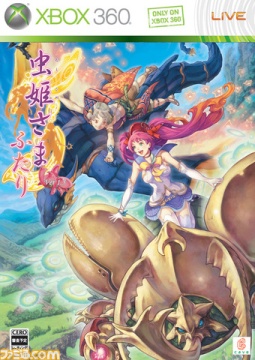
If you order from Play Asia, Mushihime-sama Futari costs nearly $75! Add in shipping and it's at least $80. That's not inexpensive at all! Cave's reasoning for making this one region free was to gauge overseas interest, although apparently the word on the street is that this one has actually sold less than Death Smiles, which was region locked. I think this might just have to do with interest in the Japanese end - Mushi is a bit older, and doesn't have the goth loli thing going for it. Meanwhile, I'm not too sure there are too many folks on the non-Japanese side who are going to pay $80 for this, outside of the hardcore audience, anyway. Although I do have to wonder - would the audience be necessarily that much wider if they sold it for $20 instead of $80? You'd certainly pick up more curious and impulse buyers, although probably not enough to make up for the lost profit.

Now, the low price of digital downloads has proven a double edged blade for multiple reasons. In this case, you'll find people clamoring that every 2D game should automatically be a cheap downloadable title, which grows annoying and completely devalues it. On the other side, it does pressure the publishers to stick in extra stuff to make a retail purchase more appealing. This is exactly why Mushihime-sama Futari has gotten me hooked, where the previous Cave games never quite gelled.


There's a lot of different ways to play the game, with four modes on the outset - the Ver 1.5 (a rebalanced version of the arcade game) which comes in the Arcade flavor (with the original graphics) and Xbox 360 (with enhanced graphics which look quite good.) There are also two console exclusive modes modes, Novice and Arrange. In each of these four modes, there's three sub-modes with different patterns and scoring systems (the third of which, Ultra, is more of a practical joke than anything), plus two playable characters, each with two types of firing shots. Do some math and there's a lot of permutations you can play through, even if it is ultimately variations on the same game. There's also Ver 1.01, which is apparently closer to the original arcade game but can only be accessed via a downloadable voucher if you got the very first print - I ordered from Play Asia and did not get one, which does not seem to be an uncommon occurrence. There's also Black Label, another mode offered as DLC. I haven't played this, because frankly it's quite bitchy to charge $15 for additional content released a few weeks after publication, when it seems clear it could've been added in - the price is already high enough as it is.

I can't get too excited about the Ver 1.5 modes, honestly - it's a Cave shooter, much as they've always been. What I DO totally dig are the two Arrange modes. I've heard people call Novice mode stupidly easy, and that's really only true in the context of Cave shooters - anyone completely unfamiliar with them will still have some practicing to do. Still, I'm not terribly good at them and I was able to 1 cc it on the first shot, and only died at all on the final boss. On this level, playing for survival is a bit boring. Now, the reason I've never liked playing these games for score in the past is because they were so damned difficult that just surviving was hard enough - and these aspects are closely intertwined, because if you run out of lives, your score drops to zero. Novice mode is easy enough so it's possible to focus on scoring without getting killed every few seconds. (Even with all of the practice I've been getting, I still can't get past stage 3 on the Ver 1.5 modes.) I'm still not sold on the Original Mode in here, but Maniac offers a pretty damn fun scoring system.


The Arrange mode puts you in control of both characters at once, which you can switch between. The secondary character will mirror the movements of your ship, and is surrounded by a circle. If you're rapid firing (the R trigger on the 360 controller), the circle will slow down enemy bullets, allowing you to weave out and escape from them, sorta like the doujin shooter Trouble Witches If you firing a steady shot (the A button), it will reflect all of the bullets away. There's a counter at the bottom of the screen that determines how often you can reflect, so you can't abuse it, but it can be refilled if you don't use it. (Not ENTIRELY sure what refills it - I think it's the yellow gems that explode out from everywhere.) Each character has their own counter though, so you can exhaust one of them, switch to the other, and continue reflecting. It's pretty hectic, especially considering your own shots get even more super powered up - I think at a given instant the screen might be 75% filled with your own bullets. The only problem I have with it is that the reflecting doesn't feel completely implemented - it's more of a defense measure than an offense, although if you do it right you can replenish some (all, maybe?) of the counter gauge, turning it into a delicate balancing act. If the reflected bullets actually damaged enemies instead of running right through them, this would be a mechanic of Treasure level brilliance - as it stands, it's just merely a lot of fun.

I'm not still not sure that the framework is really my ideal - online leaderboards and Achievements are nice, but I'd still like some more tangible rewards for progress. But the Arrange modes go a long way towards making this one a fair bit friendlier to newbies than any of Cave's past console ports, and I'm certainly enjoying it a whole lot more.

On a closing note - I bought the regular edition, and my CD has a black and white label. Is it supposed to be like that? It feels weird how colorful the rest of the packaging is, and then get such a bland looking CD.

Thursday, December 10, 2009

Dear Game, Teach Me How to Play You


Ugh. I should've known better than to write an article criticizing Cave games, because even when I'm not deliberately picking fights, their fanbase is more than a little bit touchy. To be fair, they've had it rough - for a long time their console ports were either slow to come, nonexistent or buggy, most gamers have marginalized them, and even the better entries tend to get hand waves from the reviewers. (Ikaruga is about the only exception I've seen in recent shooter-dom and that's not even a Cave game. There are reasons for this, but I'm not in the mood to spread more filth and lies and get into more pointless arguments wherein people stick their fingers in their ears and yell really loudly. There's only so many times where you can reiterate and reclarify the same points before it's just time to give up.)

What the Cave Dilemma does bring up, though, is how games should teach you how to play. I will fully admit I am bad at Cave shooters, although not necessarily shooters in general. They're pretty difficult, and I'd venture that anyone who says otherwise is...well, for the lack of any better word, wrong. They're certainly not impossible, but they do present what is, at first, an overwhelming challenge. When I complain that the barrier of entry is too high to attempt a 1cc, what I mean is, there needs to be a way to create minor, meaningful goals - smaller hurdles, if you will - that will hopefully lead you to become better at it.


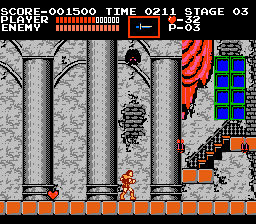
I've brought up Gradius and R-Type before, but let's veer away from shooters for a bit and talk about something different - classic Castlevania. There are six levels in the game, each divided into three sections, and each section is filled with a variety of enemies. Your character can only take between four and eight hits, and has four lives total - these are your margins of error. If you screw up, you lose some health. Screw up enough and you're back at the beginning of the section, losing one life. Run out of lives, and you have to start the stage over. As you get farther in the game, the levels get harder and your margin of error goes down, because enemies inflict more damage.

It's very simple the way it's set up - each enemy is an obstacle, a goal to be overcome. If you fail too many times, you have to repeat it until you do it right. Do it enough times, and hopefully you've picked up some skills to be used in the broad sense - not only for killing that one awkwardly placed bat, but every awkwardly placed bat. It's forgiving in that you get as many chances as it takes to get it right, but tough enough that you still get some enjoyment for increasing your skills. Your reward for your skill and persistence is the next level, and then the next, until you've beaten the game.

Now, ideally the amount of time you spend replaying a section shouldn't be too long. Everyone has their own specific tolerance, but I say if you make someone replay any more than five minutes, then that's probably too much. If kept under control, then you keep the player from becoming too frustrated. You need to have an acceptable margin of error too - gamers aren't robots, and to expect to make precise movements without making some mistakes is too harsh...at least until they've become an expert, anyway.

Modern game design has pretty much followed this template. They've taken out the lives and continues, because memory cards and save games made them meaningless. But they still work in the same framework - nice and bite size chunks.

The problem with the insta-respawn mechanic that I'm criticizing is that there's no immediate feedback, no way to learn from your mistakes until you've started the whole game over. You die, and the game just keeps going. The primary goal - a 1cc - is set way up in the sky, to essentially play a perfect game. The only other goals are the ones you set yourself, but for those of us that are used to having our goals set for us, it's too abstract, too spongy. It's a very fundamental aspect of psychology, these small rewards, and they're gone.

Furthermore, by opening the gates to unlimited continues, you've essentially opened up the entire game. With that incentive gone, what's the value of getting better beyond self improvement? People with a spirit of competition, surely, but not everyone has that, nor cares. (PAY ATTENTION HATERS: THIS IS THE PRIMARY DIFFERENCE BETWEEN YOU AND I.)

Furthermore, let's look at some numbers. A single Cave game lasts about 20 minutes, during which you have a total of three lives, on default. That's an EXTREMELY low margin of error - to demand that kind of perfection is ridiculously stressful to a newcomer. It's particularly nasty in Cave games, considering it expects you to dodge bullets within mere pixels of your character. It's heavy, and it's easy to dismiss the game as being way outside your skill range - especially when, again, the rewards aren't nearly as meaningful as other games.

I'm not saying implementing checkpoints in Cave games is necessarily a good idea - it probably isn't. You really need to design your levels specifically for that type of mechanic, otherwise it doesn't really work, especially for arcade games. The worst example was the Xbox port of Metal Slug 3. Aware that many gamers complain of infinite continues and being able to blaze right through it, they restarted you back at the beginning of the stage when you ran out of lives. But the final stage was ridiculously long, and quite tough - repeating that long from scratch every time you ran out of lives was remarkably tedious. That's why I think it would be better to leave the core game alone and design a stronger framework to add some stronger incentives, set some more tangible goals, and make getting better at the game more rewarding than getting better for the sake of it.

Shooter fans, this will not hurt your beloved genre! Please stop acting like it's a heresy to criticize its design! You guys spend so much time screaming at reviewers and people who "just don't get it" without realizing what a strawman it is. As much as you may want to think otherwise, people are not idiots. They approach - and dismiss - things for very specific, very real reasons, and they're not ignorant to do so. The truly fantastic video games are the ones that are playable in newcomers and provide longtime play value for the hardcore. If it's done right, you might even find some novices making the transition. That's the sort of thing that can really only be beneficial for everyone, as much certain folks hate their ivory towers being so crowded.

Wednesday, December 9, 2009

Purgatory Kabuki – can’t give it away!


Quite a while ago Treasure artist Yasushi Suzuki created a manga called Purgatory Kabuki – rather than being the perfect cross-over between videogames and manga that people dream about, it was awful. So awful, I couldn’t even give it away. For free!

(This blog entry comes with bonus IT Crowd script)

Author: Yasushi Suzuki
ISBN 13: 978-1-59796-070-0
Date Published: 12/27/2007
Format: paperback / B&W
Number of pages: 144
Rating: 13+
Price: $9.95
.
.
.


I recently moved house, and with that I sold off, gave away and threw out most of my surplus clutter – so all the manga I didn’t intend to read again, all the anime I disliked, and the majority of my Dreamcast CD-Rs (man, did I really burn a copy of Memories Off?). Most things sold except for Purgatory Kabuki. I then offered it to a games journalist friend who loves Treasure games and had happily accepted a poster for Gunstar Heroes – signed by the Treasure team – which I’d given him previously (which I’d actually had to rescue from the dustbin of my ex-boss, who’d received the signed posters for use as competition prizes and then simply chucked them out). But even he didn’t want Purgatory Kabuki.

The sad thing is, it is one of the worst manga/graphic novels/comics I have ever read.

Since late 2006 I’d been following its production in Halverson’s PLAY magazine (which, I should add, I think is now on the verge of bankruptcy, seeing as myself and several other European subscribers haven’t received the last 3 issues, plus a whole bunch of other things I’m not at liberty to divulge – but trust me, I’ve seen several publisher bankruptcies in my life, I know the signs. You read it here first!).


Anyway, Purgatory Kabuki was released in America and then proved stupidly difficult to get in the UK due to delayed release dates and suppliers running out. No one seemed to have heard of it anywhere, with only PLAY in America championing it. Not even NEO Magazine covered it, despite the Treasure/videogame/manga crossover connection. Not even my local ‘comic book guy’ had heard of it. This highlights an endemic failure in the media to publicise things, much like Agarest. Even if it is awful, it sets a historical precedent.

So anyway, eventually Waterstones orders it from a different supplier and I pay my £6.99 and wait for it to arrive.

So I get a call one day and go in the following morning. Well, the woman who actually handed it to me was one of the most attractive, intelligent sounding, bubbly, nubile strawberry-blondes I’ve ever seen in my life. All wise smiles and bosom. Geeky guy getting served by a young maiden, buying a manga graphic novel... Sorry, comic book. And suddenly I feel like I'm in the episode of the IT crowd.

I can just imagine myself as Moss...


Moss: You’ll never guess what Roy!


Roy: Oh, hello der Moss. What is it?


Moss: I was speaking to such a lovely young woman this morning!


Roy: Oh really?


Moss: Yes! We spoke about this, and we spoke about that, and she asked how things were, and she was smiling the whole time I made light conversation, Roy!


Roy: Oh, so did you ask her out then?


Moss: No Roy, I was buying the first print volume of the new Purgatory Kabuki graphic novel, by Treasure artist Yasushi Suzuki, who worked on hardcore titles like Ikaruga. Man, those were some great games, weren't they Roy?


Roy: Yes, dey were. I really liked Sin & Punishment which I bought on import, I bet she didn't even know that, huh Moss?


Moss: No Roy, she certainly did not know about Sin & Punishment, or who Yasushi Suzuki is, or Treasure.


Roy: So, did she continue speaking to you after you'd bought the comic?


Moss: It's a graphic novel book, Roy. And no, I quickly left the establishment and then ran off. But I think we had a real connection there.

***


Anyway, I finally had Volume 1.

And, like I said, it was shit.

I'm not a massive manga fan, since apart from Welcome to the NHK and Genshiken I can’t actually find anything that’s to my taste. Well, maybe Nausicaa, but I digress. I bought Purgatory Kabuki solely because of the videogame crossover and the fact that it’s by the main artist from Treasure. It HAD to be good, plus PLAY raved about it.

Unfortunately, it might be the worst manga EVER made.

There were only two colour pages at the start, despite the quality of monochrome shading making it look as if the whole comic was created in colour then converted to black and white – meaning you lose a lot of detail.

Worse still, it comes across as a piece of work created by someone who has no understanding of the comic medium, or even literature in general. Large panels are used almost exclusively for posing shots, while kinetic fights are displayed in tiny postage stamp squares, making it impossible to work out what’s going on. Worse still, there are several instances of panels taking up both pages, with the key details (as in main characters), being lost in the book’s gutter – this is a schoolboy error. Plus you’re left with panels displaying only empty scenery.

There’s also very little text. Which is no bad thing, I once read a fantastic graphic novel which had nearly no text whatsoever (it was about a lone wanderer venturing into a city of rats to find his lost wife, in some post-apocalyptic future – titled “The City”, it was by James Herbert). But in Purgatory Kabuki this lack of text makes things even more confusing, because the story is an incoherent, poorly written mess; a veritable rotting whale on the beach of narratives.


The story, of what I can understand, is absolute nonsense. Some guy with no name kills demons and takes their swords, until he kills a headless demon, and a child demon comes out of its belly, cuts his arm off, and then makes a deal with the nameless guy. Kill a thousand demons and take their swords, and I'll give you a new body with a working army. He accepts and is suddenly given a name. It's tough working out the rest, since it's like trying to read text fragments through a bowl of shredded wheat.

I didn’t look into buying subsequent volumes. And while I couldn't give away the first volume, I couldn't bring myself to throw it away either. So I've kept it, on my shelf, as a reminder to in future be more careful about what I buy.

Sad too, since I thought we were on to a winner, and I don’t want to criticise Yasushi Suzuki. His artwork is fantastic. The man is an extremely gifted artist, with a diverse range of styles, able to work in various mediums, and his artwork deserves nothing but praise. His other book, The Art of Yasushi Suzuki, in contrast is a fantastic coffee table read since it focuses on what he’s good at: art.


Purgatory Kabuki stands as an example where being skilled in one thing doesn’t necessarily mean you’ll be good in related fields.

Insert Credit had a fascinating interview with him, as did the publisher, DRMBooks. Apparently Suzuki-san wanted to make a game based on Purgatory Kabuki.

On a related note, someone else also raised the question pertaining to another videogame artist who attempted to branch out into manga: Anyone know what's become of Junya Inoue’s (Joker Jun, Cave’s artist) manga? It was supposedly translated into English.


After getting burned on Purgatory Kabuki I’m hesitant to investigate further. Taken from Amazon:
Otogi Matsuri 1: Dark Offering

A demon thirsty for human blood, a young girl who can see supernatural beings and a boy who inadvertently promises his future to the god of the south—all combine to give Otogi Matsuri the speed and power of a runaway bullet train. From the first appearance of the bone-crunching "cat-spider" monster, Inoue gives notice that this adventure story is deadly serious. Its teenage heroes are enmeshed in a realm that has it in for any puny humans who get in the way of its gods and demons. Luckily for plucky high school boy protagonist Yousuke Suruga, he's been unwittingly armed with the bow of Suzaku, a weapon with phoenix-like powers. Together with Ryuuichi Ezo, who's similarly armed with the spear of Seiryuu, and Yomogi Inaga, armed with otherworldly vision, he's able to take on the cat-spider and, later, a horde of monstrous dragonflies controlled by a gigantic eyeball—leading to some amusing absurdist dialogue such as "I saw a big eyeball going down the street!" Eventually, the demons are defeated and order is restored, but tantalizing loose ends have been left dangling for the next instalment, making for a good, juicy adventure with evocative graphics and great promise for part two.

Tuesday, December 1, 2009

The Trouble With Cave


I woke up this morning to find out that Play Asia had shipped my copy of Mushihime-sama Futari, which, combined with cheapass shipping and holiday mail service, means it might make it here by Christmas. But that's okay - if I were in a rush I would've ordered it from NCS, which has the benefit of being located approximately an hour away from me, instead of halfway across the globe. In the meantime, I've been pondering my love/hate relationship towards Cave shooters in general.

I love them because, aesthetically, they're brilliant. The gorgeous, sparkling sprite work, the consistently excellent music, the hypnotic bullets - it's such a wonder to see in action that it makes me completely unable to enjoy any similar game by other companies (Psikyo in the late 90s, probably its equivalent would be Milestone, today).

I hate them because of their attitude. Unless you're the type of gamer who plays games either for score, or to single credit them, then they all become fairly disposable experiences that last for maybe 20 minutes before you've seen everything they have to offer. Any time anyone makes a comment criticizing this, shooter fans go all apeshit about how they "don't get it", but really, it's quite a valid issue. You couldn't make a Gears of War that lasted twenty minutes but asked that the gamer kindly not continue every time they died, and charge $60 for it - you'd get laughed off the street. (That actually does sound like kind of a neat extra mode, at least.) But this has somehow become the standard. Now, I have no problem with difficult games, but there needs to be some kind of middle ground - demanding an all or nothing relationship with the gamer is just too arrogant for me to become involved with.


The issue stems from Cave games all originating in the arcade. When you're staring down at a vertically oriented monitor, inches from your face, surrounded by the thick haze and odor of smoke (a mainstay of Japanese arcades), and every death is essentially money out of your pocket, plus the thrill that maybe someone behind you is checking our your shumpping skills - it's something that just can't be replicated on the consoles, when no one's around and continuing is as easy as hitting the Start button. What motivation is there to play it "properly"?

Most publishers realized this a long time ago and started adding additional content to their home ports, particularly fighting games. Treasure games have done it right, by essentially making the Saturn mode of Radiant Silvergun a shooter/RPG hybrid, and limiting continues in Ikaruga until you've spent enough time with it. Even Mars Matrix added a store which added significant longevity. Two of these three games also gave a reason to aim for high score beyond just pride - quicker advancement in Radiant Silvergun, and extra money for the shop in Mars Matrix. These are all great ideas! It prevents an arcade-style game from seeming disposal, and puts some kind of worth into paying attention to scoring mechanics, which are usually explained quite poorly, if at all, making them seem shallower than they really are. Stuff like this will always, always hurt the game in question.


To their credit, most of Cave's home ports have had some kind Arrange mode, but these are often more difficult than the standard mode - they're not making it more accessible, and it's more like preaching to the choir. They do this because they have a large enough audience to sustain these kind of tactics. This is also the same audience that will routinely plunk down quadruple digits worth of moola to buy PCBs for play on their Superguns, and tend to write 10,000 word philosophical ponderances on the purity of scanlines.

Well...that's OK, I guess, if it makes Cave money, but they've also alienated a good portion of the rest of the shooter fan base - the kind of guys that grew up more on Gradius, Parodius and R-Type, all games that were also born in the arcade, but were also perfectly suitable for home play. Realizing the potential for diminishing returns, Cave took the easy route by pandering to the otaku audience, which is how you get shooters based off of gothic lolitas and fat chicks. This in also the kind of stuff that only flies in Japan, making nearly impossible to export. You can try to sell Raiden in the US without much hassle, but it's way more trouble trying passing off the fetishy boobage of, say, Pink Sweets. (It's not impossible, at least - it's no worse than Ar Tonelico, but outside of the aesthetic, they're completely different audiences.)


Still, I think the shrinkage of the console gaming audience in Japan has forced Cave to look West, which is why Mushihime-sama Futari is region free, even if it may not see domestic release. And they're at least trying a lot more than they used to, wherein in the past they've just contracted their games out to other developers with varying results. The Xbox Live Leaderboards go a way towards contextualizing high scores, making that aspect a bit more attractive, as do Achievements. From what I'm hearing, there are also more interesting modes to check out, which should also help expand its appeal. I'm hoping that's the case, at least. I haven't minded the rather bloated costs of the console Cave games in the past, because they've all appreciated in value. I have no idea how much the PS2 Ibara costs now, but it's way more than retail. At least, maybe it'll give the game some more lasting appeal before it gets shelved like all of the others.


Friday, August 14, 2009

Doujin CD Review - Cave Love


01 far east blowin' - Dodonpachi Daioujou - East Asia (Stage 1)
02 母を訪ねてBomber!Bomber! - Pink Sweets ~ Ibara Sorekara - Verde di circostanza (Stage 2)
03 土曜の夜はミスター・サイボーグ兵士 - Dangun Feveron - Hello Mr. Cyborg Soldiers - Stage 2)
04 むしむしうにゃーの大冒険 - Mushihime-sama - Shinju Heading into the Forest (Stage 1) / Levy Sense (Boss)
05 空ノ帝 - ESP Galuda - Huge Battleship Elinies (Stage 3)
06 サイドストームあらし - Storm of Progear - Boss
07 Show Time under Leaden Skies - Ibara - Show Time (Stage 1)
08 デスレーベル95-97-02 - Donpachi / Dodonpachi / Dodonpachi Daioujou (Boss)
09 夜叉桜 - Guwange (Stage 1 / Select)
10 大型連結戦車物語 ~嘘だと言ってよ、イーニィ - Suburb - Armored Green (Stage 2)
11 DDP-198x Powered by"2203" - Dodonpachi (Stage 1 & 4)
12 ウェッハといっしょ - ESP Galuda II - Aerial - Sadness Bathes in Dust (Stage 4)
13 ESP RAGING [myu314 remix] - ESP Rade - Raging Decide (Boss) / Snow Illusion (Ending)
14 Just a couple of more... - Dodonpachi (Stage 1 & 4) / Dodonpachi Daioujou - East Asia (Stage 1)

Video Game Music Database entry

Circle: Cool & Create

Even if you aren’t a fan of Cave’s ridiculously overwhelming style of shooter madness, you have to admit their soundtracks are almost consistently excellent. (We’ll forgive Muchi Muchi Pork and that blasted theme song of theirs.) Cave Love features songs from their catalog, ranging far as back as Donpachi (1995) up to Pink Sweets (2006). The style mostly focuses on fast paced dance-style arrangements, although there are a few exceptions, and a handful of vocal tracks.

The opening track is a drastic rearrangement of the first level theme from Dodonpachi Daioujou. I always thought the music style of that game was pretty weird – it felt way too laid back, especially compared to the rocking guitars of its immediate predecessor Dodopachi. Here, it plays around with the main melody quite a bit, even adding some vocals about a minute in. It’s pretty drastic, but a decent song. The second track takes one of the tracks from the already ridiculously upbeat Pink Sweets soundtrack and makes it even more hyper, along with some vocal samples (“BOMBAA!) that are remarkably catchy. The fifth track is one of the stage themes from ESPGaluda, although I think I prefer the techno-rave sound of the OST version a bit more. There's also a medley of boss themes from the Donpachi games, which is honestly a bit too sugar-infused for my taste.

The fourth track takes the first level theme of Mushime-sama, slows down the intro and adds a peaceful vocal theme, before speeding up the pace a bit - apparently this is a remix of the boss theme, though I can't really pick it out. Like the first track, it’s a pretty big departure but it’s still excellent. The final track is a surprisingly haunting medley of the first stage themes from Dodonpachi and Dodonpachi Daioujou - the fiddles and flutes make it sound like something Mitsuda would do, which is obviously a huge step from the original rocking original - and while the melodies are only barely noticeable, it's still a great song and a fantastic way to close out the CD.

One of the most interesting remixes is “Show Time Under Leaden Skies”, the first level theme of Ibara, here done in the synth and style of Battle Garegga, its spiritual predecessor. “DDP-198x Powered by 2203” is the first level theme from Dodonpachi, here done with a computer FM synth I can’t quite place – maybe it’s X68000? About a minute in, a live guitar breaks in and the theme just gets all kind of awesome, expanding on what was already an excellent song. I love it when more recent tracks are played with older sound hardware, and both of these totally rock in that regard.

Not all of the tracks are great. The boss theme from Progear is nice and tense, but it’s certainly not enough to fully support a four minute arrangement and it grows tiresome here after the halfway mark, even with the added dance beats. The naff male vocals in the Guwange song kinda ruin what could've been, though.

Overall, it’s a pretty decent collection, and at 14 tracks, is fairly long for a doujin CD, making a good value.

For all reviews going forward, I'm going to upload MP3 sets with a handful of tracks from the CD, as well as their OST versions for comparison.

Samples for Cave Love:

Megaupload
Fileplanet

Additionally, here are samples for Happy Trigger from last week, as well as a truncated medley on Youtube:

Youtube
Megaupload
Fileplanet