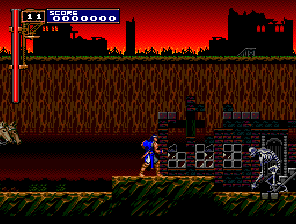
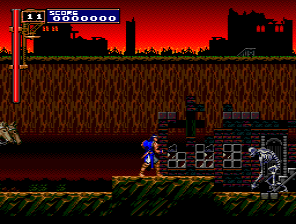
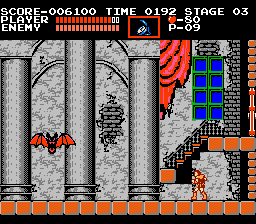
Showing posts with label castlevania. Show all posts

Wednesday, June 5, 2013

The Nintendo Power Retrospectives - Part 15


This week we come to the conclusion of the Best of the Rest for 1988-1989, with the last 10 titles on the list.

Opening Music: 'Super Buck II' by Estradasphere - http://ocremix.org/remix/OCR00577/
Closing Music: 'Of Whips and Strings' by Super Guitar Bros. - http://ocremix.org/remix/OCR02480/

Wednesday, April 17, 2013

The Nintendo Power Retrospectives - Part 8

This time I'm taking a look at Nintendo Power #2, with the magazine's most controversial cover, and a few of the NES's controversial titles.


Thursday, March 29, 2012

Explaining Resolution and Aspect Ratio - The Intro of Castlevania Symphony of the Night

Castlevania: Symphony of the Night has seen three significant variations: the original PlayStation release, the Saturn port, and the PSP port, as part of The Dracula X Chronicles package. Today we'll be looking at the technical issues regarding display and resolution in each of these three versions. (We've talked about this before, so this is just a further elaboration on the subject, namely how it can go wrong when it comes to ports.)

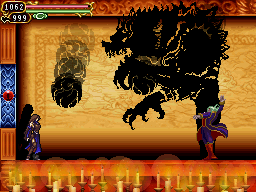
First off, here are screenshots of all three, in the intro dialogue between Richter and Dracula, taken straight from emulators in the first two cases, and directly from the PSP in the last one.


PlayStation


Saturn


PlayStation Portable


The most significant thing to notice right off the bat is how much skinnier the PlayStation version is. (You can also see how the dialogue window is dithered in the Saturn version, rather than truly transparent, one of the many ways you can see how shoddily that port was programmed, but that's neither here nor there in this discussion.) It's skinnier because it runs in the PlayStation's low resolution mode. The PlayStation can output several resolutions - right here it's 256x240 (though it doesn't take up the whole display so it's more like 256x208), but it can run in 320x240, 512x240, and even 640x240. Some 3D games use the higher resolutions, and sometimes games even switch between resolutions, like title screens for example. Even Symphony of the Night runs its "prologue text" screen at a higher resolution. The idea is that since you can fit more pixels on the screen, the overall image has more detail.


Anyway, 256x240 is the lowest the system will allow. This is similar to the NES, SNES and PC Engine, which run at 256x240 or 256x224. However, standard definition televisions run at a 4:3 ratio, which means those dimensions don't quite match. 320x240 is proper 4:3, but SDTVs can scale the image appropriately to the proper proportion by adjusting the shape of the pixels, making them slightly oblong. That's why everything looks slightly skinnier in this screenshot than they would on a television - they're supposed to be about 20% wider.

Things get dicey when we get to the Saturn version:


The problem here is that the Saturn doesn't support 256x240 - the lowest resolution it allows is 320x240. So how do you fit a 256x240 image in a 320x240 resolution? Keep in mind that pixels, when rendered internally, are square - you cannot simply make them oblong like the TV does. Your options are (A) pillarbox the screen so it's black on both side edges, (B) reprogram the game to take advantage of the extra space, or (C) stretch the image to make it fit the whole horizontal screen. The Saturn versions opts to stretch the image, since pillarboxing would seem cheap, and as you can see, it looks terrible. (Though you can see where some extra pixels are displayed at the bottom of the image, so it does seem like there was some small attempt at expanding the viewing area.) You can easily pick out the pixel distortion pretty much everywhere, since some vertical lines are doubled, and others aren't. Granted, it doesn't look QUITE this bad on a television since the fuzzy display blurs things a bit, but it's still visibly worse than the PlayStation release.

Now, the PlayStation Portable version on Dracula X Chronicles:


There are two display sizes in the PSP version. We're going with the smaller one, since that one is closest to the original resolution. Due to the portable screen, the PSP can only run in one resolution: 480x272. By this point, most developers were confident that gamers knew the difference between standard 4:3 and widescreen, and would accept that games originally designed for a standard def TV would look awful fully stretched to the PSP resolution. (Didn't stop them from screwing up Valkyrie Profile or Final Fantasy Tactics, but that's a different issue.) So, pillar/letterboxing is generally seen as acceptable. However, it still doesn't run in 256x240 like the PlayStation version - instead, it's stretched to the same 320x240 resolution as the Saturn version. The difference is that the picture is filtered, something the Saturn couldn't do and counted on the TV to take care. This technique blurs the whole screen slightly but obscures the pixel distortion seen in the Saturn version. This was probably done to keep the proper ratio as you'd see on the TV, at the expense of image quality. (As illustrated in this post from two years ago, the PC Engine Dracula X emulation runs at 296x224, which doesn't keep the 4:3 ratio nor does it use the original 256x224 resolution it originally ran at, so neither is really correct, and looks blurry to boot.)

The only thing I haven't tried is the PlayStation version of Symphony of the Night running on the PSP. How does it display its pixels? Is it in the proper resolution or is it stretched like the Chronicles port? Again, all pixels are square on the PSP screen - they can't be made oblong.

Anyway, why didn't Symphony of the Night run in 320x240 originally? Technical issue, perhaps? It certainly would've avoided this issues down the road, but clearly they didn't plan for that.

On a related note, this article on the Doom Wikia explains a bit more about the ratio that Doom was developed for, and what we see rendered in screenshots now.

Tuesday, March 20, 2012

Random Bit of Castlevania Lore - The Staircase Glitch in Dracula's Chambers


In Akumajou Dracula X: Rondo for Blood for the PC Engine, there's a hidden staircase right before you fight the final boss. Once you walk up the steps to Dracula's chamber, you just have to jump around, hold up, and eventually you'll latch onto the invisible steps, carrying you to a secret room filled with cash. I've known about this for years and years, but what I didn't know was that this is actually a reference to a glitch from the Famicom Disk System version of Akumajou Dracula, the first Castlevania game.


I'm a little unclear on how to trigger it - this site gives some details, and this Youtube video shows it in action. It seems like you have to walk up and down until you "catch" the stairs a few pixels off, then walk upwards, past the actual steps, and continue on into oblivion. Obviously, there's nothing actually up in the sky other than glitched tiles and your eventual death, but with its allusion in Dracula X remarkably self conscious, and another bit of random depth in a game already overflowing with love and detail. Take note that this only works in the Famicom Disk System version, as well as all of the versions based off it, which include the GBA Mini cart and the Japanese VC release. The American and European carts, as well as the Japanese Famicom cart re-release, fixed this bug.


Symphony of the Night features the staircase in the same area, though its implementation is different. Here, you have to hit the upper wall to reveal a switch, which will in turn unfurl a visible staircase. Different items appear depending on if you're playing as Richter (in the prologue) or as Alucard later on.

Thursday, November 4, 2010

Ten Best Game Soundtracks of 2010 (So Far)

Is it too early to talk about "Best of 20XX" stuff yet? Probably. But we're going to discuss the best soundtracks anyway, under the assumption that there's not going to be much better. The rest of the 2010 release seems to include mostly Western games, who are largely focused on bombastic Hollywood-style film soundtracks than legitimate game music, and I don't think there's too many big Japanese releases left. If something comes out and surprises is - it definitely could! - we'll append it down the road. So, without further ado, here are the Ten Best Game Soundtracks of 2010 (So Far):

VVVVVV (Featured song: Potential for Anything)


There are only maybe half a dozen proper songs in this soundtrack - fitting, since the game is only about two hours - but each of these tracks is pure SID-inspired chiptune bliss. You can grab MP3s of it the composer's website for a few bucks - unquestionably worth it.

Scott Pilgrim vs the World: The Game (Featured song: Another Winter)


Anamanaguchi was band I had only half paid attention to, because while their unique of guitar and NES chiptunes were kinda cool, their songs always felt long and meandering. When concentrated into the context of a 1-2 minute video game song, though, their talent for composition really shows through, resulting in a retro soundtrack that still has a distinctly modern edge.

Castlevania Harmony of Despair (Featured song: Invitation of the Crazed Moon)


My own big complaint about remixed music in Castlevania games is that they always drew from the 8 and 16-bit games, ignoring practically everything from Symphony of the Night and afterward. Harmony of Despair changes that, and features numerous songs from the portable Metroidvanias, all rearranged. They're all fantastic too, many being done by the same folks who redid the songs for Judgment. The DLC pack adds even more, and the handful of new tracks - including one of my favorites, Invitation of the Crazed Moon from Portrait of Ruin - are outstanding too.

NIER (Featured song: The Lost Forest)


This game kind of came out of nowhere to be really damn cool, and part of that appeal lied on its music, which took the took a tired musical trope - foreign-sounding chanting - and gave it new life. The dramatic strings and percussion pieces are even more outstanding, breezy and melodic, constrasting to the comparatively dull orchestrations that permeate stuff like Castlevania Lords of Shadows and God of War.

Ys The Oath in Felghana (Featured song: A Searing Struggle)


Is it fair to include this game? This was released in the US in 2010, but released in 2009 in Japan, which in turn was based on a 2005 release (again) in Japan only, which was a remake of Ys III, a game from fifteen years earlier. So, the music in The Oath of Felghana is hardly "new". But that's okay, because Ys III had one of the best soundtracks in existence, and remixes in The Oath of Felghana only improves them with live instrumentation. Props to the PSP version for including alternate versions from the old computer releases.

Ys Seven (Featured song: Mother Earth Altago)


The music in Ys Seven isn't QUITE as good as Felghana, but it's also the best original soundtrack in the series since Ys IV. Parts of it sounds remarkably like an upgraded PC Engine redbook track, which has always been part of the Ys appeal (at least, to the English speaking audience.)

Dodonpachi Daifukkatsu Black Label (Featured song: Vertex)


The soundtrack to DDP Daifukkatsu was kinda lousy, but the Black Label version doesn't rearrange it, it created a whole new soundtrack from scratch. It's much better, with some damn catchy electronica, and while it's not quite as trance-y as Espgaluda, it further establishes the parallel that Cave-brand danmaku shooters are the video game equivalent of an ecstasy fueled rave.

Dark Void (Featured song: Main Theme)


Usually we rag on Western game soundtracks for totally missing what we love about video game music. But we'll overlook that when it comes to Bear McCreary, the incredibly talented composer behind the reimagined Battlestar Galatica and its (now cancelled) spin-off Caprica. As a result, the soundtrack to this under-appreciated action game sounds much like his other work - which is to say, filled with fantastic orchestrations and lots of percussion. Bonus points for the Dark Void Zero soundtrack, which takes these turns and turns them into Mega Man-style NES music.

Final Fantasy XIII (Featured song: Blinded By Light)


On the Final Fantasy/Dragon Quest divide, I am usually staunchly on the side of Final Fantasy. FFXIII screwed up so much though, from the storytelling to the dialogue to the character development to the level design that it really did come up short. The only two areas where it excelled was its utterly fantastic battle system and its magnificent soundtrack. Styistcally Masashi Hamauzu is quite a bit different from series mainstray composer Nobuo Uematsu, as well as FFXII composer Hitoshi Sakimoto, but the man can use the violin like no other game musician out there.

Etrian Odyssey III (Featured song: Unrest - The End of the Raging Waves)


Even if you don't like grindy masochistic first person dungeon crawlers, everyone should appreciate these games for continuing to employ Yuzo Koshiro, one of the few prominent musicians from the 80s music scene that's still got it. This PC88 FM inspired sountrack is the best of the series, offering a wider variety of dungeon themes that alter between serene and foreboding, and numerous outstanding battle themes. The arranged album also borrows some instrumentation styles from Falcom, also making it essential for Ys fans.

Runners-up

Death Smiles (Featured song: Burning Halloween Town)


Not one of Cave's better soundtracks (better than Daifakkutsu though), at least the first level theme is pretty excellent, as are the boss and level select themes.

Super Mario Galaxy 2 (Featured song: Throwback Galaxy)


Catchy and eminently likable, with a handful of arranged songs from previous Mario and Yoshi games. Not enough of it really stands out to make the Top 10 though.

No More Heroes Desperate Struggle (Featured song: Philistine)


The "A Goddamned Philistine Since 2004" header on the main HG101 page is a reference to Margaret's song, a darkly silly little bit sung by the boss in question about how our hero, Travis Touchdown, is a goddamned pussy. Like the first game, the music selection is eclectic and ultimately not as consistently strong, some of the boss tracks are still outstanding.

Thursday, September 16, 2010

Compelling World Design: VVVVVV


How the hell did I get this far into 2010 and not have known anything about VVVVVV? Maybe that obtuse title caused my eyes to glaze over it whenever I saw any forum topics, but its appearance on Steam for a mere $5 convinced me to give it a go, and I'm in love with it. If you're like me and didn't know what it was...well, it takes the gravity flipping mechanic from Irem's NES game Metal Storm and turns it into the focus point, essentially making it a puzzle platformer. It's also huge on exploration, to the point where it's sort of a Metroidvania...but not really. There's a central hub where you need to find the other five levels, which can be conquered in any order, but there are no skills or upgrades or anything hidden like that to find. You merely explore.

I find it fascinating how I'm entranced by something so simple. Both Metroid's and Castlevania's exploration is heavily loot driven, in that the reward for heading down a dead-end would be a missile upgrade or a new sword or something. That aspect is mostly removed -- there are still "trinkets", literally named as such, which functionally don't have much purposes other than unlocking stuff, but provide some extra compulsion to take on additional challenges.

But even without those, there's still the the joy of exploration itself. Central to this fun is the gravity-flipping, of course -- he big difference between the hub world and the sub-levels is that the hub world is relatively free of danger, allowing you to reverse your direction and take off into the sky with abandon, and the only thing you might potentially lose is a few seconds. Death comes often, especially in the sub-levels, but the constant checkpoints help keep up the pace.

Indeed, the pacing is central to the experience, because not only is your movement quite expedient, the game world is both small and open enough so traveling never becomes tedious. If you were to run unimpeded from one side of the world to the other, it would take...maybe thirty seconds? Definitely less than a minute, plus the map wraps both vertically and horizonally. Plus there are transporters everywhere, in case you need to reach a far off spot. And yet in spite of how easy it is to travel, there's still lots of hidden niches that can be found through multiple passes. It doesn't hurt that the exploration theme music is one of the standouts of an already excellent soundtrack.

The other major motivation for exploration in Metroidvanias is the promise that you'd come across something cool or unique. The word of VVVVVV is pretty plain, but there are a lot of non-sequiturs throughout. Maybe they're in-jokes?


I like the bullhorn screaming "LIES" in big red letters. They're damaging projectiles, of course.


Crazier still is the elephant. Keep in mind that it's blinking, too, which accounts for the weird coloring when pasting these images together. I also spent too long in this room and apparently it turns your guy sad? I wonder why.

My favorite moment occurs when you walk from this room:


to this:


It's hard to see, but this entrance in the hub world leads to a small portion of one of the sub-levels. It's only a tiny room, so you can't actually do much, but you can see parts of it. You can tell you've entered foreign territory because the color scheme on the map indicates as such, and it looks a bit different from the normal hub world area. It's not a secret, per say, because it's out in the open, but it does give the player that they've stumbled upon something they shouldn't have. That's always one of the most gratifying of Metroidvanias -- seeing something you can't immediately access, and the excitement that comes when you to revisit it. It's even better when they tease you with something cool.

Apart from the minor glee that comes with slowly filling out an automap, another one of my favorite things is how video games use their mechanics to communicate in unique ways. My other favorite screen is this one:


All of those little "C" markposts are checkpoints, where you respawn when you die. Obviously putting all of these next to each other is functionally useless, but it sends a subconscious message to the player - something SO CRAZY is coming up that you'd better well be prepared. It's true, too, because the next set of screens is the "Veni, Vidi, Vici" section, which is sort of like those sections in Mega Man where you drop down a narrow series of shafts and have to avoid the spikes on the walls...except done over six screens or so, twice, once upside down and once right side up. The only disappointment in the way VVVVVV handles it is that the name of the room is "The Warning", which makes the message far too blatant when the design itself was beautifully subtle.

There's a certain nostalgia center in my brain that's directly stimulated by the Atari 400 games from when I was 3, 4 years old. I'm having a tough time defining exactly what that entails, but it's rare that modern game rubs that sweet spot. Bangai-O (both of them), probably, because they feature tiny characters running in huge stages (especially the DS game, with its level designer). VVVVVV does too, which is part of why I love it. Part of it is definitely the pseudo-Commodore 64 aesthetics, which is close enough to my own personal history, but all of the above aspects trigger that sense of wonder and discovery that I can't help but be related. It shouldn't bear repeating that it's easily worth the $5.

Friday, July 9, 2010

GamesTM and the State of Castlevania


A couple of months back I was interviewed by the folks at British mag GamesTM about the Castlevania series. The issue has finally made its way overseas to the US, and it should be available at most Barnes and Noble stores, so check it out!

I haven't actively kept up with the Castlevania Dungeon since starting Hardcore Gaming 101. It's not that I've had a falling out with the series. Oh no. It's mostly because writing about a variety of games is way more interesting than obsessively capturing sprites, cataloging them in tables, writing captions and doing all of the tedious gruntwork. I do admit my enthusiasm starting to wane a bit around the time that Dawn of Sorrow came out, though. I remember getting into an Internet fight with someone on the Dungeon forums who accused me of being lazy when doing descriptions for the same redundant castle areas over and over. My defense was "If Konami's not going to try anymore, then why should I?" How can you say anything more about the same Clock Tower you've been going through the past four games?

Still, though, saunter into any random NeoGAF thread on Castlevania and it's mostly complaining about how the series has gone downhill. The most recent developments have not been great - that stupid iPhone puzzle game is embarrassing, and while I haven't played the upcoming XBLA multiplayer thing, it looks tragically hacked together. Still, though, I don't exactly hate IGA the way the most vocal fans seem to, but then again, they seem to be looking for different thing in their Castlevania.

The biggest complaint is towards the level designs, and how large and aimless they are, and how the monsters are tremendous pushovers - I believe the hip phrase is "monsters on shelves". It's all true, but that seems like it's missing the point. I feel that criticizing the level design in an IGAvania is like criticizing the level design in a typical hack and slash dungeon crawler. It's not really about platforming challenges but just about the exploration, soaking up the atmosphere, experiencing the ever-crisp controls with its gorgeous 2D sprite animation, finding what cool random loot you can pick up (and the crazy powers they give you) and hopefully listening to some rad music. That's why the atmosphere is so important, and it's actually why I like Portrait of Ruin so much compared to the other DS games, whereas most seem to regard it as a black sheep. It also had new some locations to explore that went outside the Entrance Hallway/Underground Lair/whatever else rut that it'd gotten itself into. Exploring the streets of London or the Egyptian pyramids was quite cool, and it definitely has the best soundtrack of the bunch.


Order of Ecclesia has become the new fan favorite because it actually makes things more difficult, and cuts down on the backtracking by implementing a map screen. I wasn't a big fan of either of these changes, honestly. They ultimately made the game more difficult by jacking up the hit points of the enemies and forcing you to pay attention to elemental alignments to do any semblance of damage. I don't mind this, but I do mind the boss battles, which, while technically far more well designed than anything since the pre-Symphony days, tend to grow tedious simply because it takes way too long to kill them. I don't mind being a given a small margin of error, where three or four stray hits can completely kill me - the old games worked like this too. But even the most exasperating Dracula battles, like at the end of Castlevania III, were over in a minute or two. In Ecclesia, even when you've properly equipped yourself, you're hitting the same enemy dozens and dozens of times, slowly chipping away at their invisible life meter until it gives in or you die. It's an element of modern game design that you see a whole lot in 3D games - long and drawn out sequences versus short and sweet ones.

I also thought that the game world broke up the atmosphere. A lot of the fun was getting a sense of the world through a map which slowly revealed itself over the course of a few hours. That cohesion was totally missing. In an older Castlevania game, you could say that, for example, the town was located between the forest on one side and the caverns on the other. Here, none of that geography matters - it's just a place you point to on the location selection screen.

Still, Ecclesia is legions beyond anything else Konami has been doing with the series lately. Beyond the stupid spinoffs, I'm not sure how much high hopes I have for the new game. It might be alright, but if it was hard to get excited over Dante's Inferno since it was just a God of War clone, why should we except better from Lords of Shadows? Better music, maybe? Even the extremely regrettable Judgment had an alright soundtrack. It's hard to see what else that's uniquely Castlevania they can bring to the table, other than whip controls and the whole vampire bit.

Thursday, June 10, 2010

Songs of the Moment - Castlevania and Contra Rebirth Bonus Tracks

The highlight of Konami's Rebirth line has been its arrangements of their classic 8 and 16-bit tunes in the style of their arcade games circa the early 90s. A few months ago they released an album that had the full soundtracks for Castlevania and Contra Rebirth, which seemed redundant considering music rips had been circulating around for months. (Buying both games together is also cheaper than buying the CD itself - Japanese CD prices are still absurd.) But they did feature two tracks, dubbed "Another Medley"s, with two bonus songs each.


So technically the Castlevania Rebirth game is based on the first Gameboy game, The Castlevania Adventure. That game was terrible, but at least it had an awesome soundtrack. Sadly, the Rebirth game features absolutely none of the music from it. (It did feature a track from its sequel, Belmont's Revenge, which was quite welcome.) This medley makes up for that venial sin by including Battle of the Holy, the first stage theme from Castlevania Adventure. The second song is Lost Painting, from Symphony of the Night. It is a bit strange to here a song essentially downgraded to FM synth, but it still sounds quite classy. They really should've ditched the fifth billionth remix of Vampire Killer for this Battle of the Holy theme, but I'm not sure where Lost Painting would fit in this arcade-style game - it doesn't even really work as an ending theme.


The theme on the Contra medley is the first level theme from Contra Force, which is strange considering it was never released in Japan. (It was tentatively developed under the title Arkhound.) The character select screen in Contra Rebirth is also taken from Contra Force. The second theme is the ending from the Gameboy game, Operation C. That game was comprised almost entirely of remixes from other Contra titles, except for this ending, and the stage 2 theme, which also ended up in Contra Rebirth, for the level with the robot ostriches. If they really wanted to go obscure they should've done a remix from C: The Contra Adventure, the not-so-great (but not terribly abysmal, contrary to popular opinion) European-developed PSOne game, which actually had some great music.

GET BONUS:

Before Konami released their own official version, amazing internet remixer Otobeya did his own version, also in the style of their arcade music. See which one you like better!


His webpage is a must visit, as it includes dozens upon dozens of MP3s of classic video game music redone on other synths. There's tons of Gradius and Castlevania in there. I rather like the Ys 6 and Origin songs done on an MSX, or Metroid's Brinstar theme on a Master System, or Final Fantasy III (FC)'s battle theme as done on the SNES. The coup de grace is the My Neighbor Totoro theme done in the style of a Romancing SaGa battle theme.


Monday, March 15, 2010

Castlevania Dracula X Chronicles - PCE version

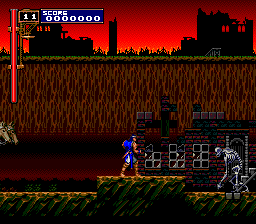
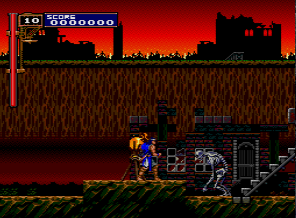
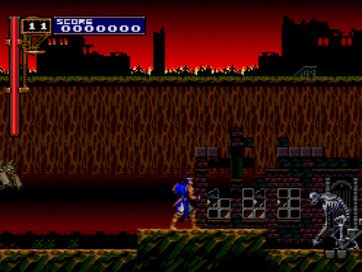
I actually rather liked the 2.5D remake of Dracula X for the PSP, although a lot of people don't. The saving grace of the package, purportedly, is that includes the original PC Engine version, translated into English, no less. However, beyond the sound synch issues, some complained about it looking muddy. Since the Virtual Console version just came out today - untranslated, but still the best, cheapest way to experience it - I thought I'd snap some comparison screens to highlight the visual issues between the PCE version and the PSP ported version.

The PSP version offers two display types - regular and large. Here they are, from top to bottom, the original PCE, the "regular" PSP version, and the "large" PSP version.


ARGH MY EYES. It's hard to precisely tell what's wrong on the PSP screen, but here's the gist of it.

PC Engine games usually run in a 256x224 resolution. This is very small - horizontally it takes up slightly more than half of the PSP's 480x272 screen, leaving a lot of empty real estate. Instead of letting the game run at the native resolution, though, the smallest you can set the game is the "regular" setting, which is 296x224. It keeps the vertical resolution but expands the horizontal resolution by 40 pixels. You can't just stretch the image though. I took the original PCE image for a simulation, so it would look like this:


That looks like crap - note the line doubling in the score, because those extra pixels have to come from SOMEWHERE, so it applies a filter, which smoothens the image like this:


Now it looks cleaner, but notice how blurry it got in the process. This is what filtering does. But it doesn't help that, for whatever reason, the PSP version uses a slightly darker color palette, so, for the final picture again:


The "large" version resizes the image to 362x272, using the full vertical resolution of the PSP and stretching the horizontal width to maintain the same ratio as the "normal" version. It's still obviously filtered though, though technically no worse than the normal version.

What crap! I haven't mucked with Symphony of the Night to compare, but how on Earth did Konami screw this up? It's not like those 40 pixels were really THAT valuable so it needed to filter the image? But then again, shoddy emulation on these types of compilations are typical, because they figure they're cheap, and no one will notice.


Thursday, February 25, 2010

25 Years of Vampire Killer

Vampire Killer, the first stage theme from the original Castlevania, is one of the most enduring pieces of video game music in its entire history. I do always admired that Konami was well aware of how much the community loved its soundtracks, and each successive sequel has usually had some kind of remixed versions of older songs. It sorta started around Castlevania III, which reused Vampire Killer titled as "Deja Vu" in the castle halls, while Super Castlevania IV started the tradition of the Holy Trinity of Castlevania Music - Vampire Killer, Bloody Tears, and Beginning - from the first three games, respectively.

So, I went through all of the versions of Vampire Killer and spliced segments from each into a full length song. It loops around three times before fading and I think has about 25 different pieces of music. I didn't include every single remix, but most of them are accounted for. I think it sounds pretty good, except the version from Circle of the Moon REALLY sounds out of place. I probably should've used another segment, but I didn't feel like going back and re-editing it. If nothing else, it shows how odd that version sounds compared to the rest. It's (very) loosely in chronological order, which gets wonkier as it goes on and on.


Sunday, February 21, 2010

The Case of Wikipedia v. Kinuyo Yamashita


Among video game composers, Kinuyo Yamashita isn't exactly a well known name, although she probably should be. Back in the mid-80s, she worked at Konami and was the composer for the original Castlevania. She also worked on a handful of other Konami games, mostly Japanese-only, including Esper Dream, Almana no Kiseki, King Kong 2, Stinger, Hi no Tori (Famicom version), Knightmare II: Maze of Galious (MSX version), Usas, and a handful of others. She quite after a few years to go freelance - according to a recent interview with Square Enix Music, Konami's refusal to properly credit their developers played a big part. (She shows up under the pseudonym "James Banana" in the ending to the NES Castlevania, although she's credit properly in the MSX2 Vampire Killer, which has the same music.) After going freelance, she did the outstanding Power Blade soundtrack, and worked on a number of Natsume titles, including the SNES version of Pocky & Rocky and Mighty Morphin Power Rangers, along with Megaman X3 for Capcom. Her official website documents several other Japan-only games, including many entries in the Medarot/Medabot series, but also notes that she had a brain hemorrhage which left her unable to compose for a number of years. She's recently become for visible on the web, thanks to her MySpace account and here appearance as a guest speaker in Video Games Live!. She has quite an interesting background!

Well, apparently Wikipedia doesn't think so.

I mean, what? The music for the original Castlevania is some of the most iconic in video game history, and is still being rearranged by Konami over twenty years later. Why not delete Koji Kondo, too? (On this note: this Original Sound Version post on the same subject mentions that they've deleted Shinji Hosoe, a veteran composer for Namco and others for over twenty years, for similar reasons. His works aren't quite as famous as Castlevania, but he's still a fairly well known, well documented composer.)

The argument by the nimrod Wikipedia editors keep shooting down source after source as "unnotable" As noted above, Japanese developers are notorious for keeping secrets - we know that Keiji Inafune didn't really design Mega Man but still aren't 100% sure who did - and trying to source these things in the games themselves is nearly impossible. That's why it's incredibly valuable (and amazing) when places like the Game Developers Research Institute dig up some of these guys to set the record straight. But oh, hey, according to the Wikipedia deletion argument, first person sources are irrelevant, as her apparently her own web page, along with various interviews, don't count, and the popularity of her original songs don't either.

Every once in awhile, there's a tiny part of my brain that thinks that Wikipedia, along with the general wiki format, will overcome the general usefulness of websites like HG101. Then I see instances of stupidity like this, with the Wikipedia editors clearly being small minded know-nothings, and think, yeah, sites like mine have nothing to be worried about.

EDIT:

One of the more recent Wiki folk reupped her original entry here, along with a longer list of her works and more sources.

Wednesday, January 6, 2010

Do You Like Castlevania Music?


Of course you do! Even the most redundant/useless Castlevania games have bang up soundtracks, and Konami's issuing a super box set on March 24, as seen at Konamistyle. For 18,900 yen (a bit over $200) you get 18 CDs, plus 1 DVD with interviews and stuff. The game listings:

Disc01 - Castlevania (NES), Vampire Killer (MSX), Castlevania II (FDS version), Haunted Castle (AC), The Castlevania Adventure
Disc02 - Castlevania III (FC version), Kid Dracula (FC), Castlevania 2: Belmont's Revenge
Disc03 - Super Castlevania IV (SNES)
Disc04 - Castlevania Chronicles (X68000), Dracula X (PCE)
Disc05 - Castlevania Bloodlines(MD), Castlevania Legends(GB)
Disc06 - Castlevania Symphony of the Night (PSX/SS)
Disc07 - Castlevania (N64)
Disc08 - Castlevania Circle of the Moon (GBA) Castlevania Chronicles (PS)
Disc09 - Castlevania Harmony of Dissonance (GBA) Castlevania Aria of Sorrow(GBA)
Disc10 - Castlevania Lament of Innocence (PS2)
Disc11 - Castlevania Dawn of Sorrow (DS)
Disc12 - Castlevania Curse of Darkness(PS2)
Disc13 - Castlevania Portrait of Ruin (DS)
Disc14 - Castlevania Dracula X Chronicles (PSP)
Disc15 - Castlevania Order of Ecclesia (DS)
Disc16 - Castlevania Judgment (Wii)
Disc17 - Akumajou Dracula The ARCADE (AC) Akumajou Dracula The MEDAL (AC)
Disc18 - Michiru Yamane Arrange Album

That's pretty ridiculous. The listing notes that this is the first time that the entire soundtracks from the MSX Vampire Killer and Castlevania Legends have been released on CD. Some of these are pretty tough to find - Order of Ecclesia's official OST was only included with a special edition available from Konamistyle, for instance. It also includes the music from the Saturn version of Symphony of the Night. And I know the pachislot game got its own soundtrack release despite being terribly redundant (most of the tracks were from Curse of Darkness), I don't think the arcade game ever got a proper release, either. Just note that some tracks may not be complete - the full OSTS for Lament of Innocence and Curse of Darkness were 2 CDs each, where they've been paired down for 1 each here. Hopefully they'll improve the soundtrack quality for the GBA releases. The line-in recording I did for Aria of Sorrow years back sounds better than the official release, for some reason.


It is missing the music from Castlevania Rebirth, but that's because it's coming on a separate release, bundled along with the soundtrack to Contra Rebirth. Why no Gradius love? There's also a drama CD for Symphony of the Night, but...eh. I wonder how much anybody in Japan really cares about these?

Thursday, November 5, 2009

Castlevania Rebirth Review

The recent trend of retro updates is trickier than it initially seems. Since they're obviously built to trigger a sense of nostalgia, they really need to put some effort into the actual design so it doesn't smell like a cash-in. For example, Mega Man 9. It was intentionally patterned after Mega Man 2, since that release was largely considered the pinnacle of the series, even though it lacked some of the features from the later games. The end result was pretty decent.


Konami's Rebirth series hasn't been quite as consistent. Contra Rebirth took after Contra III on the SNES - again, usually deemed the high point of the series - and turned out excellent. On the other hand, Gradius Rebirth felt more like Gradius II - a decent game in its own right, but pretty much everyone agrees that Gradius Gaiden was its pinnacle (at least, as far as classic Gradius is concerned). As a result, it just felt like a step backward.

No one can really agree about the "best" 16-bit Castlevania game. Some prefer the moody atmosphere and friendly controls of Super Castlevania IV. Others like the griminess and setting of Castlevania Bloodlines. Still others like Dracula X, with its bright anime graphics and expansive branching paths. You'll even find a few sadomasochistic people that love the X68000 Castlevania (which was the PSOne Castlevania Chronicles game) because it's so damned challenging.

Well, none of that actually matters, because Castlevania Rebirth patterns itself after The Castlevania Adventure, the first Gameboy game. Kind of. The Castlevania Adventure was an oddity, removing the traditional stairs and replacing them with ropes, and removing subweapons altogether. Castlevania Adventure Rebirth has stairs and subweapons, and six totally new levels with completely new bosses. The only elements it retains are a few of its distinctive enemies, particularly the rolling eyeballs, and the ability to upgrade to a flame-shooting whip. In the Gameboy games, this was downgraded if you got hit, but here it's just powered up for a limited time, regardless of how much damage you take. The only real reason it's associated with this title, probably, is so it can fit easily into the Castlevania timeline, something which IGA seems to take very seriously, and the original Castlevania has already, technically, been remade four times. (The original NES game, Super Castlevania IV, Haunted Castle, and the X68000 game. Other than similarities between the NES game and the X68000 one, these are all entirely different games.)


It's weird, then, that the Castlevania Adventure Rebirth is a step back from the 16-bit games. These go beyond the little things, like the inability to pick up dropped subweapons or jump on or off stairs. The only real concessions to progress are the ability to change directions mid-jump (which can be disabled) and the branching paths, which offers slightly different paths through certain parts of each level. In many ways, it feels like a regression even back before the 8-bit games. The original NES Castlevania certainly isn't as feature rich as its successors, but it still remains extremely challenging, in a way that most of its sequels weren't (or, at least weren't to the same extent, not counting the X68000 game.) Like all of the other Rebirth games, this game is pointed more towards a casual audience, and is therefore quite a bit easier than any average Castlevania titles. It requires more skill than your average Metroidvania, but only barely.

This creates a dilemma - if it doesn't have the features of the later classic games, and doesn't have the challenge of the earlier classic games, then what does it have? Not much, as it turns out.

Since the older Castlevania were designed to be tough, the levels themselves were fairly short, so replaying them didn't become too tedious. Not here, though. The levels are fairly long, and most have a mid-boss too, but they become quite tiring upon multiple plays. You probably won't run out lives often, but it's more of a chore to replay them, not because they're tough, but just because they're dull. There's no password or save system either, requiring you to trek through the whole game each time you play. Six stages doesn't sound like a lot, but it makes for a fairly long game in practice.

The stages themselves aren't poorly designed, but they all tend to blend together. Each usually has some kind of theme - the first stage is outdoors, the second has an underground segment, the third is full of dungeon-style traps, and so forth. But because they're so long, and the graphical design so similar, it never feels like there's much distinction. The boss battles are at least reasonably well designed, with the Coat of Arms ghost (originally appeared in Dracula X and has shown up in other games) finally being promoted to full boss status, as well as a new vampire chick, appropriately fulfilling the "sexy bad girl" quota started around Dracula X.


Like the rest of the Rebirth titles, the graphics are vaguely above 16-bit quality, utilizing more colors than the SNES could but featuring the same type of artistry. It actually looks pretty decent, not as flashy as Contra Rebirth, but with better pixel work. Most of the sprites are new, although there are some tiles obviously taken from portable games sprinkled throughout. The soundtrack is the real treat, though. Like the other Rebirth games, it picks out various themes from the series, with a preference towards the more obscure ones, and remixes them in the style of late 80s/early 90s Konami arcade synth. (Lots of people seem to mistake this for sounding like the Genesis, which also uses FM synth, but is pretty weak with digitized samples. More on that in another post.)

The first stage theme uses Reincarnated Souls for Castlevania Bloodlines, one of the most underrated songs in the series (the secret best song, in Retronauts parlance), the second takes Lullaby of the Night, the high score theme from Haunted Castle and re-appropriates it as a stage theme. The third stage uses New Messiah, the amazingly excellent song from Belmont's Revenge, and the only piece of music (sadly) to come from the Gameboy lineup. The fourth stage uses the File Load theme from the X68000 game - not a bad song but it doesn't really feel suiting - the fifth uses Aquarius (from Castlevania III, and later, Circle of the Moon) and the sixth uses the classic Vampire Killer theme. Outside of the music, at least it does push some of the right nostalgia buttons. How long has it been since we've seen those between level intermissions where the hero walks across a map screen, showing the next destination?


So that's more or less the gist of it. It's not a terribly designed game, just kind of a boring one. For years, the fanbase has been wishing for a classic-style Castlevania game with modern sensibilities, and this feels more like a tease than anything, because it skirts around it before delving into blandness. Maybe one day.

Anyway, I originally had problems installing this on my Wii, giving me a -2011 ticket error when trying to unpack the WAD. (Yes, I pirated it. I'll keep the whinging about Nintendo's idiotic digital distribution scheme to a minimum, though.) I'm hesitant to give specific information as to how to fix it, because I'm paranoid about giving advice that might end up bricking your system. I went through a few steps to downgrade my IOSes and reinstall a cIOS fix, but the thing that seemed to get it working was to patch a particular IOS, run with a specific installer. After that everything went peachy.

Until I figured it out, I tried running it in Dolphin, the GC/Wii emulator. I'm surprised that it runs the game at almost perfectly smooth framerate, with a bit more slowdown than you'd find on a real system. It's perfectly playable, although the background tiles are extremely screwed up and cycle incorrectly when you move. I've snapped a few pictures that seem to look right, which are more pixel perfect than anything I could capture through my video card. I'll have to see if Mega Man 9 works correctly now...

Thursday, August 20, 2009

Koumajou Densetsu - Scarlet Symphony

Koumajou Densetsu - Scarlet Symphony sounds like an interesting idea - a combination (of sorts) of Castlevania and Touhou. It's not like things like this haven't happened before, because MegaMari is pretty much the same idea, but tossed together Touhou and Mega Man. It was released at Comiket over the weekend, and a demo's been out for awhile now, which you can find at Frontier AJA's website. For a bit of background, the title is a combination of the word "Koumakan", referring to the castle inhabited by Remilia, a vampire girl, and "Akumajou Densetsu", the Japanese title for Castlevania III. Obviously, having a vampire castle made it a perfect setting for a Castlevania-like game.


It's a bit of a weird one, though. Koumajou Densetsu looks and feels like a Metroidvania, but it's actually structured like a classic Castlevania game. In other words, it's back to being a pure platformer. There are even bottomless pits!


Frontier AJA has the Castlevania feel down to maybe the 90% level. The sprite of the main character, Reimu, is easily up to the level of Konami's games. She moves much like Richter Belmont from Symphony of the Night, and wields the whip much in the same manner. But it's clear the developers spent a lot of time focusing on her and not much else. The jumping feels a bit unresponsive, and the hit detection feels quite buggy. Since this is based on Touhou, cutesy fairies take the role of famous Castlevania enemies like spear and axe knights, though there are still several regular enemies, which have all been redrawn, but look a bit dull. The music, while fairly decent, is done by someone who obviously loves Castlevania music a whole lot, but lacks the talent to create something that truly stands on its own.


The worst of it is that Koumajou Densetsu borrows from the Metroidvania level design philosophy - that is, lots of flat surfaces, slopes, and not much in the way of variation, with enemies just kind of strewn about. This style is okay for Metroidvanias, because they're more about exploration than action-platforming. Obviously, when you take that style and apply it to a game that IS an action-platformer, it doesn't work. The designers will do nasty things like sticking four Minotaurs - which have huge range and take tons of hits to kill - into a claustrophobic corridor, where their attacks are practically unavoidable. The levels are all remarkably tedious, too, with the same tiles and layouts repeated over and over, and makes replaying them a drag. In other words, it's way worse than Konami's own titles.

The other major aspects ditched are all of the RPG elements. The enemies in the Metroidvanias were never particularly balanced, but they weren't really supposed to be, because your character would eventually get stronger, and amass an array of cool weapons to fight them with. At least there's a special secondary attack which calls out a partner for a quick and powerful strike, which drains ten crystals. You start off with Marisa, but then each of the defeated bosses will join you and lend you their powers. There are also some vague shoot-em-up elements - a tribute to its Touhou heritage, naturally - none of which really work.


Reimu doesn't have a double jump, but she can fly. This produces a bit of a quandry in certain areas, because if you can just fly over everything, then what's the point of fighting enemies? Well, fallen enemies drop little red crystals - the tougher the enemy, the more crystals. Reimu can shoot tiny little bullets on the ground by hitting Up and Attack, but it's her only weapon when zooming through the skies. It's remarkably weak, but it does fire rapidly.


The boss battles are all flying girls, most of whom have some kind of bullet hell-style projectile patterns. You can technically try to fight them with your whip, but you can also take to the skies to fight them in mid-air. But since your bullets are so weak, you really need to focus your stream on them if you want to do any damage. The flying itself brings up some concerns - you can't directions in mid-air without dropping to the ground first, and if you run out of crystals, you're basically defenseless without bringing the fight back down to earth. There's also a very serious problem with bullet hell-style games in 2D that apparently the developers never acknowledged - your sprite is much bigger, and without the full 360 degree of movement offered by overhead games, PLUS the addition of gravity, makes the bullet patterns all but impossible to avoid unless you just run really, really far away. MegaMari had the same problem. Developers! Guys! It's nice that you're trying to Do Something Different, but it just doesn't work, so cut it out.


There's some acknowledgment that the game is so poorly balanced, in that certain enemy attacks don't do very much damage. In most of the boss battles, it seems like rushing them with a partner attack, while doing everything you can to dodge the projectiles, is the most effective measure to kill most of them.


A lot of people got excited for this when it was first announced, because it does it look pretty good in action. But, at heart, it's still a doujin game, and thus expectations should be kept in check. Like most, it's a cool concept that just isn't executed terribly well.

At least they seem to be responding to complaints. There's already a patch that brings the game up to version 1.02a, which adds an intro movie with a vocal song, some cutscenes along with the excellent original artwork, a larger health bar, and the ability to restart on the last level you played after you exit the program, amongst other changes. Maybe with this kind of time and devotion, they can turn it into something better.