
Is it too early to talk about "Best of 20XX" stuff yet? Probably. But we're going to discuss the best soundtracks anyway, under the assumption that there's not going to be much better. The rest of the 2010 release seems to include mostly Western games, who are largely focused on bombastic Hollywood-style film soundtracks than legitimate game music, and I don't think there's too many big Japanese releases left. If something comes out and surprises is - it definitely could! - we'll append it down the road. So, without further ado, here are the Ten Best Game Soundtracks of 2010 (So Far):
VVVVVV (Featured song: Potential for Anything)
There are only maybe half a dozen proper songs in this soundtrack - fitting, since the game is only about two hours - but each of these tracks is pure SID-inspired chiptune bliss. You can grab MP3s of it the composer's website for a few bucks - unquestionably worth it.
Scott Pilgrim vs the World: The Game (Featured song: Another Winter)
Anamanaguchi was band I had only half paid attention to, because while their unique of guitar and NES chiptunes were kinda cool, their songs always felt long and meandering. When concentrated into the context of a 1-2 minute video game song, though, their talent for composition really shows through, resulting in a retro soundtrack that still has a distinctly modern edge.
Castlevania Harmony of Despair (Featured song: Invitation of the Crazed Moon)
My own big complaint about remixed music in Castlevania games is that they always drew from the 8 and 16-bit games, ignoring practically everything from Symphony of the Night and afterward. Harmony of Despair changes that, and features numerous songs from the portable Metroidvanias, all rearranged. They're all fantastic too, many being done by the same folks who redid the songs for Judgment. The DLC pack adds even more, and the handful of new tracks - including one of my favorites, Invitation of the Crazed Moon from Portrait of Ruin - are outstanding too.
NIER (Featured song: The Lost Forest)
This game kind of came out of nowhere to be really damn cool, and part of that appeal lied on its music, which took the took a tired musical trope - foreign-sounding chanting - and gave it new life. The dramatic strings and percussion pieces are even more outstanding, breezy and melodic, constrasting to the comparatively dull orchestrations that permeate stuff like Castlevania Lords of Shadows and God of War.
Ys The Oath in Felghana (Featured song: A Searing Struggle)
Is it fair to include this game? This was released in the US in 2010, but released in 2009 in Japan, which in turn was based on a 2005 release (again) in Japan only, which was a remake of Ys III, a game from fifteen years earlier. So, the music in The Oath of Felghana is hardly "new". But that's okay, because Ys III had one of the best soundtracks in existence, and remixes in The Oath of Felghana only improves them with live instrumentation. Props to the PSP version for including alternate versions from the old computer releases.
Ys Seven (Featured song: Mother Earth Altago)
The music in Ys Seven isn't QUITE as good as Felghana, but it's also the best original soundtrack in the series since Ys IV. Parts of it sounds remarkably like an upgraded PC Engine redbook track, which has always been part of the Ys appeal (at least, to the English speaking audience.)
Dodonpachi Daifukkatsu Black Label (Featured song: Vertex)
The soundtrack to DDP Daifukkatsu was kinda lousy, but the Black Label version doesn't rearrange it, it created a whole new soundtrack from scratch. It's much better, with some damn catchy electronica, and while it's not quite as trance-y as Espgaluda, it further establishes the parallel that Cave-brand danmaku shooters are the video game equivalent of an ecstasy fueled rave.
Dark Void (Featured song: Main Theme)
Usually we rag on Western game soundtracks for totally missing what we love about video game music. But we'll overlook that when it comes to Bear McCreary, the incredibly talented composer behind the reimagined Battlestar Galatica and its (now cancelled) spin-off Caprica. As a result, the soundtrack to this under-appreciated action game sounds much like his other work - which is to say, filled with fantastic orchestrations and lots of percussion. Bonus points for the Dark Void Zero soundtrack, which takes these turns and turns them into Mega Man-style NES music.
Final Fantasy XIII (Featured song: Blinded By Light)
On the Final Fantasy/Dragon Quest divide, I am usually staunchly on the side of Final Fantasy. FFXIII screwed up so much though, from the storytelling to the dialogue to the character development to the level design that it really did come up short. The only two areas where it excelled was its utterly fantastic battle system and its magnificent soundtrack. Styistcally Masashi Hamauzu is quite a bit different from series mainstray composer Nobuo Uematsu, as well as FFXII composer Hitoshi Sakimoto, but the man can use the violin like no other game musician out there.
Etrian Odyssey III (Featured song: Unrest - The End of the Raging Waves)
Even if you don't like grindy masochistic first person dungeon crawlers, everyone should appreciate these games for continuing to employ Yuzo Koshiro, one of the few prominent musicians from the 80s music scene that's still got it. This PC88 FM inspired sountrack is the best of the series, offering a wider variety of dungeon themes that alter between serene and foreboding, and numerous outstanding battle themes. The arranged album also borrows some instrumentation styles from Falcom, also making it essential for Ys fans.
Runners-up
Death Smiles (Featured song: Burning Halloween Town)
Not one of Cave's better soundtracks (better than Daifakkutsu though), at least the first level theme is pretty excellent, as are the boss and level select themes.
Super Mario Galaxy 2 (Featured song: Throwback Galaxy)
Catchy and eminently likable, with a handful of arranged songs from previous Mario and Yoshi games. Not enough of it really stands out to make the Top 10 though.
No More Heroes Desperate Struggle (Featured song: Philistine)
The "A Goddamned Philistine Since 2004" header on the main HG101 page is a reference to Margaret's song, a darkly silly little bit sung by the boss in question about how our hero, Travis Touchdown, is a goddamned pussy. Like the first game, the music selection is eclectic and ultimately not as consistently strong, some of the boss tracks are still outstanding.
Showing posts with label no more heroes. Show all posts
Showing posts with label no more heroes. Show all posts
Thursday, November 4, 2010

Sunday, March 7, 2010
No More Heroes and the cultural divide
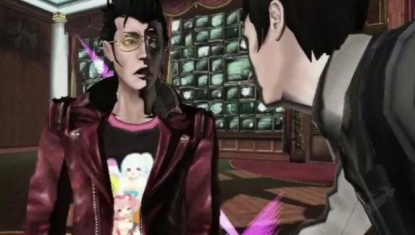
I'm approaching the end of No More Heroes 2, with a save right before the final ranked battle, with most of my stats maxed. I agree with the general criticism that it feels unfinished, especially with the lack of swords and the oh-so-brief playable segments with Shinobu and Henry (moreso Henry), but overall I think it's a better game than the first one. It's made me think of why I dig No More Heroes as a whole so much, despite so many of their flaws, and I think it's because they create a bridge across the Western/Eastern cultural divide in an entirely unique way.
It's no secret that Japanese console development is floundering, with their own market shrinking while the Western market is expanding. Still, it'd be a mistake to say that the Japanese should make games primarily for a Western audience. They might be able to look at the games we like and try to emulate them, but ultimately, they might not understand why we like the games we do.
As has been said many times before, looking at bits of other cultures is something like looking at American culture through a distorted mirror. Sometimes this works in favor, sometimes it...doesn't. But there are some examples which have strong Western influences which have gone over well in both territories, so let's take a look at a few series which accomplish this.
Capcom has excelled this generation because it's one of the few Japanese developers that really understands Western tastes. Look at Resident Evil - at first glance, there's really nothing that seems notably Japanese about it, since so much of it is based off Western horror movies in the first place. There are some incongruities, notably the awful voice acting and the cheesy dialogue from RE4, but these don't stand out all that much, considering that the zombie movie genre is already loaded with irony. Dead Rising is very similar in that regard, although I can't imagine a Western developer using anything like that game's timed structure or save system. And the same applies with Lost Planet, despite the main character being modeled after a Korean star. However, these all tip on one side of the scale though - they're almost too Western, I think.
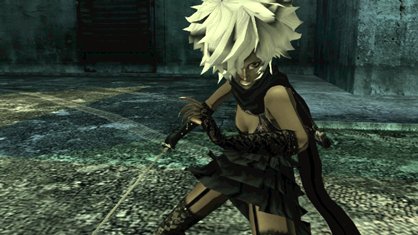
On another topic - Metal Gear. Hideo Kojima has been in love with American cinema, something which has been obvious since his days working on Snatcher and the original Metal Gear. But the way he translates some of this influence into his games is completely hit or miss. For example, one of my favorite lines from Jeremy Blaustein, the game's translator, talks about how the names for the villains would sound totally ridiculous to a native English speaker. Kojima refused to change them. Blaustein admitted that the names ended up working, but not for the same reasons that they would in Japanese - "Decoy Octopus" sounds absurd, but that lends itself to the game's lovable goofiness. Kojima, however, he doesn't know where to draw the line between "adorably cheesy" and "just plain stupid". For instances of the latter, we point to "can love bloom on the battlefield?", the very concept of Rose, the whole node/nerd debacle, the President feeling Raiden up, Otacon's step-mom banging confession, and everything involved with that soda drinking monkey. I'm not sure how much of this is due to a cultural divide - the naming definitely is - and how much of it is just Kojima being an occasionally terrible writer, but in the end it's still weird and distracting. If Ryan Payton's task was truly to provide an American perspective on MGS4, then he did a pretty bad job of it.
And here's Grasshopper did such an outstanding job with No More Heroes - it combines the best of crazy Japanese artistic and game design sensibilities, but largely sidesteps the awkwardness that seems to come inherent with them.
As much as Western developers have picked up the slack this gen, the graphical styles are still notably uniform, and the soundtracks are the same way - they take too much from mainstream cinema. No More Heroes is the antithesis of that - it's got style in droves, and what's more, it manages to pull it off with some level of restraint, without devolving into the big-hair-big-swords excess that's become disparagingly associated with shounen anime (and JRPGs, for that matter.) Despite the fact that it still has ridiculously over-the-top villains with a just silly amounts of violence, it manages to find that nebulous balance where Kojima - and for that matter, the Final Fantasy games - really haven't.
The writing doesn't feel particularly foreign either - some of the minigames titles like Man the Meat, Lay the Pipe, Coconut Grabber and Getting Trashed are double entendres that only make sense in English, and it makes me wonder how they'll be translated into Japanese, if they are at all. When beginning any of the 8-bit minigames, you can hear Travis blowing into a cartridge - since the whole blinking fiasco with the NES was largely due to the system's lousy lock out chip, which didn't exist on the Famicom, I've always thought of this as a distinctly Western thing. (Might be wrong on this, though.) (I'm also going to be pedantic and say that the clicking noise when the cartridge is inserted doesn't sound enough like an NES.) And I don't know how they sound to a native Japanese, but in English, the names Santa Destroy and Travis Touchdown are pretty damned awesome. There's the Bizarre Jelly loli anime, of course, but all of that is very tongue-in-cheek and extremely self-deprecating.
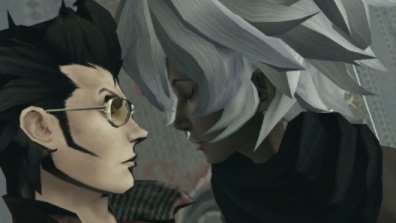
The absolute perfect metaphor for this is Shinobu, the sole surviving boss from the first game (semi-spoiler: kind of) and a playable character in the second. Despite being a samurai influenced by Harajuku fashion sense (so super Japanese), she's also black (so very not Japanese at all), complete with an intensely stylized bright white afro. She represents a unification of two cultures, and is all the more awesome because of it.
There are still some missteps, though. The whole overworld in the first game seemed like an attempt to emulate GTA and the like, something which didn't really work out since it was so empty. And the peep show scenes in the second game, what with all of the closeups on the jiggling boobs and the panty shots, are uncomfortably voyeuristic. I'm not entirely sure I can explain the nature of America's sexual attitudes, although I'm going to try. A Japanese person might look at Lara Croft from Tomb Raider and wonder why that was OK but the bouncy girls in Dead or Alive are creepy. I think the answer, from an American perspective, is that we don't want it to be so overt. We like looking at girls in skimpy clothing, but we don't want it tossed in our faces, because such pandering makes us feel uncomfortable and guilty. (That might just be my Catholic upbringing, though.)
I find it curious how hugely the original No More Heroes flopped in Japan. Perhaps it was the result it feeling to Western? The line, the balance, is going to be different for everyone. Or perhaps it was just it being on the Wii - that's apparently what Marvelous felt, given that they're putting it out on the HD platforms in a few months. It would be interesting to hear what the Japanese think of it, at least.
Sunday, July 26, 2009
Suda 51 and Wild Palms


New York Times says: An acid freak’s fantasy, drenched in paranoia and more pop-culture allusions than a Dennis Miller monologue

So I’ve got myself a modded Wii and I’m playing the American version of No More Heroes (because the UK version was butchered by the censors – those bastards), and it made me think again about the similarities between Suda 51’s work and the Oliver Stone creation, Wild Palms. (If you’re wondering why these screengrabs look so grainy, I thought it would be cool to give them a kind of Sega CD vibe)

Is that a rhino in your pool?
For those who’ve never seen it, Wild Palms was a surreal, abstract, Twin Peaks styled Sci-Fi TV-series and/or film trilogy from 1993 (depending on which country you saw it in – South Africa’s MNet ran it has a multipart film over three days). It’s about 280 minutes long. That’s about 4 and a half hours. It was produced by Oliver Stone and written by Bruce Wagner (apparently he based it on a comic strip he’d written prior, says Wikipedia), and it starred James Belushi and Kim Cattrall, long before she started having Sex in the City.


Do not trust the TV sets, and old ghosts come to life through holograms
And damn, was it one helluva weird film. WEIRD.


I’ve not played Suda’s earlier works such as Moonlight Syndrome and Silver Case (both on PS1), but Killer 7, Flower Sun and Rain, and now No More Heroes, all bear striking similarities, both thematically and stylistically, to Wild Palms. As an aside, Michigan: Report from Hell doesn’t really bear much resemblance to any of the above – though it’s still an interesting and extremely weird game.

A woman in white with a blood stain will show the way
The story of Wild Palms follows Henry Wyckoff as he slowly slips into madness, tormented by dreams involving a rhinoceros in his swimming pool, terrorists living under his pool, a global conspiracy to control society via TV, drug addiction, murder, and shocking secrets about his past, his family, and the history of America. I’m going to say it’s the biggest mind**** I have ever watched, and although I’ve never read any interview that says Suda 51 actually watched it himself, Wild Palms has the kind of insane, incestuous plot twists that he’d seriously get off on if he did.

I’d like to mention more, to encourage you to watch it, but to reveal anything would spoil the surprise.

In the rough part of town, Henry goes to a place called Hungry Ghosts to find the truth
COMPARISONS
The biggest comparison is obviously that Wild Palms and Killer 7 both feature swimming pools with secret chambers under them, plus the fact that most of Suda’s games contain palm trees, but there’s a lot more going on beyond the plainly visual. It also has to be said that games like Flower, Sun and Rain also borrow heavily from films like Groundhog’s Day.

Wild Palms deals with the subversion of reality, of not knowing what is real and what is virtual. In Suda’s games you’re constantly given the impression of being in a semi-dream state, and made to question reality.
 There’s that rhino again
 In all works there are strong themes relating to corporate and media evil. Can you really trust those in charge? Not really. Visually we have TV sets, broadcasting subliminal messages and housing the personalities of other people. In Wild Palms, the people in your TV are able to step out and touch you.

In a way, No More Heroes’ Travis Touchdown and Flower, Sun and Rain’s Sumio Mondo both mirror Henry Wyckoff, as unknowing pawns getting into things deeper than they can understand.
 This man will die by swallowing a fist
Here’s a spotlist of things off the top of my head I’ve seen in Wild Palms and Suda’s works:
* visual metaphors
* churches
* god complexes
* immortality
* media control
* subliminal messaging
* possessed TV sets
* blind people made to see
* kids with knives
* drugs and serums
* holograms
* amnesia and the loss of one’s thoughts
* virtual reality and artificial worlds as real as this one
* woman in a white dress with a giant blood stain
* humans disintegrating in particle explosions (though, Lawnmower Man also did this)
* being unable to wake from a dream
* LA surrealism
* celebrity worship
* strange, eccentric characters
* terrorism
* paranoia, and a world on the brink of chaos and revolution
* lies, deception, trickery and enough red herrings to make your head hurt
* Obviously... palm trees
There’s more, A LOT MORE, and Killer 7’s narrative alone warrants its own article, but if you like any of Suda 51’s games, or the themes or characterisations found within, then you should really track down Wild Palms on DVD and watch it. Even if there isn’t actually a connection with Suda 51, Wild Palms is worth watching in its own right.
Just don’t expect to come away understanding everything.
PS: Oh, and if you’re a member of the press interviewing him, for god’s sake, ask him about this!

Subscribe to:
Posts (Atom)