Showing posts with label list. Show all posts

Friday, May 27, 2011

A Brief History of Western Action RPGs


The action RPG is a genre that could thrive first and foremost in Japan, where influences of personal computer games often resulted in new interpretations on game consoles, thus benefiting a healthy melange of genre traditions. Mixtures like that were initially fewer in the West, due to the consoles and arcade games being marked mindless quick entertainment by an elitist home computer crowd for real deal hardcore simulations and RPGs, which were the domain of computers with lots of memory (for the time) to store all those stats. Yet early on there were a few attempts to adapt what was originally inherited from tabletop war games to a more responsive and involving model, and with the slow demise of slow-paced turn-based gameplay eventually ARPGs would catch on as a main stream genre also among Western developers.

The rise in popularity of the genre in modern times may deceive from the fact that it has truly ancient roots, and there is much confusion and oblivion about the actual early innovations. So, following up on our Brief History of 2D Fighting Games, we'll have a look at what was going on with the ARPG genre in the US and Europe over the decades. (I know a lot of you will be yearning for a parallel feature on Japanese games. Such a thing is bound to follow some day, but don't hold your breath just yet.)

Of course I am likely to be eaten by a grue for all the omissions and games I simply didn't know about. Everyone's got their own definition of what belongs in the genre, too, so please be nice when you point out to me all the games I've idiotically left out/falsely included. Please also note that I originally put this post together late in 2010, but ended up not posting it for a number of reasons. I haven't really followed the genre since then, so this is a history for the time until 2010.

Adventure (Atari 2600)


1980-1982:
  • Adventure is released for the Atari VCS in 1980. Yeah, it doesn't have The RPG Elementz(TM), but that doesn't mean it was not an important antecede for the Action-RPG genre. For the first time in an action game, players got to do adventurey stuff, exploring dungeons, finding keys and weapons. Probably exerted more influence on Zelda and the Japanese ARPG tradition than the western one, though, directly or indirectly.
  • Most of the very early computer RPGs have their roots in Dungeons&Dragons applications for big university mainframe computers, so it's hard to work out a timeline for them, but from 1980 to 1982 a lot of them have been ported to home computers, as well as some new, original games. Automated Simulations' (later Epyx) Dunjonquest series and The Sword of Fargoal, as well as Daniel Lawrence's Telengard still played out pretty much like "normal" RPGs with a time limit to your moves.
  • Dungeons of Daggorath did similar for the 1st person crawl (although it had a really interesting feature of a heartbeat sound indicating your level of fatigue and damage and at the same time giving a greater sense of urgency).
  • Also from Automated Simulations, Dragon's Eye combines boardgamey exploration with what can only be described as a fighting game with an ATB battle system, as little sense as that seems to make on paper.
  • The first batch of official Dungeons & Dragons games is released for the Intellivision, but only Treasure of Tarmin vaguely resembles an RPG/Adventure experience.
Dragon's Eye (Apple II)

1983:
  • Gateway to Apshai, an offshoot of the Dunjonquest: Temple of Apshai RPG series, is the first ARPG proper world-wide, predating even the Japanese genre forebears Dragon Slayer and Hydlide. Combat takes place in real-time with reliance on player skill, although there are also stats to be leveled up (which happens mostly automatically without offering any choices for the player), and there is a lot of loot to find in the dungeons. This being a pure dungeon crawler, only NPC interaction is missing from the modern standard formula.
  • Dandy by John Palevich is the progenitor to Gauntlet. It gets later remade as Dark Chambers in 1988.
Gateway to Apshai (C64)

1984:
  • Gemstone Warrior, SSI's first dabbling with the genre, is more of an action adventure by today's standards. The player once again explores dungeons and kills monsters in real-time and searches for treasures which amount to the score. There's item management and a limited supply of ammunition, but no experience system.
  • Icon: Quest for the Ring by the small and unknown developer Macrocom plays like a simplified Gateway to Apshai, but surprises with astonishing CGA techniques that avoid the typical ugly 4-color scheme and make for one of the best looking IBM-PC games of its time. According to a developer interview at MobyGames, the game was popular as a demo for graphic cards in Japan. Could it have been a direct inspiration for Zelda?
  • Also into adventure territory falls Knight Lore, which explores the isometric perspective (and later influences the use of the perspective in Adventures/RPGs in general, as well as Solstice and its successors in particular, which in turn inspires Landstalker and its sequels).

1985:
  • Origin Systems creates Autoduel, the first racing RPG. Eat that, Squaresoft's Racing Lagoon.
  • Also published by Origin Systems is Moebius: The Orb of Celestial Harmony. The game takes place in a vaguely far eastern fantasy setting, with a focus on martial arts training and a fighting game style combat system. The characters awkwardly walk around as profile pictures and the combat controls are horrendous, but the concept is nonetheless unique and interesting.
  • Gauntlet is released the same year. Though also not quite an ARPG in itself, it is save to assume that without Gauntlet, there would be no Diablo (and in consequence neither most other WARPGs we know today).
Auto Duel (C64)

1986:
  • Gemstone Healer, sequel to Gemstone Warrior.

1987:
  • Conceived as an RPG for dummies, David Joyner's Fairy Tale Adventure might be the first western game that fits all modern ARPG definitions without fail, finally causing some steam for the (nowadays) classical top-down ARPG in the west.
  • Dungeon Master brings 1st person real-time RPGs en vogue. With a fighting system based on intervals slightly resembling the later Final Fantasy ATB, it is also no "true" ARPG, though. Aside from a sequel, tons of games follow its formula for combat, among them Bloodwych (1989), Eye of the Beholder (1991), Black Crypt (1992), Lands of Lore (1993).
  • Macrocom delivers a follow-up to Icon with 7 Spirits of Ra. The game takes place in ancient egypt.
Faery Tale Adventure (Amiga)

1988:
  • Times of Lore (Origin Systems). The NPC interaction is as complex as you'd expect from an Origins game at that time, there's no character generation but a selection of three pre-built heroes, and the combat is fully realtime action. Might or might not be the first game with jiggle animation for the female protagonist.

1989:
  • Hero's Quest: So you want to be a Hero (later renamed to Quest for Glory because of legal issues with Milton Bradley's board game) at one hand was a typical Sierra adventure, but also featured different stats and classes for the characters, which have a huge influence on how the game is played, as well as action based combat.
  • Hillsfar is more like an RPG/Mini Game compilation. Arcade style combat takes place only in the Arena.
  • Windwalker is the sequel to Moebius and fares much better thanks to icon-based mouse controls.
  • Also: Gauntlet II.
Quest for Glory (DOS)

1990:
  • Darkspyre by Event Horizon Software could be seen as another antecede for Diablo, albeit with fixed dungeon layouts.
  • Origin's Bad Blood is similar to Times of Lore, but shifts gameplay even more towards action-adventure and is set in a postapocalyptic future where one of three mutant spies is sent out to investigate and avert human war plans.
  • In The Keys to Maramon, a spin-off of the The Magic Candle series, the player gets to chose between four characters and then has to protect the town of Maramon against invading monster hordes. The game features a day/night circle: At night all shops are closed and the fiends start storming in.
  • Quest for Glory continues with its first sequel, the main character can be imported in good, old-school RPG fashion.
Bad Blood (DOS)

1991:
  • Two games based on Norse mythology are released that year. In Dusk of the Gods, Event Horizon builds upon their groundwork laid with Darkspyre, while the Britains at Core Design put themselves on the genre map with Heimdall.
  • Conan the Cimmerian hails as the first licensed ARPG not based on a pen&paper or tabletop game. For combat the game switches to a fighting game-style 1-on-1 sideview.
  • Another licensed title, Robin Hood: Prince of Thieves, was adjusted to tie in with the Costner movie just in time, leaving an unfinished feel about the game. Released for Game Boy and NES, it is the first console exclusive western ARPG.
  • Gauntlet III: The Final Quest (Won't be mentioning any more episodes of Gauntlet beyond this. With the genre as developed and defined as it is by now, the series just doesn't cut it anymore.)
Dusk of the Gods (DOS)

1992:
  • Ultima VII makes first (very slight) concessions towards a more action-oriented combat by introducing realtime.
  • The big attraction of the year is Ultima Underworld, though, with its real-time rendered 3D world, predating even Wolfenstein 3D.
  • Event Horizon bring a direct sequel to their 1990 debut, called The Summoning, so in this year one of the last great 2D dungeon crawl ARPGs (for a while) meets the first great realtime-3D dungeon crawl ARPG.
  • Sierra releases Quest for Glory III.
Ultima Underworld (DOS)

1993:
  • Ultima Underworld II is released, but doesn't stray much from the paths laid out by the first game.
  • Event Horizon in the meantime explore more adventure-esque paths with Veil of Darkness (which in a way anticipates their much later game Sanitarium). This is their last game before closing and reforming as DreamForge Intertainment.
  • In Hired Guns by DMA Design a team of 4 cyber agents infiltrate futuristic complexes in real time over 4-splitscreen, similar to the Dungeon Master formula. Quite a stressful task for a single player, so the game also supports multiple players simultaneously. (For comparison, the first big Japanese multiplayer ARPG, Secret of Mana, was released the same year).
  • Only one year after the third part comes Quest for Glory IV.
Hired Guns

1994:
  • Warren Spector, formerly of Origin System, changes the world with System Shock and its genius mixture of RPG and FPS elements.
  • Probably through influences from Japan, western developers by now also seem to discover the console-style ARPG for themselves. SSI's Al Qadim: The Genie's Curse would have worked just as well on the Genesis or SNES
Al Qadim
  • Interplay for once releases an ARPG that isn't a straight port of a computer game, but adjusted to what they deemed suitable for the platform - J.R.R. Tolkien's Lord of the Rings Volume One for the NES has (other than shared source, art and music) little in common with its PC counterpart, which is a traditional turn-based RPG. With a party of up to five, each of which can be controlled by a human player, it has the highest simultaneous player count in an offline ARPG ever.
  • Blue Sky software delivers a console title as well, Shadowrun for the Genesis (while the SNES game is more like a traditional RPG in that, though realtime, player effort has little influence over the combat vs character stats).
  • King Arthur & the Knights of Justice shares many features with an ARPG, however it lacks a levelup system.
  • Heimdall 2 is also much more console-like than its predecessor and becomes an important title for Commodores Amiga CD32 console.
  • The main Ultima series now makes is full jump to a point&click based action RPG with platforming sequences, much to the dismay of old time series fans.
  • The Elder Scrolls: Arena in turn manages to build a bridge between the concepts of Ultima Underworld and classical fantasy world exploration.
System Shock (DOS)

1995:
  • As great a year 1994 was, the more dreary appears the slump in 1995. The only western PC title that comes to mind is Entomorph, which features an interesting setting but proves quite insignificant, gameplay-wise as well as on the market.
  • Things look a bit better on the console side. Squaresoft America sets up a development team to create Secret of Evermore, inspired by Japanese game mechanics (namely a combat system taken from Secret of Mana; but on the other hand also an ingredient-based magic system that resembles that of more recent Ultima episodes) but with an audiovisual design meant to cater to American gamers specifically.
  • Lucasarts creates Big Sky Trooper. The unique Sci-Fi action RPG falls under most people's radar for combining overly cutesy graphics with complex mechanics.
  • Ocean's Addams Family Values follows closely in the footsteps of The Legend of Zelda.
Big Sky Trooper

1996:
  • The Elder Scrolls: Daggerfall is likely the biggest RPG ever, in terms of sheer world size. YMMV once again whether it is an action- or a "true" RPG. My mileage says I won't mention any more main series entries, as now the demise of the turn based RPG in the west has begun to set in, and real-time combat loses its role as a distinguishing factor between the subgenres.
  • Most of all, 1996 is Diablo year (though some sources claim it was released in January 1997. We Europeans got it a bit later, anyway, so I wouldn't know), marking the end of the big RPG draught. The vast majority of western ARPGs to come will be influenced by Blizzard's megahit in one way or another. Love it or hate it, deny its RPG status, whatever: Diablo is the most influential game for the genre of the whole decade.
Diablo (Windows)

1997:
  • Lands of Lore II is released, other than the first game a pure ARPG with lots of FMV sequences and digitized graphics, filling 4 CDs.
  • Faery Tale Adventure also makes its comeback with part 2: Halls of the Dead.
  • The Elder Scrolls: Battlespire ditches the huge overworld and NPC interaction of its predecessors, so it almost plays like a straight action game.

1998:
  • Now the era of "Diablo clones" begins: Ancient Evil, Dink Smallwood, Hexplore (the latter featuring a voxel-based 3D engine and a party of four exchangeable characters).
  • Tomb Raider's mark on the industry also becomes clear: Bethesda Lara-fies their Elder Scrolls series with Redguard, the French RPG sovereigns at Silmarils bring Asghan: The Dragon Slayer (the Action-Adventure genre should start to return the favor the next year with Drakan: Order of the Flame).
  • After a long pause, the Quest for Glory series is concluded with its fifth and final installment.
  • Interplay releases Descent to Undermountain. Using the successful Descent engine and the even more successful AD&D license, the game is a huge disaster, often quoted as the most bug-infested retail game ever and/or the worst RPG ever.
Hexplore (Windows)

1999:
  • Ultima's main series turns 3D with Ascension, but after endless revisions from the groundup isn't the game fans wanted, they call it pejoratively an "action adventure". It also ships with lots of bugs, and receives many fan mods to fix its several flaws.
  • Lands of Lore III is released and considered the weakest title in the series as well.
  • More Diablo clones: Revenant, Darkstone, Clans.
  • The year is saved by System Shock II, once again the best thing since sliced bread.
  • Another mention deserves Silver, which combines Japanese-style inspired RPG flair with beat 'em up fights and mouse gesture special moves.
Ultima IX: Ascension (Windows)

2000:
  • Diablo II is released, and it would have completely rejuvenated the hype around its predecessor, hadn't it been going strong consistently over all the years, anyway.
  • Warren Spector continues to explore new grounds with his cyberpunk thriller Deus Ex, which gives more meaningful plot decisions into the hands of the player than any game before.
  • Also: Summoner for PC and consoles, Nox.

2001:
  • Piranha Bytes apparently takes any concepts that are salvageable out of the trainwreck that is Ultima IX (figuratively speaking), patch it all up with what they carried over from their pen&paper passion, and somehow make a great game out of that. The new German RPG prodigy is called Gothic.
  • No end to Diablo-inspiration in sight: Vampire The Masquerade: Redemption and Throne of Darkness (in a samurai setting).
  • But 2001 marks also the beginning of console hack&slay shovelware with Baldur's Gate: Dark Alliance, an attempt to cash in with the biggest name in non-action RPGing at the time.
  • Also: The obscure Euro-only title Technomage that dreams of being Japanese; Dragon Riders: Chronicles of Pern, based on the fantasy novels by Anne McCaffrey.
Gothic (Windows)

2002:
  • With Divine Divinity by the Belgian Larian Studios and Dungeon Siege by Gas Powered Games, the Diablo worshippers start to create something more meaningful with their time.
  • Gothic gets a sequel, which manages to excel the expectations set up by the first game.
  • The Lord of the Rings: The Fellowship of the Rings, oddly enough not based on the recent movie, but the book
  • Only one month later EA brings The Lord of the Rings: The Two Towers. This one is based on the movie, and other than the aforementioned one a straightforward hack&slash game.
  • With Arx Fatalis appears a spiritual successor to Ultima Underworld.
  • Also: Summoner 2, now only on consoles.
Lord of the Rings: The Fellowship of the Ring

2003:
  • With the current console generation, "RPG Elements" (meaning: stats that grow over the course of the game) start to crawl in into all genres, distinguishing between "proper" Action RPGs and action games with RPG elements becomes more and more difficult. For example, Deus Ex: Invisible War is more linear than its predecessor and relies even more on player skill rather than stats, causing many to file it as an FPS.
  • More Hach&Slay with Dungeons & Dragons: Heroes, The Lord of the Rings: The Return of the King.

2004:
  • Even more Hack&Slay: Baldur's Gate: Dark Alliance II, Fallout is selling out with Brotherhood of Steel, Everquest gets a console hack&slay spin-off with Champions of Norrath, The core RPG cult classic Bard's Tale gets a remake that in no way pleases old fans, either, but can at least win a new niche audience with sarcasm and snide. And not to forget Forgotten Realms: Demon Stone, Knights of the Temple: Infernal Crusade and X-Men Legends (some of which also got sequels I'm not tracking any further).
  • More stuff to shove down the throats of point&click ARPG fans on the PC comes with Sacred and Beyond Divinity.
  • With Sudeki tries another game to emulate Japanese aesthetics, with mixed results.
  • The most significant entry of this year is Peter Molyneux' latest baby Fable with its good&evil mechanics and a visibly developing main character, despite keeping about 5% of the promises previously made by its creator.
  • The underdog gem Vampire: The Masquerade - Bloodlines, by the troubled Troika Games, is one of the most RPG-ey games (in the classical sense) games to date. Unfortunately the developer shall soon go bankrupt, leaving the game unpatched with loads of bugs. Maybe the most extensively fan-patched game.
Sudeki (Xbox)

2005:
  • Bioware, by now known as the saviour of the WRPG, tries their hand at the slightly pretentious Asia-Fantasy story Jade Empire, fittingly with a martial arts beat 'em up fighting system, most likely their least loved game ever (maybe with the exception of the Sonic handheld RPG), although that of course still isn't too bad in Bioware terms.
  • Sequels to Dungeon Siege and Champions of Norrath (dubbed Champions: Return to Arms). In a similar mold fits Fate by Wild Tangent.
  • Sigma Star Saga (WayForward Technologies) for GBA mixes an RPG with Shmup stages.
  • D.W. Bradley, of Wizardry fame, makes a short and unfortunate comeback with Dungeon Lords.

Jade Empire

2006:
  • Gothic 3 ships as the most bug-ridden game since Ultima IX and completely forfeits the series' reputation. Publisher and developer part ways to set in motion their individual follow-ups.
  • Dark Messiah of Might and Magic revives another of the big ancient PC RPG series in a new subgenre. Console version/remake follows in 2008.
  • Also: Titan Quest.

2007:
  • CD Projekt from Poland land a surprise hit with The Witcher, based on the most popular Polish fantasy novel.
  • Less surprising but even more hit is Bioware's Mass Effect.
  • Hellgate: London tries to combine Diablo's collecting mentality with the FPS genre, but can't even dream to repeat its role model's success.
  • Been awfully long since the last norse setting. Cyanide Studios from France try to rectify this with Loki: Heroes of Mythology. Another French title, Silverfall, is a typical fantasy hack&slay for PC and PSP.
The Witcher (Windows)

2008:
  • Fable II is released and fulfills about half the expectations people had for its predecessor.
  • Fallout 3 brings an old core RPG fan favourite back in form of an FPS/RPG hybrid.
  • Also: Two Worlds by Reality Pump from Poland; Sacred 2.

2009:
  • Borderlands is also borderline FPS/ARPG.
  • Piranha Bytes rises again with Risen, only not quite as high as they stood before Gothic 3.
  • Venetica embraces The Legend of Zelda, though not without a solid shift towards stat-based RPG, and pairs it with the gorgeous views of fantasy Venice.
  • Sidescrolling ARPGs never really caught on with western developers, but now there's Aztaka, which by virtue of being unique(?) in this therefore is the only indie game included in here.
  • Also: Divinity II, Torchlight.
Venetica

2010:
  • Mass Effect 2, though sacrificing many of its predecessor's "RPG elements", becomes the most engaging RPG yet.
  • Arcania: Gothic 4 is likely to doom the series to mediocracy forever.
  • Fable III comes out by the end of the year.
  • The espionage RPG Alpha Protocol and Fallout: New Vegas stand in good old Obsidian (and Troika, as some of that company's former employees are involved) game tradition in that they waste a lot of potential with lackluster QA (more fateful with Alpha Protocol, less with Fallout).
Alpha Protocol

Sunday, December 12, 2010

A Merry Hardcore Gaming Christmas!


Once again its getting time to become a little more silent and holy - in a crazy, busy, consumerism kinda way, of course. Most media have recognized the power of this holiday of consumption sprees, but not all of them still remember the no doubt outdated, more contemplative aspects of the time.

You'll hardly ever see a year go by without at least one specificly christmassy movie showing up in theaters, while game sites and magazines will rather suggest you put Call of Duty or Madden under the christmas tree. And it's not the least bit their fault, as they simply don't have much choice. With the exception of the odd movie license, Christmas games are an especially rare breed. One is tempted to conclude the competitive nature of video games just doesn't go well along with the holiday of love. But it hasn't always been this way. Let's take a look at what offered the nerds of yesteryear the opportunity to feel Christlike while avoiding to have to spend time with their loved ones.

Out of competition are licensed games (Home Alone, Nightmare before Christmas, etc.) and MMO specials (those are legion).

These are the games you should really get for christmas:


Maria's Christmas Box (1988)
The oldest Christmas game we could think of is ... actually pretty weird for a christmas game. (Now vintage) British glamour girl Maria Whittaker dons the Santa Outfit, mostly to take it off again in a game of strippoker. Way to start our family holiday special!


Snatcher (1988)
Nothing says holiday season like a hardboiled detective and robot side-kick tracking body-snatching biomechanical monsters through a futuristic cyberpunk city. If Gillian and Metal Gear visit the city square, not only does a jazzy rendition of jingle bells play in the background, but the two discuss their Christmas plans and Metal promises not to let Gillian spend it alone. Aww, now that's the holiday spirit.


Father Christmas (1989)
Oh no, Santa has overslept. Now he really has to hurry to build his sled and get those presents delivered. If only those pesky elves would stop stealing the parts of the sled from him. (I thought they were supposed to be his helpers?) Then of course follows the actual ride. Santa delivers all continents, America, Europe, Africa (not depicted racially insensitive at all, see the first screenshot of this post), the Eskimos in Antarctica (sic!) and Finland. Finland??? Poor little Asian and Australian kids...


James Pond 2: Codename Robocod (1991)
So you think the idea of a fish in the British Secret Service is stupid and ridiculous? So how about a sequel with a fish in a robo suit to walk on dry land whose mission it is to liberate Santa's workshop from the evil Dr Maybe? Yeah, I figured you'd love it.


X-Mas Lemmings / Holiday Lemmings (1991-1994)
The Lemmings became christmassy a whole four times. Each year from 1991 to 1994 DMA Design released a special level pack for the joyous season. They alway used the same set of graphics, though. The concept of the game where you have to assign various jobs to the suicidal little critters to make them reach the level door stays untouched.


Secret of Mana (1993)
Not a christmas game per se, but in the all time favourite by Squaresoft you get to visit Santa (complete with Rudolph the red-nosed reindeer) in his hut inmidst a frozen forest. After you beat him to a pulp in his huge creepy ogre form, that is. Far East of Eden Zero features Santa, too.


Daze Before Christmas (1994)
While christmas specials were abundant at the time, original christmas games had become rare in the 90's. Daze Before Christmas is a nice if stock platformer that occasionally makes clever attempts to integrate christmas tradition into the gameplay, for example the 24 levels are presented as the doors of an Advent calendar. For whatever reason Santa turns into the devil when he drinks a cup of coffee.


Jack in the Dark (1994)
Before finishing the sequel to their legendary hit Alone in the Dark, Infogrames first used this neat little game to showcase their current engine version. The game actually takes place at halloween, which gives the little witch enough time to break into the toy shop and free Santa from the grasp of the evil jack-in-a-box.


Rise of the Triad (1994)
If you really have to shoot pixel people in the head in first person on christmas, try Rise of the Triad. The classic FPS actually contains several "easter eggs" for several holidays, christmas of course was no ecxeption. (Day 1 buyers soon got the opportunity to experience this, as the game was released on december 21st.) Not only wears one of the characters a Santa hat, the music is also replaced by a tune that masters the seemingly impossible task of instilling feelings of neighbourly love just as much as the desire to blow shit up with huge guns.


Jazz the Jackrabbit Holiday Hare (1995) & Jazz Jackrabbit 2: Holiday Hare 98 (1998)
Sonic's Rival on the PC got the christmas treatment twice, each time with a few winter-themed extra levels. The second game actually contains almost as much easter levels.


ESP Ra. De. (1996)
Yepp, Cave's bullet hell shooter is set at christmas 2018. You would hardly notice most of the time except for the ending, though. They don't go to church for evening mess, that's for sure. When looking closer, there are a number of visual clues scattered throughout the stages, though.


Christmas NiGHTS (1996)
The last of the promotional christmas specials in this list. Christmas Nights, like Rise of the Triad, also supports special events for several other dates, according to the Saturn's internal clock.


Shenmue (1999)
The plot of Shenmue isn't actually about christmas, but with it taking place in winter, chances are you'll eventually get to experience the holidays in Yokosuka, with the believable artificial world recognizing the occasion. Despite the sometimes grief themes, many events in the game are full of christmas spirit, like Ryu helping a small girl to bring up an orphaned kittie.


Deathsmiles IIX (2009)
The original Deathsmiles had a strong Halloween theme, but its sequel shifts things up a few months to take place during Christmas. There's the sound of jingle bells in the air, the white dusting of snow on the ground...and a fiendish bastardization of St. Nick named Satan Claus at the penultimate foe.


There's obviously more games to note (Parasite Eve, Napple Tale, etc.), but this should you keep busy for this year's holidays. If the above are not the right games to go on your wish list, check out the thread on our forums for more suggestions. Thank you so match for playing and do have a Merry Christmas (when it hits in about 2 weeks)!


Thursday, October 28, 2010

A Brief History of 2D Fighting Games


I've been a big fighting game fan for a very long time, but my interest lapsed for a couple of years around 2006. When the recent resurgence of 2D fighters recaptured my interest, I set out to learn more about the 21st fighters I'd missed. As it turns out, I didn't miss out on a whole lot, but the notes I made during that search continued to grow until I'd written a fairly-thorough timeline of 2D fighter releases, which I've decided to share here. Most of these games have articles on HG101, but I hope this list could add another layer of perspective that is lost when you read about one series at a time. The list is broad, but you'll have to read the linked articles for specifics about the game mechanics. It contains most of the 2D fighting games significant enough to be released in arcades and on a home console, although there are bound to be omissions. (I intentionally skipped most of the games predating Street Fighter II, Mortal Kombat sequels, a few of the worst Neo-Geo games, and some anime games.) I've also included some 3D fighting games and games from other genres to provide context.

The games' placement under specific years are based on when they were first officially released, (almost always their Japanese arcade releases,) although I'm using western titles for the sake of readability. As always, the year a game is released isn't necessarily the main year when it was popular, and most console ports came out about a year after their arcade releases. (Neo-Geo home carts usually came out a few months after the MVS (arcade) versions.)


1984-1985:
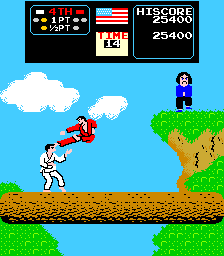
  • Karate Champ (1984) and Yie Ar Kung Fu (1985) aren't the first fighting games, but they may be the first ones that are worth playing.

1987-1989:
  • After Street Fighter is released in 1987. Takashi Nishiyama, the director, and Hiroshi Matsumoto, the planner, leave Capcom and move to SNK where they start work on Street Smart, released in 1989.

1990:
  • Neo-Geo makes its debut, but there are no fighting games among this year's releases. (Baseball Stars, Blue’s Journey, Cyber-Lip, Magician Lord, Mahjong, Nam 1975, Ninja Combat, Puzzled, Riding Hero, The Super Spy, and Top Players Golf)


1991:
  • Street Fighter II takes arcades by storm.
  • Fatal Fury, which had been developed concurrently, is released later that year. (Although many people would consider King of the Monsters to be the first Neo-Geo fighting game.)

1992:
  • Street Fighter II is released on the Super NES, and two new versions are released in the arcade. (More if you count bootleg versions.)
  • Either Art of Fighting or World Heroes is in every Neo-Geo cabinet you pass. (This is just anecdotal, but I'm sure my experiences at two different Godfather's Pizzas are universal.)
  • Fatal Fury 2 ditches the Southtown charm of the original in favor of a bland Street Fighter II-inspired international tournament.
  • Mortal Kombat offers a Western take on the fighting genre.
  • Time Killers, which was developed by the company that goes on to make the arcade version of Street Fighter the Movie, is laughably terrible.
  • Also: King of the Monsters 2: The Next Thing, Battle Blaze (Sammy)


1993:
  • Capcom releases its new CPS2 hardware with Super Street Fighter II.
  • SNK begins toying with crossovers by putting Ryo Sakazaki in Fatal Fury Special. (and they put Geese Howard in Art of Fighting 2 the next year) More importantly, Fatal Fury Special plays a million times better than Fatal Fury 2.
  • Fighter's History, Power Instinct, and Martial Champion are Data East, Atlus, and Konami's attempts at riding the band wagon, and they are all ported to home consoles.
  • Capcom and SNK release the wrestling games Slam Masters and 3 Count Bout within a few months of each other.
  • Sega introduces the 3D fighting genre with Virtua Fighter.
  • Also: Samurai Shodown, World Heroes 2

1994:
  • SNK releases King of Fighters '94, mixing characters from Fatal Fury, Art of Fighting, Ikari Warriors, Psycho Soldier, and some of their sports games. It begins what eventually becomes their most-prolific franchise, receiving annual updates through 2003.
  • Capcom broadens its scope by releasing X-Men: Children of the Atom and Darkstalkers, both of which feature cartoony graphics and over-the-top special moves.
  • 3D fighters Virtua Fighter 2 and Tekken dominate arcades and build interest for the upcoming Saturn and Playstation consoles.
  • Rare's Killer Instinct arcade game is treated as a way to preview the upcoming Nintendo 64, although since it is a 2D fighting game with lots of pre-recorded music and video, it is a very inaccurate representation of what the system will offer. In its attract mode there is even an announcement that it will be available for your home in 1995 on Nintendo Ultra 64, which is false for at least three reasons.
  • The Neo-Geo CD is released, offering arcade-quality games at an affordable price for those willing to wait through minute-long load times.
  • Also: Art of Fighting 2, Samurai Shodown 2, Power Instinct 2, Fighter's History Dynamite, World Heroes 2 Jet, Aggressors of Dark Kombat (ADK), Golden Axe: The Duel (Sega - The first game for Sega's Saturn-based ST-V hardware), Primal Rage (Atari)


1995:

1996:
  • X-Men vs Street Fighter is Capcom's first Marvel crossover game. (although Gouki from Super Street Fighter II Turbo is a hidden character in 1994's X-Men: Children of the Atom)
  • Red Earth is the first game for Capcom's CPS3 hardware.
  • Art of Fighting 3 uses rotoscoping to make some of the nicest animation you'll see of Robert putting his hands in his pockets and kicking his opponent while she's down.
  • Sunsoft's Waku Waku 7 is probably the finest 2D fighter that isn't made by SNK or Capcom so far, featuring memorable characters and unique physics with an elastic feel.
  • More games: Samurai Shodown 4, KOF '96, Street Fighter Alpha 2, Kizuna Encounter (SNK), Touki Denshou Angel Eyes (Tecmo), Ragnagard (System Vision), Ninja Master's (ADK), Breakers (Visco), Rabbit (Aorn), Virtua Fighter 3, Street Fighter EX


1997:
  • Capcom, long lambasted for its inability to count to three, releases Street Fighter III a mere six years after Street Fighter II. It is Capcom’s last internally-developed 2D fighting game to feature completely new animation.
  • SNK releases its 3D arcade hardware, Hyper Neo Geo 64, with Samurai Shodown 64. (and Road’s Edge)
  • Taiwanese company IGS releases the PGM, an arcade board with interchangeable cartridges similar to the Neo-Geo MVS. It is primarily home to beat-em ups and shooters, but one of the first releases is the one-on-one fighter Killing Blade. (arcade-only)
  • SNK releases its new 19th-century weapons-based fighter The Last Blade, introduces a brighter art style in Real Bout Fatal Fury Special, and wraps up the Orochi story arc in King of Fighters '97.
  • Darkstalkers 3 (Vampire Savior in Japan) is followed by two alternate versions, Vampire Savior 2 and Vampire Hunter 2, four months after the original release.
  • Also: Pocket Fighter, Marvel Super Heroes vs. Street Fighter, Street Fighter III 2nd Impact, Groove on Fight (Power Instinct 3 - on ST-V hardware)

1998:
  • Capcom and SNK release the final iterations of their Saturn-era series. (Although these iterations later received small updates such as Street Fighter Alpha 3 Upper and KOF 98 Ultimate Match.)
  • Street Fighter Alpha 3 makes its arcade debut (It was later re-released with more characters from the home versions.)
  • SNK's 2D fighters are essentially all encores of 1997's games, two of which are "dream matches" without any story: Last Blade 2, Real Bout 2, and King of Fighters '98. (It was believed that KOF 98 would be the last in the series, and its Dreamcast port is actually called King of Fighters: Dream Match 1999.) Neo-Geo collectors are initially miffed by the scant differences between these three games and the versions from the previous year, but the games are eventually recognized as some of the system's all-time best.
  • Arc System Works releases the first Guilty Gear game exclusively on the Playstation. It was created by Daisuke Ishiwatari, who left SNK after working on The Last Blade.
  • Psikyo releases Daraku Tenshi: The Fallen Angels. (only in arcades) It is rumored that the final version of the game is incomplete, and that after some of the development staff moved to SNK, they based the KOF '99 characters K' and Maxima on Cool and Harry from this game.
  • SNK releases the initial black and white version of the Neo-Geo Pocket.
  • Also: Marvel vs Capcom (on CPS2), Astra Superstars (Sunsoft - on ST-V hardware), Jojo's Bizarre Adventure (Capcom), Rakuga Kids (Konami - for the Nintendo 64!), Asura Blade (Fuuki - arcade only), Samurai Shodown 2: Warriors Rage (for Hyper Neo-Geo 64)


1999:
  • Capcom releases Third Strike and SNK releases Mark of the Wolves, both of which are tournament mainstays for many subsequent years as 2D fighter development wanes even more quickly after their releases.
  • SNK relaunches the KOF series with King of Fighters '99, introducing a new story arc, the striker system, six new characters and several newly-animated returning characters.
  • Fatal Fury Wild Ambition and Buriki One (arcade-only) are the last Hyper Neo Geo 64 games. (of seven total)
  • Neo-Geo Pocket Color is released, with SNK vs Capcom Match of the Millenium released later this year.
  • Also: JoJo's Bizarre Adventure: Heritage for the Future (Capcom - The last CPS3 game), Super Smash Bros (N64), Power Stone

2000:
  • Guilty Gear X features high-resolution character sprites made to look crisp in a 640x480 display.
  • Marvel vs Capcom 2 features one of the largest rosters in a fighting game. The character sprites in all of Capcom's Naomi games are still drawn at CPS-level resolutions.
  • Capcom vs SNK... Everybody rumored. Nobody believed.
  • All three of these games are released on Sega's Dreamcast-based Naomi arcade hardware.
  • Dimps is founded by Takashi Nishiyama, the director of Street Fighter and producer of Fatal Fury, Art of Fighting, and the first six KOF games. He is joined by many other Capcom and SNK alumni.
  • SNK is purchased by Aruze, which is more interested in making pachinko machines with SNK characters than funding video game development.
  • Also: King of Fighters 2000, Asura Buster (Fuuki - arcade-only)

2001:
  • Capcom vs SNK 2 is released. In the following years Capcom's arcade release schedule is nearly empty.
  • SNK's founder, Eikichi Kawasaki, and a number of other important staff leave SNK to start the new companies Playmore and Brezzasoft, shortly before Aruze bankrupts SNK. Playmore and Brezzasoft set to work obtaining the rights to SNK's intellectual property after the bankruptcy.
  • King of Fighters 2001 is developed in Korea by Eolith.
  • Also: Capcom vs SNK Pro, Virtua Fighter 4, Tekken 4


2002:
  • Guilty Gear XX is released on Naomi hardware. During one of the most stagnant times for Capcom and SNK, the Guilty Gear series sees newly-tweaked annual iterations for six consecutive years.
  • King of Fighters 2002 (And Metal Slug 4) are developed in Korea.
  • Rage of the Dragons for Neo-Geo is designed by Evoga, one of the only dedicated video game companies in Mexico, and developed in Japan by Noise Factory.
  • Also: Soul Calibur 2

2003:
  • Playmore wins the legal battle to use the name SNK in Japan, and changes its name to SNK Playmore.
  • Hyper Street Fighter II: The Anniversary Edition allows players to choose different renditions of the characters from all five iterations of Street Fighter II, taking the mashup so far as to change the voices and sound effects depending on the character chosen. The arcade version runs on CPS2 hardware!
  • To fight piracy, KOF 2003, SNK vs Capcom Chaos, and Metal Slug 5 were released as stand-alone PCBs as well as MVS carts.
  • Samurai Shodown V is made by Yuki Enterprise.
  • Guilty Gear X ver 1.5 is released on Sammy's new Atomiswave hardware (arcade-only), while Guilty Gear XX #reload is made for Naomi.
  • Also: Power Instinct Matrimelee (Noise Factory - on Neo-Geo)

2004:
  • SNK Playmore releases the last official Neo-Geo game, Samurai Shodown V Special, developed again by Yuki Enterprise.
  • SNK Playmore releases its first Atomiswave game, KOF NeoWave. Despite Atomiswave's higher display resolution, the character sprites in all of SNK's Atomiswave games are still drawn at Neo-Geo resolutions.
  • SNK Playmore also releases the 3D fighter KOF Maximum Impact on the Playstation 2. (The 3D KOF series does not see an arcade iteration until KOF Maximum Impact Regulation A in 2007)
  • Capcom Fighting Jam mashes 20 characters from Street Fighter, Darkstalkers, and Red Earth together. It runs on the Namco System 246 board.
  • The Rumble Fish, an Atomiswave game from Dimps, features smooth vector-based animation where the characters' limbs are all rotated separately.
  • Guilty Gear Isuka introduces 4-player madness to the series, running on Atomiswave hardware.
  • KOF '94 Rebout for Playstation 2 is a remake with higher-resolution graphics, but extremely dated gameplay.
  • Chaos Breaker is the last game from Korean developer Eolith. (arcade-only)

2005:
  • SNK Playmore releases King of Fighters XI, Neo-Geo Battle Coliseum, and Samurait Shodown VI on Atomiswave hardware.
  • The Melty Blood fighting games, which started with a doujin PC game released in 2002 by development circles Type-Moon and French-Bread, see a full arcade release in Melty Blood Act Cadenza, published by Sega and developed by Ecole.
  • Hokuto no Ken, developed by Arc System Works, is published by Sega on Atomiswave.
  • Also: Guilty Gear XX Slash (on Naomi), The Rumble Fish 2 (on Atomiswave)

2006:
  • SNK Playmore begins porting groups of Neo-Geo games to other consoles on budget-priced compilation discs
  • Guilty Gear XX Accent Core is the last Guilty Gear game released in arcades.
  • Arcana Heart is made by Examu, formerly Yuki Enterprise. (the developers of Samurai Shodown V)
  • Also: KOF Maximum Impact 2 (console-only), Virtua Fighter 5

2007:
  • Battle Fantasia from Arc System Works sets a high standard for using 3D graphics while still maintaining smooth 2D-style gameplay.
  • Sengoku Basara X made by Arc System Works is published by Capcom.
  • Capcom and SNK begin releasing their classic fighting games on console download services.
  • Also: KOF Maximum Impact Regulation A

2008:
  • Super Street Fighter II Turbo HD Remix, developed by the American company Backbone Entertainment, is a downloadable release on PS3 and Xbox 360. The Canadian artwork and fan-created music lead some players to question its status as an "enhanced" remake.
  • Capcom resumes making fighting games in earnest with Street Fighter IV released on Taito's Type X2 hardware, and Tatsunoko vs Capcom (developed by Eighting) released on custom Wii-based hardware. Ryota Niitsuma, who worked on both games, mentions later that Capcom has no further plans for fighting games with 2D characters but plans to continue mixing 3D graphics with 2D gameplay.
  • BlazBlue: Calamity Trigger from Arc System Works is a brand-new game featuring high-definition 2D artwork.
  • Also: KOF 98 Ultimate Match, Guilty Gear XX Accent Core Plus (only on home consoles), Samurai Shodown Sen (developed by K2 LLC), Arcana Heart 2, Melty Blood Actress Again


2009: A Resurgence of Fighting Fervor as Street Fighter IV, KOF XII, and Blazblue are released on PS3 and Xbox 360
  • KOF XII is the first new 2D SNK fighting game since 2005, and the first internally-developed game with all-new animation since 1999. Although it is widely criticized for the size of its character roster, the only 2D fighting games from any company to feature as many newly-animated characters are KOF '94 and KOF '96.
  • BlazBlue Continuum Shift
  • Also: KOF 2002 Unlimited Match, Daemon Bride (Examu - arcade-only, running on the eX-BOARD), Arcana Heart 3, Gouketsuji Ichizoku: Matsuri Senzo Kuyou (arcade-only)

2010: Return of the Incremental Updates!
  • Super Street Fighter IV is initially released on home consoles with ten more characters than the original Street Fighter IV. The upcoming arcade version will have more characters.
  • KOF XIII features more characters (divided into teams!) and a story, but it also has substantial changes to the fighting system which make it more than just "the completed version of KOF XII."
  • BlazBlue Continuum Shift II is an arcade release that features the updates from the home version of Continuum Shift, as well as further changes.

Future games:
  • Marvel vs Capcom 3 features 3D graphics and 2D gameplay, released straight to consoles.
  • Street Fighter x Tekken is a tag-team crossover game developed by Capcom with 3D graphics and 2D gameplay similar to Street Fighter IV.
  • Tekken x Street Fighter is being developed by Namco.