Showing posts with label Gameboy. Show all posts

Saturday, December 4, 2010

Rastan Jr....Maybe? About Taito's Knight Quest

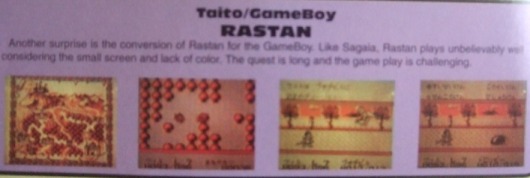
So I was paging through one of my many old issues of Electronic Gaming Monthly (thanks to old college buddy Bobby Sibi for the donation!), specifically in the August 1991 issue, and saw a preview of Rastan for the Gameboy.


Wait, what?

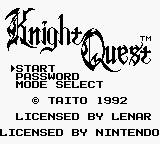
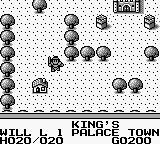
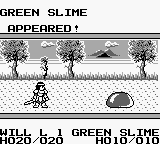
We did a lot of research for our Rastan article, surely this isn't something we missed? So I tried to dig up any info I could glean from this tiny preview - that it's a Gameboy RPG made by Taito, and stars a character named Will (as evidenced in the screenshots, though they're in Japanese.) This turned up a game called Knight Quest, which was released in both North America and Japan under the same title.


While published by Taito, it was developed by Lenar, who also did *shudder* Deadly Towers. It's a pretty bog standard RPG similar to Dragon Warrior, in that you're a single character that roams around the landscape, fighting turn-based battles and grinding for EXP/cash. The only major differences are that enemies are visible on the field, and the side-view battles that make everything look a little more action-ish. It certainly doesn't seem to have very much in common with Rastan - the world and enemies are more like generic-RPG than anything similar to Conan or any other source that Rastan ripped off. So what's the deal?


Either:

(A) This was originally attached to the Rastan IP at some point in development, as sort of a Rastan Jr. meant for kids and positioned as an RPG. Not unfeasible, considering Sega did something similar with Golden Axe and its Game Gear spinoff Ax Battler. Plus, they shoehorned the Rastan character into the Western-developed arena fighter Barbarian, although that happened well over a decade later. Or...

(B) Electronic Gaming Monthly was mistaken and was talking out of their asses. One of the most fun parts of reading old EGMs is reading previews of Japanese games and trying to pinpoint where the writer had no idea what they were talking about and was just rambling off some text based on a few screenshots. Based on the vague preview - "Rastan plays unbelievably well considering the small screen and lack of color. The quest is long and the game play is challenging" - this may very well be the case.


There's no title screenshot in the EGM, alas. And so there's no real definitive answer we can dig up, but it's interesting to ponder. Anyway, you can read more about Knight Quest at the excellent Gaming Sanctuary.


Thursday, November 25, 2010

Replacing a Game Boy save data battery

I recently went to a junk store which resulted in the impulse purchase of 9 unboxed monochrome Game Boy games, costing in total $19. Each was $2 a piece, except for the jewel in the bundle Mystic Quest, aka Seiken Densetsu, which cost $3. As luck would have it, the save battery was dead. Join me on my own mystic quest, as I battle magi and dragons to replace the fabled Panasonic CR1616 3V save data battery.
.
.
.


Actually, first I’m going to regale you with reviews of the 9 games I bought. If you just want the battery replacement guide, scroll way down.

I’ve always loved the original GB, since there’s something wonderful about those tiny cartridges and the system’s limitations. I also feel that it’s a comparatively undocumented system, with a tonne of overlooked but awesome games no one talks about. For a bit of fun I sometimes buy random carts without knowing anything about them, and on occasion I strike pay dirt, such as with Mercenary Force which yielded an HG101 article. Maybe there are hundreds of potentially incredible games still waiting to be found?

This lot were tucked away in a series of plastic security boxes at my nearby second-hand junk store. They cost $2 each, except for Mystic Quest which was $3. At those prices, it was kid in a porno store time as I grabbed whatever looked interesting. I left behind about 30 or so cartridges, most of them common (including about 7 Donkey Kong cartridges), and a tonne of Pokemon crap.

Unfortunately when I got home and tried these, I was mostly disappointed.


Volleyfire
This was a Japanese import, and a shooter, so I had to have it. Sadly it’s unbearably dull. Imagine Space Invaders, except instead of invaders there’s one guy moving left and right trying to shoot you. Worse than it sounds.


Rescue of Princess Blobette
Sequel to A Boy and his Blob. This is quite cool, but it feels way too restrictive on the small screen, and I don’t like the setting of a run down castle. I prefer the original. It’s not bad, I guess, but not as good as I’d hopped. If you want portable blobbing, get the original NES emulated on a PSP.


Mystic Quest
I’d already finished this years ago, but wanted the cartridge as a collectible. Two things are wrong with it: it’s in French, which I didn’t expect, since oftentimes RPGs are released in English in France. And secondly, the save battery was dead.

Solomon’s Club
Like Solomon’s Key on the NES. Pretty good all in, not sure how long I’ll play it for though.


Darkwing Duck
Played it briefly, seems just like the NES original. Rather good.


Duck Tales
Pretty much the NES game in monochrome I’d say.


Star Trek – Into the nexus
I had hoped this would be a cool RPG like the NES Star Trek games (pictured), but in fact it’s a collection of extremely awful minigames.


Blaster Master Jnr
This just goes to show how much attention I pay to HG101’s many fine articles. If I had read up on this, I’d have known it was nothing like Blaster Master on the NES. I think it’s terrible.


True Lies
I recall seeing a magazine preview for this, which made it look a bit like Die Hard from the NES, which is one of my all time favourite games. Sadly it’s a poorly designed maze shooter, where you can’t make out who is a hostage and who isn’t, resulting to many game overs.


And that’s about it. The Disney stuff is cool, but better on the NES. And Mystic Quest, my prize of this lot, didn’t even work due to battery death. All in all, I wasted $19 which could have been better served on buying a PSN card.

Once I get a chance I’ll be trading this lot in at a nearby retro store. The real nail in the coffin for all of this was, I recently tried for the first time a GB emulator on my PSP. And OH MY GAWD. Never before had I imagined such clarity. I’d tried GB emulators on the Nintendo DS, but the system just didn’t have the resolution to do them justice. You either ended up with a 1x ratio the size of a postage stamp, or you had to go with 1.5x which filled the screen but filtered everything. GB games at x2 resolution on a PSP are the way GB games were meant to be played. It is BETTER than perfect.


REPLACING THE BATTERY

Before I could trade it in at my retro store, I would have to replace the battery on Mystic Quest. I’d replaced batteries on NES games, my Sega CD RAM cart, and several Sega Saturns, but I’d never even popped open a GB cart before.

First I’d need to remove the annoying GameBit screw Nintendo uses. I find the inclusion of these in most retro items slightly disturbing, since you need to go out of your way and order a GameBit screwdriver (they come in two sizes). Their use signifies that Nintendo had never considered the possibility of battery death, or if they did, never intended for owners to repair the problem. It’s extremely short-sighted. Does Nintendo’s repair service still exist for retro items? Can I post them my GB cartridges for battery replacement? Why can’t I crack open my cartridge?

The bigger picture here is that all retro items are slowly dying. Meaning if you’re a purist who wants original hardware, you need to find or become a collector who knows how to mod systems such as the SNES, and the Mega Drive for 60Hz, or knows how to build RGB SCART cables, and who can recommend the best CRT TV, all of which are now defunct. NFG has been a leading figure in the technical chop-shop workings of consoles, and there are others online, but I always find it worrying that preservation of this subset of human culture falls to people like us: a few scruffy guys with soldering irons. There should be a museum for this kind of stuff.

The GB uses the smaller of the two GameBit sizes. After it’s cracked you slide the cover-art part of the cartridge down and pop it off. Here’s where it gets problematic. Backup batteries in console cartridges were easy to replace, using bigger batteries such as (I think, maybe) the DL2032. The GB uses the considerably smaller CR1616 battery. Even worse, Nintendo appears to have soldered these in place.

For comparison’s sake, here is the circuit board to the crappy Star Trek game. Notice how it’s smaller than Mystic Quest, lacking the entire upper section which deals with battery save data.

The battery is housed between 2 small horizontal plates, each of which is soldered to the circuit board. The battery is attached to the plates either by 2 pin-head drops of melted solder on each, or a machine actually punched two tiny holes into the plates, which resulted in an embedded spike in the battery. It was too small to tell, but based on how flush the set-up was with the circuit, they obviously made the battery-and-plates component at a separate part of the plant, and then later in the production line a person or machine took the pre-made battery component and then just soldered that in place. There is absolutely NO WAY you could solder the lower plate onto the circuit, then somehow puncture holes or apply solder to this plate in order to place the battery on top of it, before attaching the upper plate with additional solder/holes. There’s just not enough room around the circuit board to work.

This was going to cause me a huge problem, since I had two options: desolder the 2 plates, replace the battery and then try to re-attach this mini component, or try to pry out the battery whilst leaving the plates in situ, and then hope could I wedge a new one in. Feeling lazy I opted for the latter, and had to use one of my super-tiny flat-head screwdrivers to wedge between the lower plate and battery. A few minutes of jabbing and poking broke the seal and the battery lifted up (the bastard was stuck in like an Alabama tick). Then I delicately had to do the same with the upper plate, making sure not to break them. The plates were quite thin, and had a flexibility not too far off aluminium foil.

If you check the photos, you should be able to see the tiny spikes on the plates – now, I’m not sure if these are tiny blobs of solder which held the item in place, or if a machine punctured a hole from the other side to fasten it securely. There were two tiny indentations on the plate’s reverse side.

Next I needed a replacement battery. The CR1616 is easily available but not too common where I live. A local general store didn’t have it and couldn’t get it in. A dedicated electrical store nearby had a wide selection of batteries, but not the one I needed. They could order it in though, which would take 2 take days and cost me $3.75. I could have gotten it slightly cheaper online, but I didn’t feel like the hassle so had them order it. Assuming my replacement plans succeeded, my working copy of Mystic Quest would have only cost me $6.75.


The problem now was how to affix it securely? I’d bent the plates slightly and the whole thing was loose, and even bending them back didn’t fix things because unlike NES batteries, there was no springy cup shape to hold it in place – the plates are just 2 horizontal strips. I considered tiny drops of superglue, but this would create a barrier between the battery and plates. Resoldering was out since my soldering iron is too chunky.

Then I remembered a special tape I had for affixing bandage gauze to human skin, called Omnifix. That stuff sticks like poop-on-a-blanket and is extremely difficult to get off. Perfect! It would look a little Heath Robinson, but once the cartridge was closed you wouldn’t notice.

Before replacement I took some pliers and scrunched the little spikes flat (the fact they crumpled into the plating so easily increases the likelihood they were the result of holes as opposed to solid blobs of solder). Next the battery went back in face down, and I applied two strips of bandage tape. The tape and adhesive are non-conducting, so I didn’t mind it touching various circuit lines.

Although it somewhat resembled a child’s scuffed knee, I was please with how the circuit board still fit neatly in the cartridge casing afterwards. In case any future owners wanted to get at the battery in a decade’s time when it died again, I decided to replace the GameBit with a standard Philips screw. I normally keep a big box of spare-parts, but had recently misplaced it, so in a pinch stole one of the good screws from a broken N64 memory card by Logitech. Et voila. It fit perfectly and kept the cartridge housing secure.

I tested the game by starting two new save files, named after HG101 no less, and then tried them out 5 minutes later, and then a few hours later. Even after switching the unit off the memory data remained intact, and will hopefully give its future owner several years of enjoyment.


As for myself, I am selling off my small GB collection. These things are reaching the age where they’ll need proper restorative care to keep functioning. I’ve already binned one GB due to a broken, dust filled screen, my old Game Gear’s AC input mysteriously died, my CDi’s internal battery is dead and cannot be easily replaced, and I don’t even want to switch my 3DO on for fear of what I’ll find. I only hope that there are collectors who take this seriously and will maintain the skills needed to keep various older pieces of hardware in working condition.

Monday, August 17, 2009

Fred Ford and the origin of handheld gaming


Toys For Bob’s Fred Ford: the man, the myth, the Melnorme Trademaster. And as I discovered, possibly also a founding father of handheld videogames? Could it be...

---

(above photo taken from a web archive of Yukki’s old site)

In a recent interview I conducted with Fred Ford, he revealed some fascinating and hilarious background to the work he did before teaming up with Paul Reiche III. What I found particularly interesting, was that he worked on a Japanese monochrome handheld with a screen about 1cm by 4cm”, creating several games for it. Based on when Toys For Bob was founded, this would put the device at pre-Gameboy era, essentially making Fred Ford one of the earliest people to work on handhelds.

His entirely unedited statement goes thus, followed by some musings of my own:
---
I was attending U.C. Berkeley at the time and, being the eighth out of nine kids, was responsible for paying my own way as my parents had long ago been sucked dry.

I somehow sensed that the promotion I was striving toward in my janitorial job was always going to remain beyond my capacities and so I answered a 'Help Wanted' add for a local software company, Unison World. I only had my work ethic to offer, having no prior experience, and when the interview ended with "Well, we're not hiring just yet, but we might call you in a month or two.", I figured I was being let down easy.

But I did get a call in a couple of months. After spending a sleepless night, agonizing over what I was throwing away in the field of custodial engineering, I grudgingly accepted. And the crazy thing was that they let me do whatever I wanted, ruining me for later Silicon Valley corporate jobs where my bosses actually wanted to have some say about what I did. First I worked on some sort of Japanese monochrome handheld with a screen about 1cm by 4cm (maybe 16 pixels by 64 pixels). I did a bowling game, a first-person bi-plane game, and a top-down window on a find-the-other-tank game.

After that I moved onto the NEC, Fujitsu, and MSX. Sometime during this halcyon time, the two owners of Unison World had a falling out and one split off to form Magicsoft. Their agreement had all of the employees, including me of course, going to Magicsoft. Not too long after this, Erol Otus, would coincidentally go to work for Unison World although I did not meet him at the time.

Some of the games I did for those systems were: Pillbox, Sea Bomber, Ground Support, and some submarine game whose name escapes me. I was working on a game for the MSX (I still have the eight inch floppy) when Magicsoft ran out of money. This was just as I was finishing my degree at college and the timing seemed right for me to put away childish things and join the corporate world. Luckily, after six years lost in the corporate wilderness, my senses returned and I hooked up with Paul.

Perhaps the most memorable thing as a callow, introverted 20 year old were the hookers who would primp in front of the large, mirrored window that fronted our office on Adeline Street in Berkeley. Some things you cannot forget even if you want to.
---


The question is, which handheld is he talking about? Google searches concerning Unison World don't bring up much pertaining to games...

The easiest thing would be to email him again and ask, especially since Fred Ford and Paul Reiche III must stand as two of the finest developers in the industry, happy to answer questions and just chat with fans (such as this forum topic on Little Witching Mischiefs), even if it’s not going to further any plans for intergalactic domination (which is not something I can say for most other developers, controlled by PR reps who won’t even acknowledge your existence unless you can guarantee high-scoring prime-page magazine coverage). Yeah, FF and PR3 are some good guys, and apart from not wanting to take advantage of this situation with more questions, I think it’d be fun for us to try to deduce the answer ourselves.

The orientation of the screen makes me think it’s Milton Bradley’s Microvision (the screen was actually square, 16x16, but it’s still an oblong system), especially since it also had a bowling game and other titles released for it which fit Fred’s description (see above link). Picture below taken from Wikipedia and rotated counter-clockwise.


On the other hand, Fred describes it specifically as Japanese handheld. Assuming it’s obscure, there’s not going to be much information on it in English. A good bet could be the Epoch Game Pocket Computer, from 1984. Except online sources say that only 5 games were released, none of which match Fred’s description... Which makes me think it’s the Microvision again. Picture below taken from Handheld Museum.


Quite a puzzle, I’m sure you’ll agree readers. Winnie Forster’s Games Machines encyclopaedia sheds no light on the subject, and was even lacking in an entry for Epoch’s handheld. But it’s a fascinating piece of handheld gaming history, pre-Nintendo Gameboy. If you have any ideas on what it might be, let us know!


EDIT:
So I emailed Rik at the Handheld Museum, and he shed some possible light on what else it might have been. Thank you Rik!
---
I'm really curious about what he was working on... If he can't remember details, one thing to try to figure out would be what year this was. Microvision came out in 1979, and I know the people at GCE (the company that made the Vectrex) were involved with it. But that might have been designing the base unit, and Fred's company was programming games...

Do the names Dan Shafer or Chuck Blanchard sound familiar to him? There's another cartridge based game that came out in 1983 with a 16x32 pixel screen (though larger than he described) called
Super Micro Cartridge. I don't think it was for the Japanese market, and none of the games sound like his (although you could imagine them being re-named with the right 'stretch of the imagination').

Maybe he'd recognize the look of it?

I assume this was a cartridge based game? It might have just been a game with several games built into it... Hard to say. Most of the cartridge based games back then had custom screens instead of just 'pixels'...

---

EDIT 2:
Fred Ford gives a response, and the plot thickens!

About the Japanese hardware I was working on, I remember only that the screen was shaped more like a calculator's screen than a typical handheld (i.e. rectangular rather than square). But I don't recall its being a true calculator. I also think I recall that it was mostly black. So maybe it was the missing link between calculators and handhelds. This would have been 1981 or 1982.


Sunday, August 2, 2009

Limitations, boobs, and why I miss the monochrome GB

Videogame sprites are a lot like breasts: you either feel they have to be as large as humanly possible, or you can also appreciate when they’re smaller, but still perfectly formed. Never is this more so than with the monochrome Game Boy. Although I have a tremendous appreciation of what systems like the Neo Geo and Saturn could do back in the day, and what is now being done in 2D games such as Odin Sphere and BlazBlue, I still miss the tiny pixelated sprites and the limitations found in Game Boy games – particularly the earlier titles.

When you play the earlier GB games it’s clear the developers were aware of the screen limitations and so worked accordingly. Sadly as the years went on, they became more daring, created increasingly larger sprites, and in my opinion lost something wonderful. If you notice in the screenshot above (the width is increased, but the height should match the original GB pixel height), the original Sunsoft Batman is half the size of his sequel’s sprite. And with Mario, the Mario 2 sprite at his smallest is bigger than the original Mario after powering up! Although forum opinion tends to disagree with me, I feel this trend was a mistake on the part of developers. The best GB games kept things petit and worked to their strengths.


When you stare at a small screen, the main character will always be in view. Making them increasingly detailed and larger to fill the screen is a bad idea, because it means for the length of your playing you’ll be seeing more of exactly the same thing: the main sprite. The Donkey Kong Land sprites, plus those of Killer Instinct, are particularly awful. Whoever thought converting CGI SNES graphics to a 4-tone palette would be a good idea, was an idiot. The games as a result are a blurry, unplayable mess. For my own personal taste, I prefer nothing bigger than Arremer in Gargoyle's Quest, while the original Batman and Mario sprites are absolutely lovely. Look at how much charm they ooze despite being around a dozen blocks high. I could build them out of Lego if I wanted to!

Smaller sprites allow for more variety in the scrolling stages because they give you room to see more of the surroundings, and there’s something primordially satisfying about wielding tiny characters against massive bosses (if you’ve ever had to fight off a grizzly with a pocket knife, you’ll know what I mean). Regardless of whether you’ve ever experienced this same qualia, the fact remains that sprite size also affects design, with bigger sprites resulting in suffocated levels. When you have a combination of small, nicely drawn sprites and solid gameplay, it’s magical. Alien 3 stands as my favourite GB game, and despite generations later having handhelds capable of massive sprites and 3D graphics, with dual screens or widescreen, Alien 3 still ranks in my top 10 handheld titles. Everything is exquisitely detailed in miniature, from beds in the infirmary, to books, garbage, prisoners and the little facehuggers that roam the corridors.

When I play the best the GB had to offer, and there a ton of games (Mercenary Force, Mario Land, Batman, Alien 3, Donkey Kong 94, Monster Max, etc), it saddens me, because I realise that when the GBC and then GBA came out, developers had still not reached the maximum potential of the little monochrome wonder. And I don’t mean in terms of graphics, I mean in clever design that takes advantage of how intimately close you are to the action, coupled with the minimalist, miniaturised sprites and layouts, and all the other limitations that came with the system. Limiting one's creative freedom can focus the design and, ironically, result in something creatively more interesting.

There is a beauty found in limitation and greyscale; the old masters didn’t abandon pencil when they discovered how to put colour on canvas. Even today, with my PS3 and HD TV, I would still be willing to pay money for a well done GB-style game. Not just something stylistically black and white, like Mad World, I mean proper tiny sprites, dwarfed by their surroundings, and doing interesting things in a restrictive space.

Don’t believe me? The biggest proof to me that the GB still had what it takes, was an old competition by Way of the Pixel.

When I first saw the entries I was excited by the prospect of fan-made indie games. Sadly it was only a series of GB mockups – but they hint at what could have been.

My personal favourite? The STALKER mock-up, since after System Shock 2, STALKER is probably my favourite first-person shooter, containing everything which I had wanted from Bioshock, but was denied. Though, I disagree with the mock-up artist’s view that it would have to be turn-based fighting – it could be real-time just like Alien 3! I'm hoping that as indie games grow, and increasingly unusual styles are attempted, a few people will make games of epic scope, but in a minimalist style.


(Alien 3 pics taken from Vooks blog)