Showing posts with label electronic gaming monthly. Show all posts

Saturday, August 20, 2011

Mr. Gimmick review in EGM July 1992

I've been prepping an article on Sunsoft's excellent Famicom title Gimmick!, which very almost made it to the United States back in 1992 under the name Mr. Gimmick, but was cancelled. However, it was released in Scandanavia in very limited quantities, and it was reviewed in the July 1992 issue of Electronic Gaming Monthly. (The NTSC prototype ROM has also been dumped, but apparently you can only play it for now by purchasing a $45 repro cart.) At any rate, I was curious what EGM had to say about the game, but couldn't find anything on the net other than the scores, which were surprisingly low. However, I found the mag in my stack o' mags in the attic and scanned it, for all to be ashamed at what a terrible magazine it was back then.


The full text is transcribed below:

Mr. Gimmick is Sunsoft's latest NES title. You play the part of Mr. Gimmick, a green blob with special magical gifts. His main weapon is a mystical star that forms over his head to seek out enemies. Collect bottles that give Mr. Gimmick new powers like fireballs, invincibility, and powerful bombs. The five levels are beautifully detailed with pastel colors while the bosses will present quite a challenge to Mr. Gimmick.

Steve: Here's a game with a cool theme that could have been explored in a hundred different ways. Instead it's a repetitive attempt at the action genre with difficult that is obviously geared to the wee sprites. Kids games don't have to be completely lacking, however, and more time could made this one a winner. 5

Ed: OK, so it looks cutesy and seems like a great game for a 7 year old, but wait. Instead, you get a very challenging game that requires a great deal of technique. It starts off easy, but that is only practice. Get farther into the game and you'll have quite a challenge. Definitely a sleeper. Give this one a try! 8

Martin: Mr. Gimmick has a few cool options to the game play and the cute theme will attract younger players. I can't get excited about moving a little booger around the screen though. The graphics are OK and the sounds are decent but other that that [sic] the game play is very simple and needs more variety. Not bad, but not great. 5

Sushi-X: Mr. Gimmick is one of those games that the kiddies can relate to. The levels are nicely detailed for a NES game but with only five levels the variety just isn't there. The music is kind of catchy but wears this after a while. The game plays rather well however. The score would have been higher if it wasn't so easy. 4


Okay, you have to understand that most of the above is factually incorrect. Gimmick! is not only a brilliant game (if you can't wait for the article, then watch this excellent annotated longplay), but it's also ridiculously difficult. Like, up to the levels of Ninja Gaiden and Battletoads difficult. Three out of the four reviewers clearly didn't play the game for any length of time, if at all, only to dismiss it as "kid" stuff because it looks bright and cutesy. There are also six levels (seven if you count the hidden final stage, which requires incredible skill to get to) so they seemed to have based their review off an incorrect fact sheet of some kind.

This attitude was sadly rather common in the magazine, which at the time was very dismissive to 8-bit games in favor of flashier 16-bit titles. (The forgettable Super Bowling for the SNES in the same issue got a 7, 8, 8 and 7, for context.) You also have to remember that this same magazine actually gave numerical scores to each system in their yearly buyer's guide, which is possibly the biggest thing you could do to troll readers back them. Of course, there was no internet to complain, although that was one of the specific reasons why myself (or, rather, my father, since I was ten years old) subscribed to Video Games and Computer Entertainment over EGM.

Saturday, December 4, 2010

Rastan Jr....Maybe? About Taito's Knight Quest

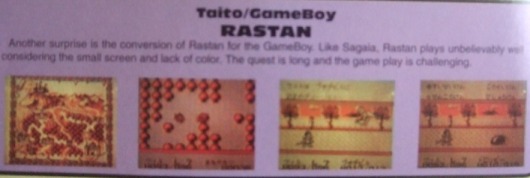
So I was paging through one of my many old issues of Electronic Gaming Monthly (thanks to old college buddy Bobby Sibi for the donation!), specifically in the August 1991 issue, and saw a preview of Rastan for the Gameboy.


Wait, what?

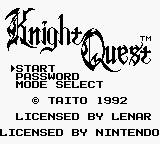
We did a lot of research for our Rastan article, surely this isn't something we missed? So I tried to dig up any info I could glean from this tiny preview - that it's a Gameboy RPG made by Taito, and stars a character named Will (as evidenced in the screenshots, though they're in Japanese.) This turned up a game called Knight Quest, which was released in both North America and Japan under the same title.


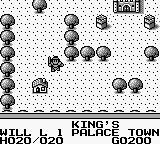
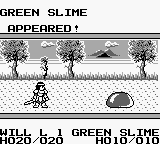
While published by Taito, it was developed by Lenar, who also did *shudder* Deadly Towers. It's a pretty bog standard RPG similar to Dragon Warrior, in that you're a single character that roams around the landscape, fighting turn-based battles and grinding for EXP/cash. The only major differences are that enemies are visible on the field, and the side-view battles that make everything look a little more action-ish. It certainly doesn't seem to have very much in common with Rastan - the world and enemies are more like generic-RPG than anything similar to Conan or any other source that Rastan ripped off. So what's the deal?


Either:

(A) This was originally attached to the Rastan IP at some point in development, as sort of a Rastan Jr. meant for kids and positioned as an RPG. Not unfeasible, considering Sega did something similar with Golden Axe and its Game Gear spinoff Ax Battler. Plus, they shoehorned the Rastan character into the Western-developed arena fighter Barbarian, although that happened well over a decade later. Or...

(B) Electronic Gaming Monthly was mistaken and was talking out of their asses. One of the most fun parts of reading old EGMs is reading previews of Japanese games and trying to pinpoint where the writer had no idea what they were talking about and was just rambling off some text based on a few screenshots. Based on the vague preview - "Rastan plays unbelievably well considering the small screen and lack of color. The quest is long and the game play is challenging" - this may very well be the case.


There's no title screenshot in the EGM, alas. And so there's no real definitive answer we can dig up, but it's interesting to ponder. Anyway, you can read more about Knight Quest at the excellent Gaming Sanctuary.


Tuesday, May 4, 2010

New EGM and GameFan hit the shelves


Print isn't really dead, is it? I don't think most folks want it gone, but no one wants to pay for it, hence the conundrum. Clearly there's an affection for it amongst the video game magazine industry, because they keep on trying. They're smarter than just kicking out the same old stuff though - they realize they need to reinvent themselves in order to keep buyers interesting. Gamepro, previously an ADD-addled rag for adolescents, has somehow turned into a respectable publication in the past few months, often compared to the likes of Next Generation or Edge. And recently, not one but two revivals have hit the newsstands, each seeking to provide a quality alternative to *shudder* Game Informer.

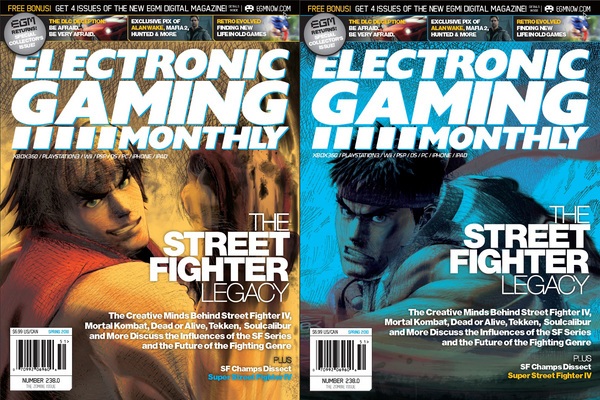
First up is: Electronic Gaming Monthly:


EGM began back in 1989, becoming, along with Gamepro, Game Player's, and Video Games and Computer Entertainment, some of the first dedicated video game magazines on the market. It was sold to Ziff-Davis in 1996, who then sold it to Heart Publishing in 2009. Hearst had little faith in the print market, so they canned the mag while letting 1up.com, its online equivalent, survive. Not long afterward, Steve Harris, the original founder, bought the rights to the magazine and promised to relaunch it, feeling the name still carried plenty of weight in the gaming industry. Over a year after it shuttered its doors, EGM is back, and while it's not technically the same as it was a year ago, it carries many notable names, including Brady Fietcher (ex-editor of Play), Dan Hsu (EGM alumni), Marc Bozon (from IGN), and numerous others.

They brought back the old logo, which was ditched in an EGM redesign from a few years back. The whole magazine feels more like the EGM from the late-PSX, early PS2 era, at least in design. It's obviously not as thick as it used to be, but the paper stock is heavier - I still liked the old EGM even in its waning days, but there's no doubt that it began to feel really thin and flimsy, while this carries some weight. It's not Edge or Next-Gen thick, but it's a step up from most other modern US mags.

The key feature is on Super Street Fighter IV, and has interviews with not only Yoshinori Ono, but brings John Tobias (Mortal Kombat) and Tomonobu Itagaki (Dead or Alive) into the mix with some interesting commentary. (The highlight - Itagaki votes Tekken 1-5 as the Five Worst Fighting Games of All Time. Truly a man after my own heart.) The Review Crew has gone from three reviews down to two, with a main review and a second opinion. There's a four page spread on the history of EGM, as well as some features on the effects of Metacritic and some commentary on Sony's motion controller, as well as a short feature about the recent retro revival. Many of the editors have their own columns towards the back, and includes Dan Hsu doing what he does best - ripping pieces into his lesser video game journalism peers. They even brought back Seanbaby to talk about Jonas Brothers and Barbie games. I thought, like most of the Internet, that I'd gotten sick of him, but as it turns out I really haven't. There are a couple of previews that feel a bit redundant based on all of the coverage elsewhere (Alan Wake) although it covers a few I hadn't heard of (Naughty Bear). There's also some digital content you get access to if you subscribe at EGMNow.com. A quality effort overall!

And now, GameFan:

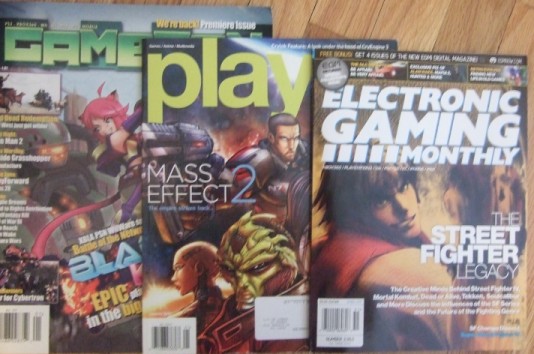
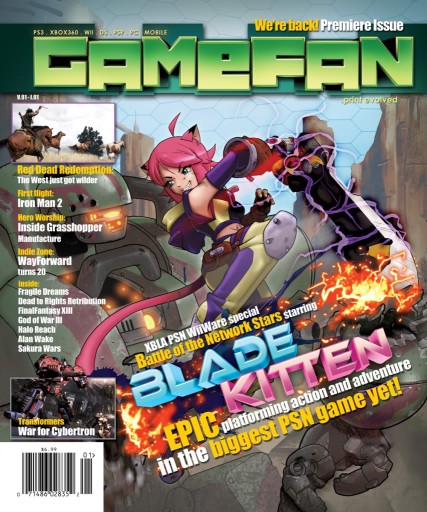
The issues of this one are a bit shiftier. As we've blogged about before, Play Magazine died a quiet death earlier this year, with the January issue (the Mass Effect 2 one) being its last. Somehow, publisher Dave Halverson was able to recover and almost immediately start a whole new magazine with a whole new staff, leaving over $40,000 due to his previous writers unpaid. (And all of his subscribers left in the dust. Boo.) I don't know how this all happened, but three months later, the revival magazine, going under the old moniker GameFan (they dropped the "Die Hard" part, presumably because it's under use by another website) and sticking on a short "MovieFan" section to act as a dual genre magazine.

It's been upgraded to a large format, similar to Rolling Stone. It's nice and large on the newsstand, although it uses thin, glossy paper stock, so it feels kinda cheap to hold. The large format also makes it very difficult to fit on a shelf, or makes it all the more liable to get torn up if you stack them in a pile. The layouts are busy, but much more cohesive than the GameFan days. I think they're a bit more attractive then EGM, although not quite as professional looking.

The content is pretty similar to what you'd find in Play, seeing how the cover heralds a fairly obscure title, the upcoming downloadable game Blade Kitten. There are the usual previews and features, with the best being an interview with Suda 51 and other Grasshopper Manufacture folk. The coverage is alright, although I feel like a lot is lost from Play. I always felt the cool Japanese coverage was kept aloft by Eric Patterson, Nick Des Barres and Casey Loe, none of which are involved in this one. (Casey is onboard EGM, and all three have form an excellent podcast, WARNING! A Huge Podcast is Approaching Fast! (a reference to Darius.)

The reviews section is a bit confusing, because it's done like the old Die Hard GameFan. There's the "Viewpoint" section, where two people (reduced from four) give a brief opinion on a game, along with a rating. Later, there's a fully review for the title, although it more describes what the game is about rather than offering any criticism. The coverage is inconsistent, because some games get a Viewpoint but not a real review, or vice versa.

As expected, a huge chunk of the reviews are written by Halverson, so if that put you off about Play, this isn't going to be any better. In fact, one of the best things Play Magazine did was get rid of the scores, because it made it less apparent that they gave high scores to any old piece of crap. Well, the scores are back. In typical fashion, practically each and every game is awesome, with nearly every one scoring an average of an 8 or above (the only one with a flat out negative rating is the widely derided Blood Bowl) and stuff like Final Fantasy XIII gets a 10, because it's much easier to pen flowery love letters than it is to write actual criticism.

As for the MovieFan section - I'm not sure it really works. You're supposed to turn the magazine over and flip it, and, hey, a whole new magazine! Sort of. The thing is, the bar code is clearly on the GameFan side, and any book store I've seen stock this only stocks it in the Gaming section - the movie side may as well be invisible. The cover article is on Alice in Wonderland and the designs of some of its creatures, while there are shorter articles on large movie monsters and vampires, along with a summer movie preview and a noting of some upcoming 3D movies. It's not altogether bad, but it is completely pointless. If I wanted to read something of vague substance, I'd just pick up Entertainment Weekly or Premiere. It feels like Halverson wanted to cover movies and just kinda stuck this on there, with little regard of whether anyone would actually want to read it. As such, it just feels like it's taking away from the game coverage. Arguably the same thing could be said of the anime section of Play, but even that was smaller than the movie coverage.

THE VERDICT:

As you can tell, I'm being much harsher than GameFan. It's not a terrible magazine, and I feel its niche coverage is more up my alley than EGM, which aims a bit broader, although neither as mainstream as Game Informer. But EGM is, on all accounts, more professional and better written. It's also cheaper to subscribe - $25 for a year compared to $40 for GameFan, and after the shenanigans with Play, I don't exactly have faith that Halverson just won't take my money and run again. Maybe if they do more stuff like that awesome article on Japanese Xbox shooters from late last year, GameFan can hook me again, but until then, I'm going to have to be a bit wary.