
This week we're covering a rather traditional platforming affair with 16-bit flair. Tobe's Vertical Adventure was originally release on Xbox Live, but it has since been delisted in favor of the improved Windows version.

This week we're covering a rather traditional platforming affair with 16-bit flair. Tobe's Vertical Adventure was originally release on Xbox Live, but it has since been delisted in favor of the improved Windows version.
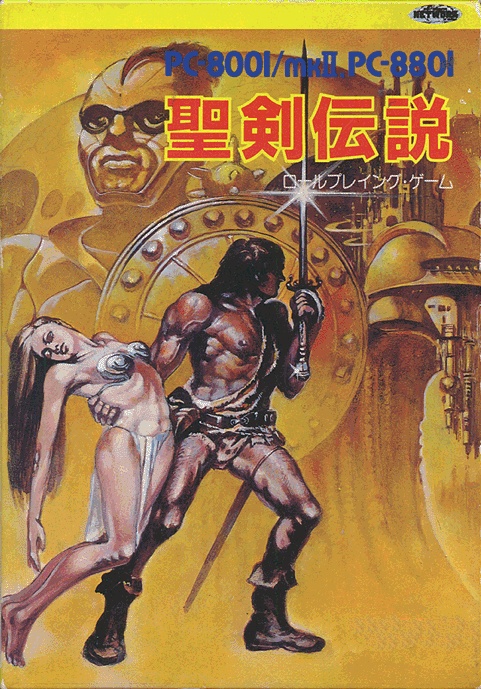
No, this has nothing to do with Square's popular Mana series, despite the identical Japanese title. This one was actually from Compaq - yes, they published a few games in the '80s - and like Dungeon very much inspired by the early Ultima games.
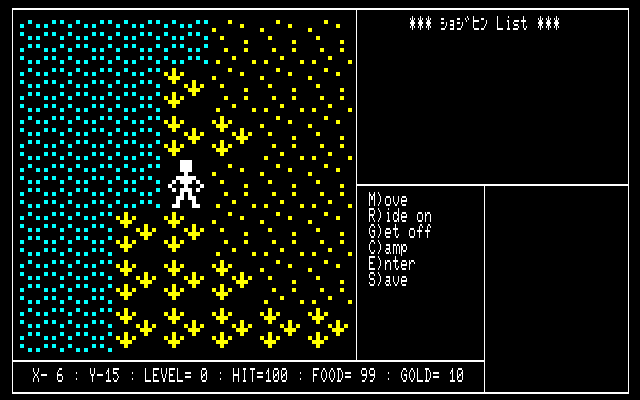
After creating your character (you can freely distribute a set amount of points between Strength, Agility, Charisma, Wisdom and Intelligence), you're dropped at this spot on an overworld map. Even getting around is a pain in the ass, though, because you have to press "M" before every single step. This is especially annoying on the laptop I'm using to play it, cause I have to switch the right part of the keyboard to turn into the numerical keypad, and "M" is inside that area, so I have to switch back and forth for every step.
Combat is weird as hell, but also somewhat interesting. Whenever you're confronted by a randomly appearing "army," you chose the number of rounds to be fought, before the opposing parties proceed to whack each other on the head. If you type "100," it's 100 rounds, if you type "1," it's just a single one, and so on. So if you fear you might lose the fight, typing a low number might be wise, but you're only getting loot if you take out the enemy entirely (which is typically 10 hits). The only problem? Even if enemies look exactly the same as others you've met before, their strength fluctuates wildly. Oddly, the game doesn't quit when you lose all your hit points, but you're stuck in the next fight, cause you cannot type in "0," but also no more than the amount of your hit points.
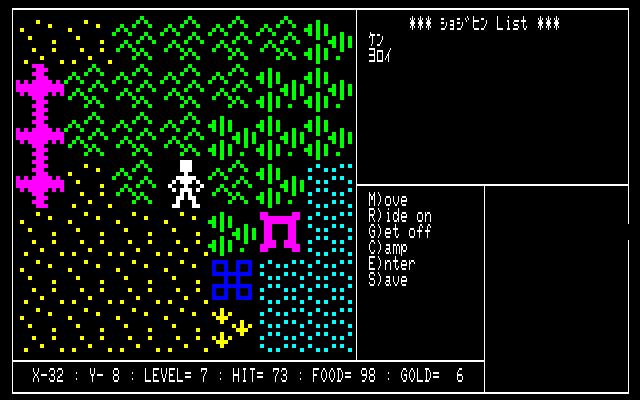
I don't know if this game has a dungeon, but it does have towns and castles, which fit on a single screen, like in the very first Ultima.
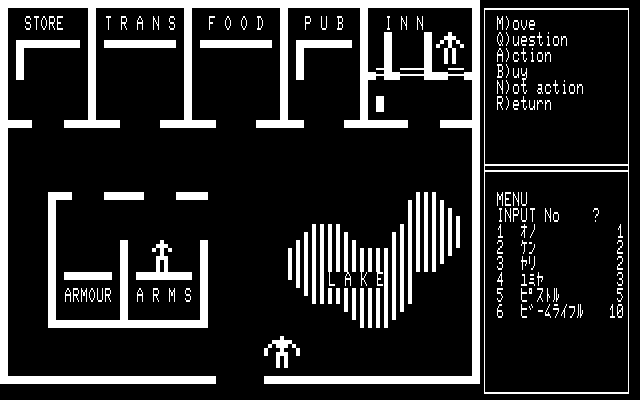
In the towns you can of course get equipped. It seems every weapons and armor you buy is equipped automatically, but I don't know if they accumulate... "Trans" is for transportation, and you can buy a bicycle, a horse, a boat, a coach, a car, a ship and a magic carpet. At the "Store" you get matches, water tanks, fishing gear and tents. The weirdest thing: Once you selected "buy" to see the wares, you can't seem to back out of the purchase again. As the other shop suggests, you consume food, but the game is rather generous with it. You start with 100 units, and it takes a long time before those are used up. I never managed to do anything at the pub.
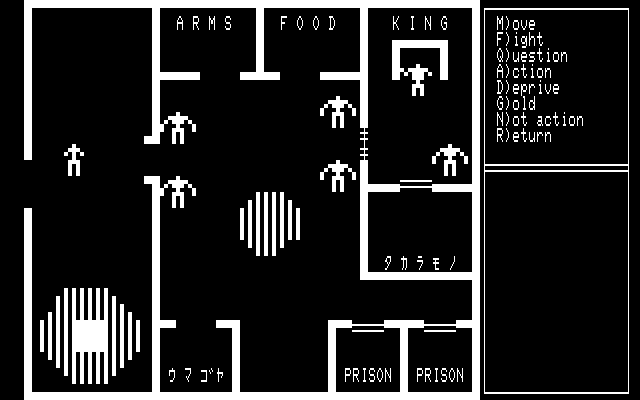
In the castle you can visit the king - if you know the password, which I don't. Moving on...
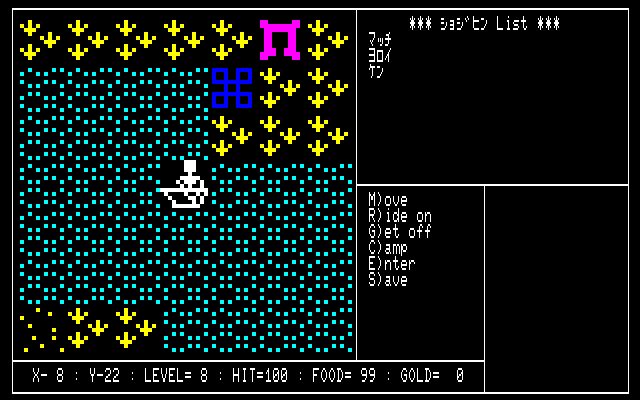
Crossing the river on my boat. The boat disappears after one use.
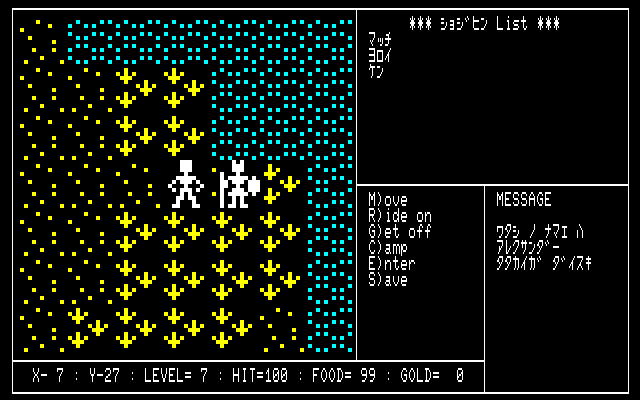
South of the river I've encountered these guys, but otherwise everything looks the same.
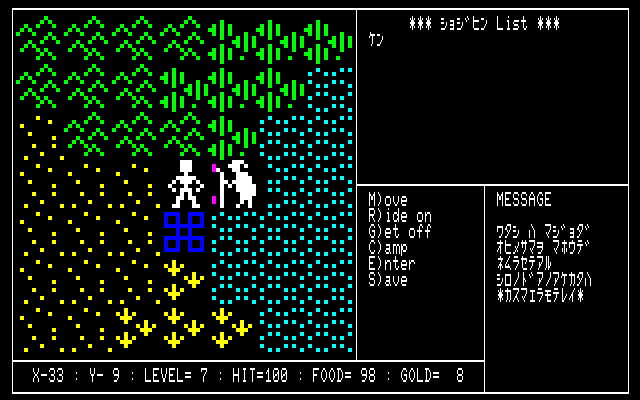
"I'm a witch. I've put the princess to sleep with my magic. The Way to open the white door is *Kasumaeramoterei*
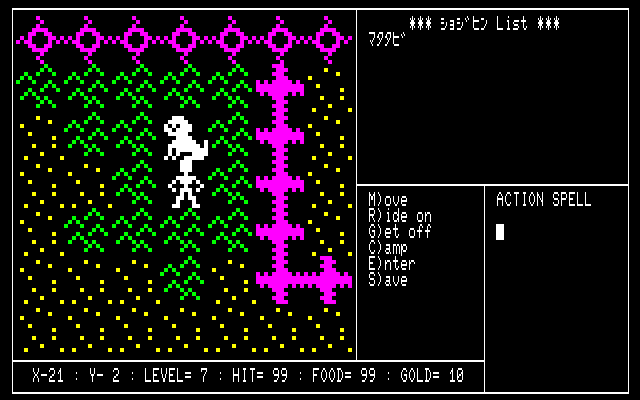
This guy requires an "action spell," which of course I don't know. It's white, but it doesn't look like a door...
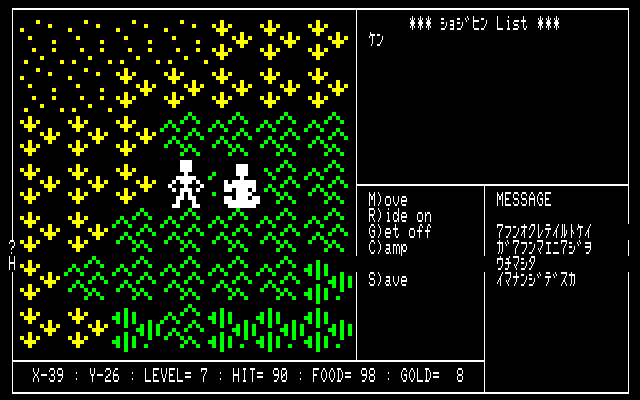
When wandering around the map, one eventually meets this guy, who appears again and again. He has some kind of riddle: "A clock that's 7 minutes late has shown 7 O'clock 7 minutes ago." But I couldn't type in the correct answer, cause the key of a necessary character (the "-like thing that turns consonants softer, like t into d or s into z) apparently isn't mapped on my keyboard.

A bit early this week, cause I finally got back my Dreamcast and wanted to get this review out as soon as I could for anyone who's still on the fence about whether they really need yet another shmup for the system (short answer: yes). At least from the reviews I wrote, this was the hardest to keep close to 500 words so far. The game certainly should deserve a more thorough examination in a proper article some time further down the line, but for now there is at least this quick review.

Of Light & Shadow is a short but free puzzle platformer where you have to make use of the abilities of two quite polar opposite characters.

Remember that cool Indonesian survival horror game we plugged a few days ago? We actually liked it so much we sent a bunch of questions to its developer, which was so kind to answer them for us.
They could still use some support for their Indiegogo campaign, which only runs for a few more days, so if you like survival horror and especially Fatal Frame, do consider backing it!
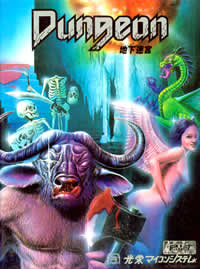
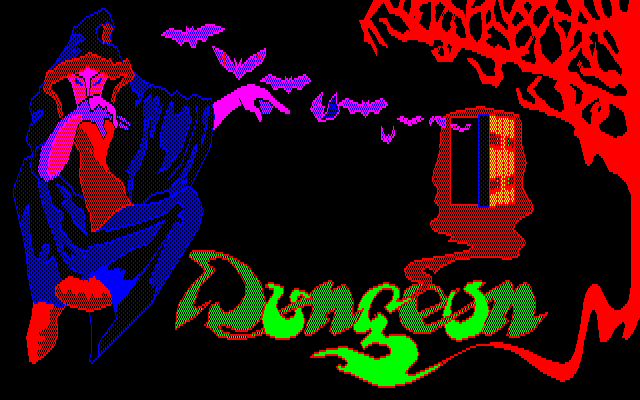
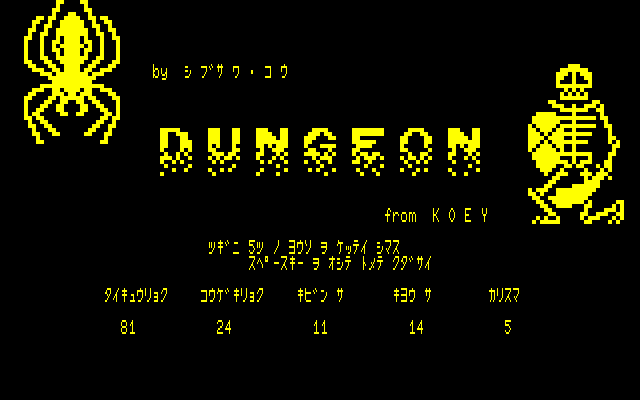
Koei's final RPG for 1983 follows the classic Ultima formula closer than any of the other games shown thus far. It's also one of the more accessible games of its period, as both the PC-80 and PC-88 versions are well-preserved. The title screen opens with a wizard who majicks open a door, from which then a swarm of bats comes flying out.
Character creation is simple: Chose between five classes - Soldier, Cleric, Magic User, Thief and Ninja (bit of a Wizardry influence there?) - then roll your stats. The flipping numbers for those stop by pressing escape, you can try as often as you'd like, and the process is really fast. After that you get five additional points to distribute at leisure, but with a decent roll, those don't really make much of a difference.
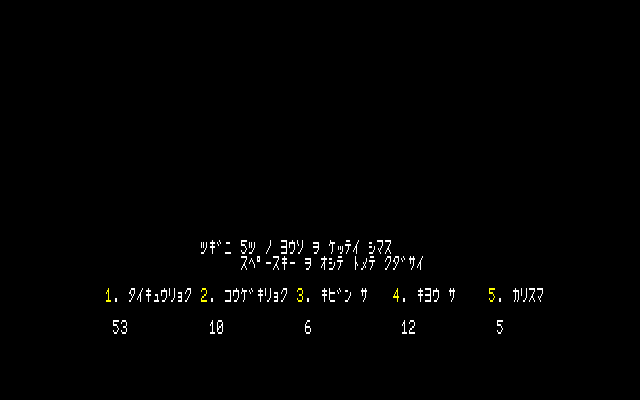
The stats are, from left to right: Stamina (HP), Attack Strength, Speed, Skillfulness and Charisma.
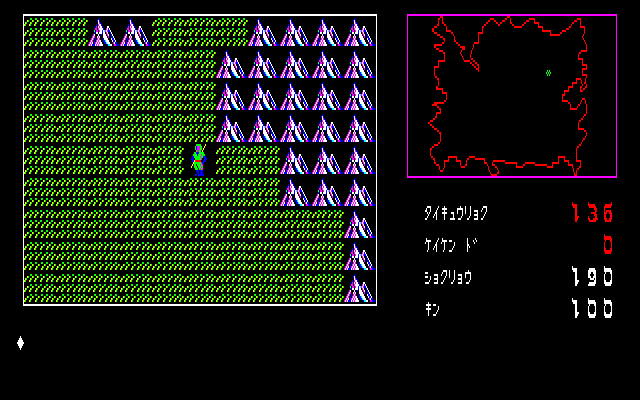
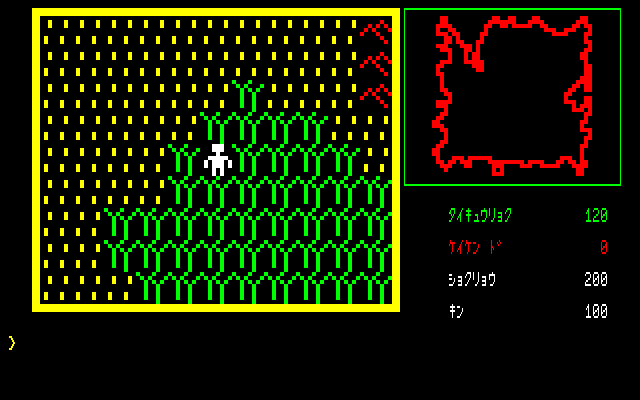
Each game starts at a random location on an island that constitutes the entire overworld. You can only hope to be spawned near a city - while it's possible to survive one enemy attack, another one is very likely fatal. The stats shown at the lower righthand side are stamina, experience, food (which is reduced with every step) and money.
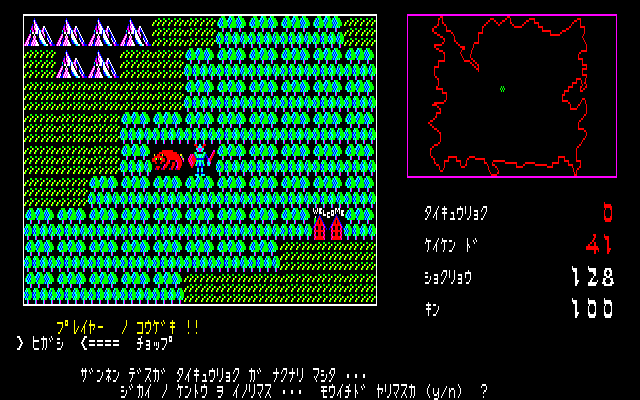
Like in Ultima, you enter a city or a dungeon by stepping on its field and pressing "E". The towns themselves are once again played in text adventure mode, like in Dragon & Princess. And even though the game is called Dungeon, I found the cities to be the true impenetrable labyrinths. I even found a guide in Japanese for the game, which explains that one can get healed and buy equipment by using (T)ransact at the right locations. But I can never seem to find the armory or the temple where this is supposed to happen. Whenever I try to (T)ransact with people, they just seem to take my money and do nothing else, or start to swear at me.
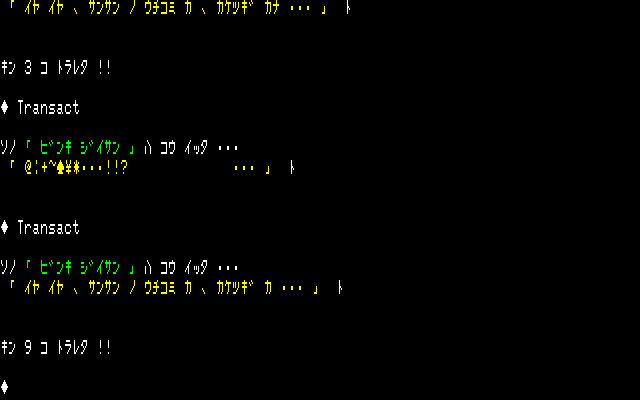
It seems the people actually have their daily schedules and walk around the city, and when no one's there, you can (S)teal stuff. If someone catches you, though, you get thrown in the titular dungeon. The catacombs are truly massive and seem to span the entire island underground. It has a few lower levels that are smaller, but the base level is ridiculously huge.
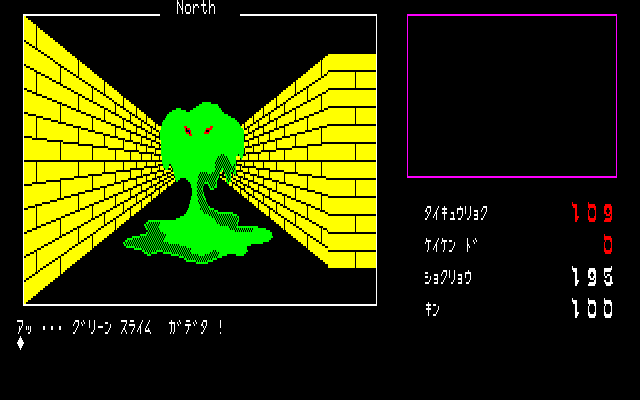
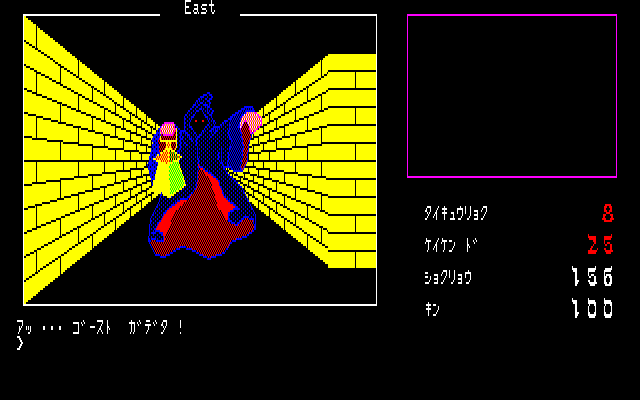
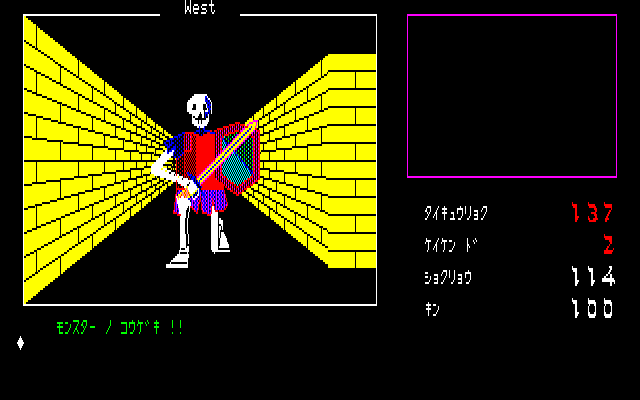
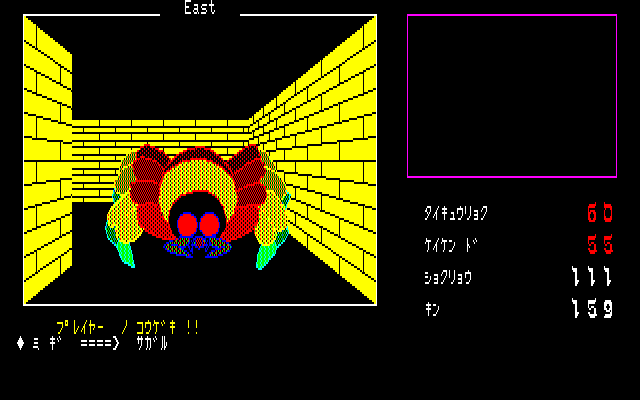
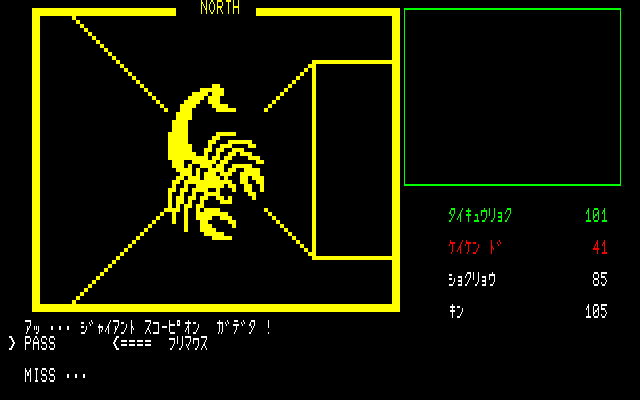
Enemies also walk around the dungeon in semi-real time, like in the first two Ultima games, before that series adopted Wizardry's party approach. Like in Ken to Mahou, there are several options for attack and defense, but their actual effects are just as dubious. Since I've never managed to buy any equipment or get myself healed, the same "2 enemies to die" rule from the field applies here as well, unfortunately. The monster designs are once again pretty cool as far as the typical D&D monsters go (That Japanese guide has images of them all, albeit in scaled-down form. Ours appear a bit downsized on the blog, but when you save them or open them in a new tab, they're actually in the original resolution):

For this week I decided to go outside my own comfort zone, and maybe that of most of HG101's core readership as well, by reviewing Dear Esther. It's not a particularly favourable review, but I avoided delving too much into "LOL it's not a real game" territory, although I think that's still a question with a justification to be asked, which I hope the final paragraph can make a decent case for.
