Showing posts with label capcom. Show all posts

Wednesday, July 16, 2014

Nintendo Power Retrospectives - Part 30

This week I'm taking a look at Nintendo Power Issue #20.


Games Reviewed This Issue:
Mega Man III - Capcom (NES)
The Immortal - EA (NES)
Deja Vu - ICOM (NES)
Gremlins 2 - Sunsoft (NES)
Dragon's Lair: The Legend - CSG Imagesoft (Game Boy)
Mercenary Force - Meldac (Game Boy)
Burai Fighter Deluxe - Taxan (Game Boy)
F-1 Race - Nintendo (Game Boy)
Super Scrabble - GameTek (Game Boy)

Please support my Patreon at http://www.patreon.com/countzeroor
Gamester 81's Miracle Piano Teaching System Review: http://gamester81.com/rare-snes-miracle-piano-review/
Thanks to NESGuide.com for gameplay footage of The Immortal and Deja Vu.

Wednesday, June 18, 2014

Nintendo Power Retrospectives - Part 28

After a long absence, the Nintendo Power Retrospectives are *back*. This time I'm covering issue 18 for November, 1990.


Retronauts Pocket episode of Destiny of an Emperor: http://www.retronauts.com/?p=602
Theme Music: Super Buck II by Estradasphere, a re-arrangement of the Overworld BGM from Super Mario Bros II, composed by Koji Kondo - http://ocremix.org/remix/OCR00577

Please support my Patreon at http://www.patreon.com/countzeroor

Game Covered:
Solar Jetman - Tradewest
Little Nemo - Capcom
Dr. Mario (NES & GB) - Nintendo
Duck Tales (GB) - Capcom
Robocop (GB) - Data East
Play Action Football (GB) - Nintendo
Castlevania III - Konami

Sunday, July 14, 2013

The Nintendo Power Retrospectives - Part 18

This week I'm taking a look at Nintendo Power #9 for November & December of 1989.


Saturday, June 29, 2013

The Nintendo Power Retrospectives - Part 17

So, now that we're caught up, episodes from here on will be going out bi-weekly. This time we're taking a look at Nintendo Power #8, for September and October of 1989, and our first Game Boy game!

Games Reviewed:
  • Duck Tales
  • Hoops
  • Who Framed Roger Rabbit (NES)
  • Tetris (Game Boy)

Wednesday, June 5, 2013

The Nintendo Power Retrospectives - Part 15


This week we come to the conclusion of the Best of the Rest for 1988-1989, with the last 10 titles on the list.

Opening Music: 'Super Buck II' by Estradasphere - http://ocremix.org/remix/OCR00577/
Closing Music: 'Of Whips and Strings' by Super Guitar Bros. - http://ocremix.org/remix/OCR02480/

Wednesday, May 22, 2013

The Nintendo Power Retrospectives - Part 13

This episode I take a look at the best of the rest for Nintendo power's first year - well, the first 11 games of the Best of the Rest anyway.


Wednesday, May 15, 2013

The Nintendo Power Retrospectives - Part 12

This week I've come to the end of Nintendo Power's first year, and boy is this issue weak on games to review, with only four titles. On the bright side, one of those is a classic from Capcom. We also have the results of the first annual Nintendo Power Awards.
The official HG101 write-up of Xanadu (and with it Faxanadu) can be found here.

Sunday, November 21, 2010

Resident Evil Gaiden – those who dislike it are nuts

I’m a man who tends to upset people. This happens because I’ve never been one to care what others think of me. What I do care about though is when creative works, be they film, music, books, or London arthouse theatrical plays, don’t get the praise they deserve or are wrongly criticised. This is why I’m calling out the plague of paid reviewers who were paid money to play and critique RE:G. I’m calling them out for dereliction of duty. Someday I will be dead and later forgotten, but creative works exist for as long as humanity does, hence why I feel it is my duty to correct the mistakes of critics who came before me. This week I’ve been playing Resident Evil Gaiden on the GBC, and contrary to what a dozen shrill voices once said about it, the game is astoundingly good. This is my defence for the unfairly maligned.
.
.
.


If you want my views specifically on RE:G as a game, scroll down.

I tend to defend critically panned games quite a lot. I did it for Zelda on CDi, I did it for The Divide: Enemies Within. I also feel an unspoken camaraderie for Duane Alan Hahn, who wrote the To What Degree Do You Love ET feature and who convinced me of the game’s merit. I like to think that my appreciation for critically hated games is more than simply supporting the underdog (though as a consummate underdog myself, I do like to help fellow comrades). Rather, I believe it’s because I tend to examine games in the context of the time of release, the genre and the hardware they are on. Some reviewers actually criticised RE:G because it wasn’t as atmospheric as other titles, which run off CD and have the benefit of a television screen. You might as well say it sucks because its multiplayer wasn’t like Madden’s. Man, some reviewers are idiots.

Metacritic doesn’t have an entry for the game that I could find, but go to GameRankings to read what they said about RE:G. Look at the scores which average out to 56%. A quick Google brings up comments by sites such as Planet Resident Evil which describe it as a game no one should play. Back in the day it was these same comments in magazines which stopped me from buying it, despite liking the look of it in screens. It was because of the casually dismissive voices of these few pissant cretins who held power in reviewing circles, that I was denied until now one of the greatest gaming experiences I can recall. They failed both me and every other GBC owner.

I only played RE:G this last week by emulating the GBC on my PSP – with the unfortunate side-effect that the digitised voices of moaning zombies were lost (the latest MasterBoy doesn’t emulate them sadly). Even so, it was incredible.

It was a revelation.

It was a reminder that older games can still rock my view of gaming as hard as any new release. It now stands as my joint 1st favourite GBC game, alongside MGS: Ghost Babel. Maybe I even like it more than Ghost Babel. Survival Kids comes a very close third on my GBC list. Furthermore, acknowledging the obvious technological differences, I regard RE:G as a more substantial zombie and survival horror game than either Resident Evil 4 or the Dead Rising games.

And please do me the courtesy of allowing me to explain myself.

RE4 is an over-the-shoulder shooter. It’s Gears of War without the cover system. Ammunition is plentiful, saving unlimited. Enemies are all over the place and it’s very fast. It has more in common with the Contra series than it does with older Resident Evil games. It’s a great game, of course. But it’s not Resident Evil as I know it – which is slow and has a chronic shortage of ammunition and save ribbons. RE4 is an action man’s game and is too easy, which is why I don’t like it.

As for Dead Rising, it’s not a survival horror at all. It’s like a very easy 3D scrolling fighter. It’s Final Fight with an extra dimension. You walk along hitting dudes in the face, eating food you find lying around, picking up scenery to hit the dudes, and then you fight a boss. Then repeat. Like I said, it’s by Capcom so they might as well have called it Final Fight 3D: ZOMBIE EDITION.

Resident Evil: Gaiden on GBC is the pure distillation of everything I loved about classic RE, minus the puzzles. It’s also a British developed game, by developers M4, which sadly didn’t last for very long.


--- THE GAME ITSELF ---


Succinctly put, it’s Diehard the film. It’s a guerrilla war against massive odds, where instead of a full frontal attack you need to chip away at the enemy’s sides, take down who you can, ration all supplies, and crawl on your belly through painful situations just to survive.

Instead of Nakatomi Plaza you have the Starlight ship. Instead of Bruce you have Barry, and later extra characters Leon and Lucia. Bruce starts with a gun, so do you. Then you get a slightly bigger gun, but not enough ammo, and so it goes: gradually increasing your power.

And RE:G is difficult. I mean relentlessly, proper balls-to-the-wall VIDEOGAME hard. To go back to my comparisons earlier: RE4 and Dead Rising were both cakewalks, designed for people with short attention spans and limited gaming skill. They’re fantastic games, but let’s be honest, they’re very easy on default settings. Contrarily though, a lot of reviewers commented on the high difficulty of these games. Which I accept. Some of the critics who reviewed the above zombie titles and RE:G aren’t as good as me and never will be. Maybe that’s why they didn’t get RE:G – they just couldn’t handle the save system or severe dearth of ammo.

But it’s this high difficulty, this guerrilla war which feels like you’ll never win, that makes me love the game so much. I like not having enough supplies. I need to have not enough.

A true survival horror game is about trying to survive against insurmountable odds. Not spamming recovery items and ammo respawn points. To instil horror you need limited resources. RE:G doesn’t actually give you anywhere near enough ammo to finish the game comfortably. Skilful use of the knife, which could be ignored in previous games, is now essential for success.
On countless occasions I would have to sit and spend several minutes planning my next assault, just like John McClane: I’m stuck in an elevator. I’ve got a handgun with 5 bullets. A shotgun with nothing. An assault rifle which has 4 rounds. A few grenades, but I’m saving those for a potential boss. Plus a selection of powders. I’m low on health and I’ve got a small girl in tow who has almost no health and is carrying the infinite knife. Just in case. There’s at least 10 zombies between me and safety, now – how the hell do I make 5 bullets and 4 rounds take down 10 enemies?

So, you turn to the knife. I like to call him Mr Knife. Or maybe Sir Knife. Lord Knife. KING KNIFEY. You kind of stare at the blade, contemplating its physical existence; an infinite razor which extends from and beyond all known space and time. The one object in your universe not shackled by the laws of entropy. It never blunts, it never dulls, and its thirst for zombie flesh is unquenchable. It is infinite.

Yes, the knife my dear friends. We will use the knife.

And so it goes, as your ragtag bunch of survivors encounter and escape from increasingly dire situations. As you trek it from one hell to another, desperately trying to preserve every resource you have and wondering if you’ll have enough by the end. It’s all too easy to reach the final section of the game and simply not have enough ammunition to kill the last few bosses, thereby demanding a restart. And the game is long, so you’ll be restarting from quite a ways back. And this happens because you’re just not good enough. Perhaps reviewers didn’t like the fact that M4 was basically saying to them: you’re just a bit rubbish, son.

This is all good though. If you’ve not got the tenacity to tackle a real challenge, go play Famrville or something equally insipid. As it stands I finished RE:G on my first go, with 2 rockets spare.

So actually I lied. It’s not really difficult at all. But it gives that impression.

The plot is good with plenty of twists, while the need to switch characters interesting. I also like the combat, since it makes great use of the GBC’s technical limitations. Getting a good rhythm with the knife is fun, and overall it’s a very clever idea. I love the combat. A quick note must also go to the sound – the extensive use of digitised speech is genius, at least on original hardware. The music is also cool, making good use of the GBC’s limited sound chips. Previous RE games to my knowledge were never big on music. They had a few ambient chords to add tension, but were generally minimalist. Here there’s proper albeit simple tunes which really got me in the mood. The simple music loops here kept me pumped as I Run-and-Shunned my way through hostile territory.

I also want to make special mention of the sprite art. They say the skill of drawing sprites is almost dead in the commercial world. Very few games use it. Those that do don’t always look so hot. In RE:G every animation frame of each sprite is dripping with gorgeous detail and effort. Notice the cadavers around the piano and bar areas. Notice the detail in the run animations of the main characters. Notice how light and shadow are portrayed, so that both yourself and the enemy is draped in darkness when standing in unlit areas. Notice the colour and detail of the backgrounds, and the minutiae resplendent in everything you come across. It is a painstakingly gorgeous, low-resolution 2D game. I love Muramasa’s big screen splendour, but as a connoisseur of videogame visuals, I also appreciate what can be done with less.

These washed out screens which I stole from the internet do not convey its splendour.

Reisdent Evil Gaiden is a fantastic game. It deserved more than 56% on GameRankings, and frankly I’m embarrassed by the dismissive, shallow, unskilled, and unnecessarily negative views of my predecessors and contemporaries.


Because it sadly didn’t receive critical acclaim, and because I doubt it sold well, I want to call out the talented British developers at M4 who deserve more credit for what they achieved. If the rest of the world was too narrow-minded to appreciate the skill of this team, to hell with the rest of the world. History shows that quality and skill are not always appreciated.

Take a bow, fine sirs. Your creative endeavours have sparked my soul.

Game Engine Programmer:
James Cox


Lead Programmer:
Kieron Wheeler


Support Programmer:

Odin Phillips


Lead Artist:

Stefan Barnett

Background Artist:

Bruce Silverstone


Presentation Artist:

Mark Brown

Artist:
Elliot Curtis

Musician:

Shahid Ahmad


Game Designer:

Tim Hull
EDIT: I've just discovered, Tim Hull actually does the Global Timoto website, which documents cultural games from around the world and is definitely worth checking out. It's kinda similar to HG101's Games of the World section. Awesome stuff!

Special Thanks:

Marvin Hill


Friday, October 29, 2010

East vs. West with Keiji Inafune and Hiroyuki Kobayashi

Keiji Inafune, one of guys behind Mega Man and also one of the head honchos over at Capcom, recently announced that he's leaving the company. I got to meet him a few weeks ago at NY Comic Con and got a picture with him, although it is far too dorky to post. I figured this would be a fitting time to dig up an old interview I did with him about his views between Western and Japanese game design for a 1Up article from about four years ago called Clash of the Cultures.

Inafune has come under fire for his comments regarding appealing to Western gamers. While he's said some things that are certainly questionable, and when he says things like "I want to study how Westerners live, and make games that appeal to them", I wonder how much of that was his personal thoughts or the bean counters at Capcom. But I also think too many people are misconstruing some of the things he's said. I take most of his commentary as "Japan development has stagnated and has a lot to learn from Western development, and much profit to made, because they're actually buying console games", which is being interpreted as "All Japanese video games nowadays are awful, Western games (and gamers) are superior so let's make more brown and grey shooters."

While my own article had some detractors (one of the commenters here called it "one of the most ignorant, superficial, and ultimately worst article I’ve ever seen in my life"), I think my biggest mistake came from underestimating the sensitivity regarding the national origin of people's favorite games. Some people called my article jingoistic, others called it too wapanese. My point was they both had their pros and cons, that by considering these could result in more rounded games, and that's the sentiment I get from Inafune, too. Of course, I also wrote this article before it became clear that the Japanese were having problems with HD development, which has only caused the cultural rift to widen further. Now, apparently, the only people that play Western games are illiterate gun-happy dudebros and the only people that play Japanese games are lonely otaku pedophiles. Awesome!

Anyway, the interview text is below. I wanted to interview Inafune because Dead Rising had just come out, which seemed like an interesting blend between Western and Eastern philosophies. I also interviewed Hiroyuki Kobayashi, the producer of Resident Evil 4, although I don't think I used as many as his comments in the actual article, because Inafune's comments seemed more relevant.

Q: When designing a game with the American market specifically in mind, what are some specific design aspects that are favorable or unfavorable? What about for the Japanese market?

Inafune: On the plus side of things, aiming games for the international market is smart business. It allows you to reach customers in every territory. It is also good for development teams because it broadens their horizons on understanding fun. For instance, if an American were to live all of his or her life in America, they would only be acclimated and truly understand American culture. However, if that person were to live in another country, such as Japan, that person would then also understand another culture. If they moved to another country, they would understand another culture on top of that. It is the same with games, if you only aim games at the Japanese market, you will only understand the Japanese sense of fun, but if you begin to make games for other markets, you will expand the possibilities of fun. I feel it is good for development teams to have as broad a horizon as possible.

On the minus side, since the development staff are Japanese, they must have a firm understanding of western games before they can make one with true western appeal. For instance, if a Japanese team is going to make an FPS, they must truly understand and appreciate FPS control schemes and FPS design mechanics. Another hard part is starting from a base of the unknown. Making a game with western markets in mind, there are many unknowns that simply do not exist when making a Japanese directed title because of the knowledge and expertise we have built in that area. When it comes to Japanese titles, they are easier to plan and implement because the path has already been laid out. That is why Japanese companies tend to focus on the Japanese market - what has to be done and what users expect is clearly defined, so it is much easier to start production. Making a game for the western market introduces unknown factors that make production more challenging.

Kobayashi: One of the things we keep in mind when designing games that will end up being released overseas is avoiding the introduction of too much Japan-specific content to avoid alienating an audience that wouldn't be as familiar with it. However, I don't feel that a game released overseas has to be completely different from one released in Japan. Sometimes it can come down to the details like making sure the English localization is solid or using foreign motion capture actors and actresses to perform the motion for the game to avoid it feeling too "Japanese" for people overseas.

Q: One of the big differences between Western and Japanese games is the huge visual gap. Americans complain that Japanese games are too bright and crazy and cartoonish, while Japanese gamers complain American games are too dark and generic and realistic. Why do Japanese games tend to stylize the graphics rather than favoring realism?

Inafune: From birth, you are exposed to your native culture and you view it through your own eyes. Japanese children are exposed to "manga culture" and the established aesthetics that exist in Japan. It is ingrained in our culture. Western audiences, especially Americans, on the other hand, are exposed to a wide variety of characters. From Spongebob to comics such as X-Men, Spiderman, and other superheroes, westerners are exposed to vast differences in the cultural products they consume and this is seen in the visual style exhibited in western games. I don't think this cultural difference is going to change, and to be honest, I don't think it should. As Japanese designers, we can still make games that appeal to not only Japanese, but also western visual tastes.

Kobayashi: I think a lot of the bright, cartoonish visual look in many Japanese games is a result of the strong culture of anime cartoons and manga comic books we have in Japan. The gamers here have all grown up on anime and manga, and many continue to read manga into adulthood. Since Japanese anime and manga are usually very bright and colorful, that tends to be the kind of visual style that is accepted in Japan. For overseas, it might be that with more of an entertainment background in movies and TV, realism is the type of visual style that is desired. Of course, this is not always the case as there are a lot of American and European gamers that do like the bright and colorful art style and plenty of Japanese gamers that prefer the realistic visual style.

Q: What about music? Many Western games focus on orchestral music or licensed tracks, if at all - many are simply focused on atmosphere. Japanese soundtracks tend to use a greater variety of instruments, styles, and concentrate on a strong melody. Is there a difference behind these philosophies?

Inafune: From a design standpoint, I think western designers have a much stronger background and influence from film. In film scores, orchestrated music is used to accompany a set piece and give it emotional weight. Western games implement this very film style technique much to the same effect. However, in Japan, since the days of the Famicom Japanese composers have gone about making each individual sound one by one. They created sounds using the Famicom that sounded like other instruments and layered their work. Now that technology has advanced, western designers view it as the opportunity to branch even further into the idea of film scoring, while Japanese designers continue that traditional approach to instrumentation that developed during the 8-bit era.

Kobayashi: With Japanese games, the directors and development staff want to present an experience that they have envisioned, and to do that, they often want to maintain more control over the music and how it is used in the game. With licensed music, since it is something that usually hasn't been made for the game, it may not fit the atmosphere the development team is trying to convey as well as an original piece that they design and create from scratch to fit a scene or stage. In Japan, we do a lot of promotional tie-ins with professional artists, but it usually stays at the promotional level and does not usually enter the game itself. There might also be a difference in the West where a game might become more appealing to users if it contains music and artists they recognize whereas that is not the case in Japan.

Q: Many Japanese games use fixed cameras, whereas many Western games let you directly control the camera. Is there any other potential reason for the differences?

Inafune: Japanese don't really feel the need to control the camera. For instance, Japanese gamers playing Lost Planet at Tokyo Game Show sometimes had trouble controlling the camera, and it was clear to me that they are simply not acclimated to this sort of control. In traditional Japanese games, such as a 2D side-scroller or an RPG, there is absolutely no need to move the camera whatsoever. The fixed camera controls how you play the game and you work within that requirement. Japanese people, who prefer to have a very focused idea of what must done, prefer this way of doing things because they can focus on the actual game play. Western audiences, I feel, are much better at multitasking, and adapt to the freedom and requirements of a user controlled camera much better than Japanese gamers.

Kobayashi: In general, Japanese development teams want to make sure the user experiences the game they have envisioned. To make sure the player sees what the developer wants them to experience, the fixed camera angles are more common. If the fixed camera angles are done right, the player shouldn't feel the need to constantly move the camera around, and that's part of the challenge of designing the game.

Q: The issue of save systems also struck my mind, especially with Dead Rising recently. Many Western games started on PCs, which had the disk space to save all of your data, so you could pick up right where you left off. Most Japanese games were on consoles, used passwords/battery backups, and thus had savepoints. Even though technology has progressed to the point where you can save all relevant data, many Western games use quicksaves while Japanese games still use save points. Why the difference?

Inafune: This is not a technology issue. It is an issue of differing views on game design. American designers do not view the save system as part of the gameplay experience. In Japan, the save system is viewed as part of the game. It is a feature. In previous generations, designers took what should have been a negative for the game due to technical limitations and turned it into a gameplay positive. For instance, in Resident Evil, part of what makes the game fun is knowing there might be a zombie between you and the save room. It adds tension to the encounters. If you could save anywhere in Resident Evil, it would not be the same game. Manipulating the save system is one of the many details that Japanese designers take very seriously. For instance, with Dead Rising Japanese gamers would be turned off by the save anywhere approach. They would feel that the game is not challenging, that it isn't really a game. Knowing your status, what kind of weapon you have or how far away the restroom save point is integral to the tension and fun of Dead Rising. Some people understand this and enjoy it, others do not.

Kobayashi: I agree that there is a tendency for Western games to allow saving anywhere whereas Japanese games rely on save points, but I don't feel it is an issue of technology, I feel it is an issue of gamer preference. There are advantages and disadvantages to either system. When the player can save anywhere, they can end up saving in a bad place, perhaps forcing them to backtrack to a previous save, or worse, to start over. Save points themselves can also be part of the game experience. If you can save anywhere, you lose an important gameplay element. Perhaps with the Japanese game development background being more centered around consoles like you mentioned, it made Japanese developers more inclined to integrate save points as an actual feature of gameplay and part of the challenge of the game. For that reason, even if the technology today allows saving anywhere, I don't feel it implies that save points are obsolete by any means. Another difference might also be that Japanese developers design games hoping that players would set aside at least a set block of time to play a game and keep going with the experience rather than jumping into and out of it, breaking the experience up.


Q: Do you find that American gamers tend to focus more on open-endedness and exploration? It seems like many Japanese games are pretty linear.

Inafune: Culturally speaking, Japanese culture is firmly rooted in wet-rice agriculture and its status as an island nation. Japanese want to be able to plan, they want to have guidance, they want to have focus. To put it simply, Japanese people feel uncomfortable with the unknown and not understanding the future. RPGs illustrate this well - It is your turn to attack, it is the enemy's turn to attack. You pick a magic spell and you have a predictable result. You progress through the game with clearly defined goals. Japanese enjoy having these clearly defined goals, and it progresses all the way through to the actual game implementation. Japanese game designers focus on the concept of triggering and proceeding through gameplay "flags" or "dip switches". Japanese people don't like just being dropped into a sandbox with no guidance. If you tell a Japanese person they are free to go anywhere, often times they will choose to go nowhere. Westerns, on the other hand, seem to be excited by the unknown. For instance, as a hunting and trapping society, an American may go deer hunting and encounter a bear. Japanese would be scared by this encounter, whereas the American will probably shoot the bear and go back excited that he got a bear instead of a deer. The unknown encounter becomes even better than the known. I feel this is the key difference.

Kobayashi: There are Japanese gamers out there that do like the open-ended game style and I believe there are American gamers that enjoy the more linear style as well. In general, I do agree that Japanese games tend to be more linear in nature. Part of this relates to the recurring theme of Japanese developers wanting to provide a very definitive experience for gamers and in this case, the linear story helps to keep the player involved in the story as a smooth flow from start to finish much like reading a book. A lot of gamers overseas prefer to make the adventure their own and prefer the open-ended style, which is one reason we think that Resident Evil 4 was so popular as it was more open than any Resident Evil before it. I don't think either style is right or wrong, they're just different.

Q: It seems like some games - especially Capcom titles like Devil May Cry 3 – are made more difficult for the Western audience. Why is this, and why does it seem like the Japanese tend to favor easier titles?

Inafune: There are two reasons for the difficulty changes. The first one is from a business perspective. Western markets also have rental markets. If you make a game that is too easy, it will become a rental instead of a purchase and the game's sales will suffer. Thus, those on the business side of things often request that games be made harder to counter-act the rental market. The second reason is from a design standpoint. Western gamers like to challenge things. If a game is very difficult, they view beating it as a triumph over a sort of foe. Japanese gamers will quit if a game is too hard. They want an RPG where you never die. If you play an RPG correctly, you should not die. That is the point. Most RPGs are not concerned with raising your skill, they are concerned with raising your EXP - Experience. I think that Japanese companies are slowly losing the ability to make hard games that still appeal to Japanese users, and this is evidenced by the decline in sales of action games as Japanese users lose interest in challenging higher difficulty levels.

Kobayashi: I'm not sure that it's so much that Japanese gamers prefer easier games, but rather gamers overseas tend to like more challenge. It's a slight difference in nuance, but when making a game, we don't intentionally make it easier for Japanese gamers. For years, we have always received requests from users overseas to "make the games harder" and we have been responding by adding challenge to the games we release overseas. However, I believe there is a growing casual gamer market in both the US and Japan and I think the difficulty gap is narrowing. Rather than making a game "hard" or "easy," I think an important design philosophy is to try and make sure that a game gradually gets more difficult throughout the course of it. If this difficulty curve is adjusted well, it means that a player can avoid feeling like a game is too hard but at the same time doesn't get boring either. At the end of a game, a player should feel a sense of accomplishment and be capable of much more than they were when starting a game. If a game is consistently the same difficulty throughout, it will always end up alienating a group of users.


Saturday, April 24, 2010

Final Fight Double Impact is online only

If you want to play the PS3 version of Final Fight Double Impact, you need to be online even if playing in single player. Furious at this turn of events, I wrote a letter to Capcom’s PR departments demanding a response. This is my letter and their reply.
.
.


My main problem with this situation is that it forces me to be online at all times. Even if you only need to be online when FF:DI first loads and can then disconnect, this is a huge pain in the ass. It totally removes the option of random casual play, because I’d have to plan long in advance. I live in the countryside, and despite being extremely fortunate to have ADSL broadband where I live, the only telephone line for 6 hectares goes to a utility shed and is then divided up, sometimes for up to three people using the internet. If I want to connect to PSN I need to ask everyone else to get off, otherwise the speed is so low I end up disconnected from the servers, and I need to set up a 10m ADSL cable from the router to my house with the PS3. It’s a pain in the ass and WiFi isn’t an option (PC connection is a little easier, thankfully). This means each Friday/Saturday I kick everyone else off, connect, and spend a few hours downloading games, demos, updates and enjoying a couple of hours of mahjong multiplayer. If a demo is several gigs in size, I need to leave it downloading overnight. Constant PS3 connection to the net is not possible without some pretty drastic life-changes (like moving house).

I tried to explain this to Capcom, who force you to remain connected to the internet as a form of DRM, and while they replied, the hilarious thing is their response didn’t match my original email. I don’t think they even understood my original email. (EDIT: I've just discovered that the reply was actually a standard one sent to everyone who complained)

With this development, I no longer trust any game on PSN, because it’s likely others will follow. I had to ask around on forums regarding Afterburner Climax, just in case it tried to pull the same stupidity. And I’m going to have to ask for all future games. If this is to become the norm, then the world of PSN has suffered a serious blow.

I miss the days of buying a cartridge, and knowing that forever more I could enjoy that cartridge without constant, additional fuckery just to get it to function. Jeez, when did games get to be such high maintenance?


MY EMAIL:

Greetings,

I freelance for various publications including GamesTM, Retro Gamer, The Escapist, and Hardcore Gaming 101.

Right now I'm considering writing a scathing article against Capcom due to the fact that despite me wanting to pay for Final Fight: Double Impact, you don't want me or others actually playing it.

The PS3 version does not function offline - it forces you to be logged in to PSN. While I am able to thread an ADSL cable across the distance of my large country house, purely to log on once a week (normally Saturday) to download updates, demos, buy games and have a few quick multiplayer games, it is not convenient to keep my PS3 net-ready the rest of the time. To do so would require re-arranging my entire house and therefore my life - which is an absurd demand to make, regardless of how good the game is.

This is grossly unfair and has so far stopped me from buying FF:DI, despite really wanting to own it. But before pouring scorn on your incompetent decision, for all the public to read, I thought I would email you and ask:
Is this mistake going to be rectified so the PS3 version can be played offline? There are others besides myself who for 99% of the time do NOT have access to PSN.

Rumour has it you did this to stop game sharing - isn't it possible to have a "one-time-download-only" version for people who don't have constant access to the internet? I refuse to buy anything which forces me to be online for it to function.

What happens when PSN closes down in a similar way to how the original Xbox One online system is closing? What happens if I move to a place which does not have ADSL - do you expect all my purchases to become void if this happens?

I've played games from over 20 years, and I've written about them for half of that time, and the stupidity of this decision, to shackle people to a transient, intangible and impermanent technology, is both short-sighted and disturbing. Compare for example other Capcom games, such as Super Street Fighter 2: HD Remix, also on PSN. In 50 years my children will still be able to play it from my PS3 HDD, even if PSN and the people at Capcom who make such decisions no longer exist.

What is Capcom's official stance on all this?

Best regards
****


Capcom’s official response, courtesy of Jason Allen. Apparently this has been circulating to other places, meaning I was simply sent a copy and pasted version which they hoped would end the matter:
Capcom would like to formally apologize for the issues consumers are having with the PS3 version of Final Fight: Double Impact. Typically, the notification for a required PlayStation Network connection appears in the full game description when a game is downloaded from the PlayStation Store. Unfortunately when populating this content this detail was overlooked and wasn't included in the versions of the game that released in North America and Asia. It was included in the release for Europe. Capcom should have checked to make sure the notification was included when the final game was made available and we sincerely apologize for this oversight.

The DRM requirements for Final Fight: Double Impact are not unique to this release. This protection mechanism has been implemented in numerous games offered on the PlayStation Store before. When it was brought to our attention that the notification was missing, we acted quickly with Sony Computer Entertainment America and a fix is on the Way.

We would like to thank our vigilant fans for bringing this to our attention and we will exercise better scrutiny on future Capcom releases.

Thank You

Sunday, December 6, 2009

Super Street Fighter 2 SNES - Beta Censorship

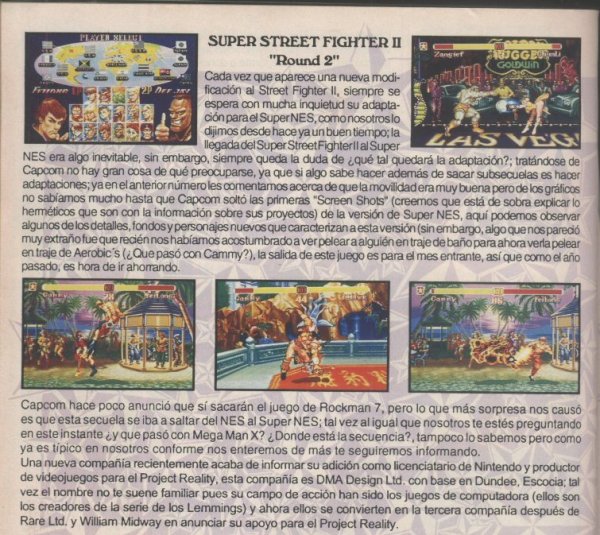
ReyVGM posted an interesting image on the forums, from an old Spanish language magazine:


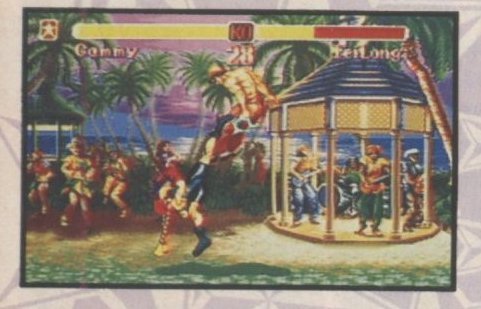
It seems that Cammy is wearing spandex that covers more of her legs in this prerelease screenshot. See full preview below:


In the text it also mentions how weird it is that her outfit appears to be changed. Of course, when the game was actually released, Cammy was still wearing her proper outfit. So what's the deal with these screenshots? If we had to speculate, Capcom probably assumed that her normal outfit was a bit too revealing for Nintendo's platform and self censored it. But this was also around the time that Nintendo started loosening their grips on mature games, so Capcom must've been able to leave it in.

Thursday, October 8, 2009

In Defense of: Bionic Commando (The New One)

It's not technically up on the main page yet, since I'm still working on editing/formatting a few more pieces, but Sotenga's review of the new Bionic Commando is now part of the full article. He gives it a favorable review, despite a detailed deconstruction about how awful the plotline truly is, and his overall assessment is pretty spot on.


I actually really enjoyed this game a lot, although it's easy to spot where the issues are. It made the famous mistake of trying to appeal to everyone and completely failed in the process. Retro fans disliked the complete change in atmosphere and tone, while modern fans were somehow under the assumption that this was an open-ended game, and disliked its linearity, as well as its difficulty. I think two things caused this: GRIN shot themselves in the foot by making Bionic Commando Rearmed (unofficial HG101 Game of 2008) so awesome, so the change was made incredibly apparent, and it had the unfortunate situation of releasing next to Infamous and Prototype, two other games that satiated action gamers in ways that Bionic Commando didn't.

Personally, I'd like to think of this as this generation's PS2 Shinobi, another 3D revival from about six years back that also emerged to middling reception. Both have their own fair set of issues - the pits and checkpoints in Shinobi, the load times in Bionic Commando, the repetitive level designs in both of them - but the core mechanics are just so damned fantastic that, for me, at least, it completely overshadowed any of its other issues. For Shinobi, it was the air dashing and wall running; for Bionic Commando, it's (obviously) the swinging. It doesn't really feel like the older games, but there was never any way it could in 3D. So much of the platform swinging is automatic that it loses that aspect, but it more than makes up for it with its application in combat.


Any of the major battles are made much more exciting when you're surrounded and start getting pelted up bullets, when you can leap off the nearest cliff, turn around in mid-air, latch on to something (hopefully) and slowly regain some health while firing what few enemies you can see. It is, in practice, a variation of the cover system that's been popularized by Gears of War, but infinitely more interesting because it can be used almost anywhere, without having to duck behind designer-placed obstacles. It also makes important use of vertical space and the ability to traverse it quickly, greatly enhancing any strategic combat options.

And for me, latching onto an enemy, reeling in so I slam into them and send myself flying backwards into the air, while spraying fire towards any other enemies - well, that's just as awesome as the first time you launched an enemy into the air and juggled them with bullets in Devil May Cry. It has the same exact impact as not only looking cool, but serving a important function in the game itself.

A few weeks after its release, Gamestop dropped the price to $20, although it's back hovering about the $40 mark now. That'll probably drop again come the holidays, which hopefully will convince more people to give it a go. I know this is another one of those games that's going to be showing up in "LTTP" threads for years to come, and maybe it's only in time that it'll get the respect it deserves.