Tuesday, September 8, 2009

Doujin CD Review - Ages


01 Turbo Outrun - Rush A Difficulty
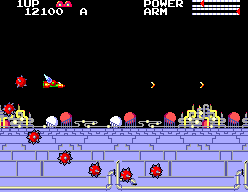
02 Power Drift - Like the Wind
03 Lunar: Silver Star Story - Tsubasa
04 Space Harrier 2 - Harrier Saga
05 Magic Knight Rayearth - Taflon by the Sea
06 Yumimi Mix - Achichicchi
07 Fantasy Zone - Prome
08 Super Shinobi - Medley
09 Galaxy Force 2 - Alone Fighter
10 Eternal Arcadia Legend - Last Battle
11 Lunar: Silver Star Story - Wind's Nocturne


Circle: Woodsoft

VGMDB Entry

I love me some Sega, and I'm absolutely sure the guys at Woodsoft do too. This album begins with the classic "SAY-GAH!" chant, and the "logo on dark background" seems heavily inspired by the Segagaga packaging, which was also a huge (self-addressed) love letter to the company. Despite its intentions, though, the album as a whole is unfortunately disappointing. The selection digs from a lot of Sega's more obscure games, which isn't always bad. Every fan nowadays knows Outrun or After Burner, but Turbo Outrun and Power Drift are considerably more obscure and it's great to see a Skies of Arcadia track make it out here too. Still, you can't help but feel they're cheating by including two songs from Lunar: Silver Star Story, which originated on Sega platforms but soon went elsewhere, and aren't even Sega games. (Magic Knight Rayearth, on the other hand, was at least published by Sega, but it's hardly a classic or even a distinctive tune, you know? Some of soundtrack of that game was just taken from the anime anyway.) And then they went super obscure with Yumimi Mix, a Mega CD title from Game Arts.

Beyond the song selection, though, the real trouble lies with the cheesy synth that permeates nearly every song. The Lunar songs sound the same as their original counterpart except with worse instrumentation and vocals, so what's the point? The Space Harrier II theme sounds dull and neutered, and it's mind boggling how they could take the awesome Last Battle theme from Skies of Arcadia and make it sound so terrible, completely ruining the drama and intensity of the original track. Prome from Fantasy Zone was one of the more obnoxious songs from that game, and the arrangement here is just as bad.

At least the synth doesn't ruin every song. The Power Drift tune is catchy if uneventful, and while there are better tunes from Turbo Outrun than Rush a Difficulty, it's still an alright rendition. The only really standout track is the five minute Super Shinobi (Revenge of Shinobi) medley, combining the first level song with the Chinatown theme and ending song, My Lover. The tempo is heightened a bit for great effect and the instrumentation here is far better than the rest, especially the guitar that breaks in parts of the song. But there's nothing else on the CD remotely to that level, so it's really hard to recommend as a whole.

Download samples


Monday, September 7, 2009

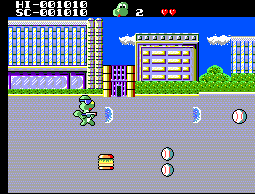
Fun Sega Master System trivia - Part 1

I love the Sega Master System. A lot of just has to with childhood attachment and all of that, but there's just so much weird history behind a lot of the games, the kind that people tend to gloss over because...well, not many people really care about the poor thing. And so, for part 1 in a series (??) of fun facts about the system...a lot of this is covered already in various HG101 articles, but if you haven't combed through the entirety of the library, hopefully you'll find something interesting here.

-There were numerous Sega Master System games that originated on Japanese PCs. Sega had a pretty good working relationship with Compile, who ported their MSX shooter Aleste (known as Power Strike outside of Japan) as well as Golvellius. Other games include Miracle WarriorsAKA Haja no Fuuin (Sega's version of the game is substantially better than the original PC version, which also showed up on the Famicom) and Psychic World (which was originally called Psycho World - the SMS version was only released in PAL territories, but it came out in the US for the Game Gear)


Super Cooks


Super Cooks


-There are three versions of Golvellius - for the MSX, MSX2 and Sega Master System - and all have different world and stage layouts. The game promised a sequel, which never technically came to pass, but Compile did create a tribute on one of their MSX DiskStation releases under the name Super Cooks. It looks and controls exactly like Golvellius, with brand new stages, except everything is food themed.


Kid Kool


Psycho Fox


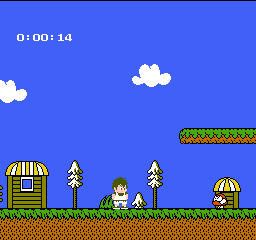
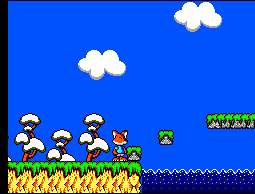
-Psycho Fox bears a suspicious resemblance to an NES game called Kid Kool, known in Japan as Kakefu Kimi no Jump Tengoku: Speed Jigoku. It looks and plays extremely similarly, although Psycho Fox definitely looks much better. What's even more bizarre is that the game concept was expanded upon and received a "sort of" sequel in the form of Magical Hat no Buttobi Turbo! Daibouken for the Sega Mega Drive. This game, based off of an anime license, got a complete makeover and became Decap Attack in America. The levels in these games are mostly the same, with some minor differences, despite the graphical changes. Why are these games all so similar? They were all developed by Vic Tokai.


Kenseiden (Japanese)


Kenseiden (USA/Europe)


Kenseiden (Korea)

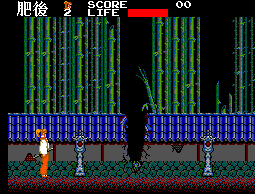
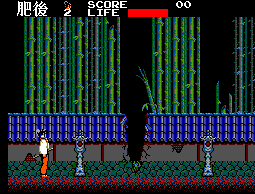
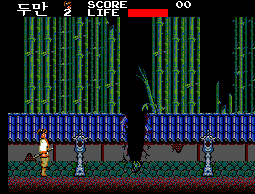
-In the Japanese version of the samurai action-platformer Kenseiden, the main character has blonde hair, which is even shown on the game's cover. Perhaps this was deemed too manga-esque, because all of the other versions give him more typical black hair.


Kenseiden (Japanese/USA/Europe)


Kenseiden (Korea)

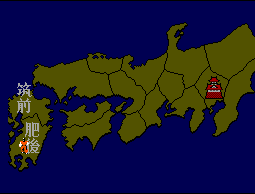
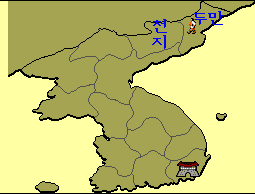
-Korea, not having the best relations with Japan, tends to remove any reference to samurai or medieval Japan. Most of Kenseiden is the same, but the old Japanese map between levels is replaced with a map of Korea. The sprite was also changed again slightly, though I can't quite say why - maybe the outfit is more "Korean"? (Other examples of this include Mitsurugi being replaced with "Arthur" in the Soul Calibur games, the renaming of SNK's The Last Blade to "The Last Soldier", and Samurai Shodown renamed as "Fighters Swords".


Heavyweight Champion


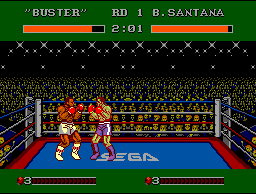
Buster Douglas Knockout Boxing

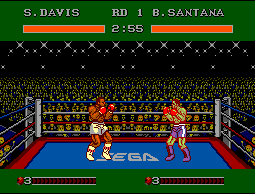
-Heavyweight Champion is a standard boxing game, similar to Rocky but a bit better. When Sega acquired the rights to Buster Douglas, it was re-released as James 'Buster' Douglas Knockout Boxing. The title screen is different and the main character's name is changed from "S. Davis" to "Buster", but otherwise the games are exactly the same. Strangely, it's one of the most valuable SMS titles released in the West.


Chouon Senshi Borgman


Cyborg Hunter

-Several SMS games were originally based on various anime/manga properties, which had to be changed in the West. These include Hokuto no Ken, which became Black Belt (and its Genesis sequel became Last Battle), Kujaku-Oh (The Peacock King) became Spellcaster (and its Genesis sequel became Mystic Defender), Anmitsu Hime became Alex Kidd in High Tech World, and Chouon Senshi Borgman became Cyborg Hunter. In Black Belt's case, all of the graphics were completely redone. Alex Kidd had some graphical changes, but was otherwise mostly the same. Spellcaster and Cyborg Hunter had some minor changes but mostly just switches names. The only anime license that made it to America unscathed were the two Zillion games. A few others that didn't make it out of Japan include Sukeban Deka II (which combines adventure segments with action beat-em-up segments, similar to Spellcaster) and Tensai Bakabon.


Chouon Senshi Borgman


Chouon Senshi Borgman

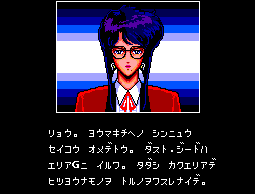
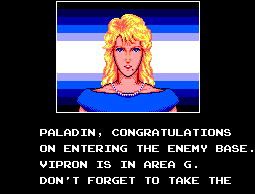
-The ending of Cyborg Hunter mentions Paladin, the name of the main character, as well as two other characters named Trevor and Catherine, who aren't mentioned anywhere else at all. In the Japanese version, these were two other characters from the anime - Anis Farm and Chuck Sweager. The main character is Ryo Hibiki instead of Paladin. One of the guns is also called the Zillion in the Japanese version, but was changed to a more boring "Ray Gun" for the other releases. Chouon Senshi Borgman, along with Bomber Raid, were two of the last Mark III games released in Japan, and thus, are fairly pricey. One of the anime series was localized by ADV and released on DVD under the title Sonic Soldier Borgman, back when they were indiscriminately licensing stuff. It's more or less a standard Bubble Gum Crisis ripoff.


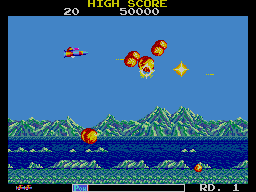
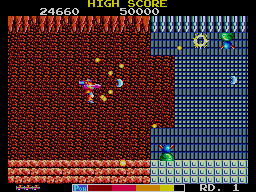
Transbot (SMS)


Astro Flash (Arcade)


Astro Flash (Arcade)


Astro Flash (Arcade)


Astro Flash (Arcade)

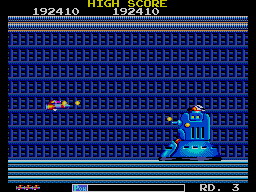
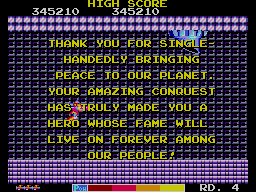
-Transbot (also known as Astro Flash) was an early Sega Master System shooter that came on one of those cards. There was actually an arcade version of the title that came out for the System E arcade board, which was essentially a slightly enhanced Master System. While it was also called Astro Flash, it was called Transformer in other regions. Anyway, while it shares the same theme, it's a completely different game. The Master System version contained a few stages over some moon-like planet that repeated over and over, along with an alternate underground tunnel stage. By destroying a specific truck, you can transform into different shapes, each with different weapons. The Arcade version actually has a definite end - there are four stages total, each with an above and below ground section. You can transform between ship and robot form at any time, each of which has a different weapon. You gain power by destroying enemies, which in turn strengthens your weapons. The graphics are completely different, although it shares the same affection for multi-plane backgrounds - this and Black Belt were incredibly impressive back in 1986.


The Dinosaur Dooley


-It's relatively well known that the Sega Master System was fairly popular in Brazil, but it also got some additional support in Korea. One of these games was The Dinosaur Dooley, which was based off a popular cartoon character. It's a fairly lousy side-scrolling shooter, but it's weirdly notable because the soundtrack consists of lousy chiptunes renditions of American rock music, like Nirvana's "Smells Like Teen Spirit", Soup Dragons' "Divine Thing" and "Pleasure", Spin Doctors' "Two Princes", and Ugly Kid Joe's "Everything About You".


Not quite the MADWorld I was expecting...


A MAD is essentially a music video that either attempts to juxtapose characters from a completely different series into an existing opening video from another or use a song that was meant for something else and make a completely "original" music video with it using characters from a random series.

... Maybe it's better if I just showed you an example of a MAD instead. THE iDOLM@STER has festivals dedicated to this stuff on Nicovideo, and a lot of them are pretty amazing:


And if you're wondering, yes, they literally recorded those animations from the 360 port of the game, somehow pulled them out from the background stage, and did lots of clever tricks to make it look like that. And since Project Diva has been released into the wild, someone decided that maybe it was a good idea to apply this technique using Sega's 3D models of Crypton's Vocaloids. Hopefully events dedicated to this will start popping up more so I can talk about it later:


And with this post, I officially declare Vocaloid Week to be over. Hope you enjoyed my random discoveries.

Sunday, September 6, 2009

Hachune Miku plays her own song


Well, not really:


Even though that was kind of a bad performance, the person's programming skills improve to the point where it perfects a song I haven't been able to on Hard yet because, well, it is HARD! The hardest in the entire game, actually!


I am LATE ☆ POSTING!


Runo originally announced his career as a music composer in Second Life who now makes tunes for an idol group called Negicco and supervised their Tokimeki High School (which has no relation to this game) Summer Festival just a few weeks ago. Since this is Vocaloid Week, I'm now going to say that his rise to fame came from using Miku as the vocals for his songs:


Yeah, nothing spectacular and sounds like a generic kz clone. Don't worry though; he does get better:


That song then inspired some girls from the Niigata Performance School to sing it live. His style eventually becomes a cross between OSTER Project's use of instruments and happy feelings with kz's signature dance beat.

Saturday, September 5, 2009

Fred Ford handheld follow-up


Following on from our previous post regarding Fred Ford's involvement with a mysterious handheld, CRV in comments brought up this page. The game, Space-N-Encounter, has a horizontal screen and is a hybrid of handheld game and calculator. This was circa 1982. The screen and three games for it were designed by Tom Sloper.

Phaser Fight - "Inspired" by Scramble, this game requires the player to navigate the spaceship through a treacherous landscape. It's a scrolling game (your ship is always in the general center area of the display).
Meteorox
- "Inspired" by Asteroids, this game requires the player to fly through an asteroid field. Shoot the rox! The player's motion is limited to the left side of the screen; rox that get past you on the left "wrap around" to the right and come at you again.
Star Sweep
- "Inspired" by a number of games, this one has an enemy minelayer causing you grief. The player's ship flies across the entire screen (bouncing off top and bottom) and "wraps around" to the left again.

After reading Tom's long description of his one-off calculator, I'm not entirely sure it's related to Fred's work, but it's too interesting an anecdote to leave it submerged in the comments section.

So, has anyone played on a Space-N-Encounter?

Falcom Panel - Otakon 2008 - Video for Download

Coming a year late, but here we go!


Full download:
Megaupload
Fileplanet

Youtube links:
Part 1
Part 2
Part 3
Part 4
Part 5
(embedded after the jump)

The full download a bit over 400 MB encoded in xVID, and 52 minutes or so long.

This stars me, Wyrdwad, OMGFloofy from the Ancient Land of Ys forums, and a guy named Will who I don't think posts at either place. We spent a huge chunk of the time talking about the basic history of Falcom then about Ys, but we ran out of time before we delved deeper into their other series. The same thing happened at this year's panel, too, which we unfortunately couldn't record due to logistic reasons. (We had too much luggage and the camera didn't fit in our trunk.) Anyway, enjoy! (Thanks to Vysethebold for recording this for us!)


Friday, September 4, 2009

Falcom Translation News - Brandish 4


I'm a few weeks late on this, but apparently a group of people are translating Falcom's Brandish 4, also known as Brandish VT. (Check out the full HG101 Brandish article) They're also doing the fan world one better by remixing the entire soundtrack. The (as of current) final installment of the series ditched screen rotation in favor of an isometric perspective, which is far less headache inducing. I'm not a gigantic fan of the series, although I do think it's kinda cool how they took the mechanics of a standard first person dungeon crawler, made it third person, and introduced real time combat. It's always been a bit weird and futzy, except for the recent PSP remake, which fixes pretty much every problem the series ever had (and should be an excellent candidate for localization, but chances of it being picked up seem slim.) With this, Ys Origin and Xanadu Next coming up soon, English speaking Falcom fans can finally play through games without skipping through all of the text with apathy and frustration.

Also, Ancient Land of Ys member OMGFloofy has started up a Falcom blog called Endless History (the domain name is a reference to the continent which Ys takes place on, while the title is named after the vocal version of the song "Morning Grow (Glow)", the ending song to the first Ys.) So far it's keeping on top of the upcoming release of Eiyuu Densetsu (Legend of Heroes) VII, as well as Ys 7 for the PSP, which is coming out in a few weeks. It's also updating on Falcom's weekly special, which bundles together various games and goods at a discount. Falcom games are notoriously difficult to obtain for us non-Japanese, and about the only way to get them is by ordering straight from the company. The shipping is extremely pricey, but you're still getting a decent price overall - the only way you'll get better is either by trawling Japanese used game soft stores or hanging out at the Falcom boards and hopes someone decides to part with some of their stuff.

Happy love as groovy sound indeed


Aliced Twilightz is a group primarily consisting of two people: KTG and Linco. In terms of musical style, they're very similar to kz of livetune fame and tend to work with a wide variety of people when making music. Unlike kz however, not all of their works use Vocaloids as the singers, but one of their most ambitious songs uses Miku as the vocals with Rin and Len Kagamine as the chorus, and it sounds pretty awesome:


Sometime later in 2008, it turned into a full music video and could be easily mistaken for an opening sequence to a shoujo Vocaloid anime:


What's even more interesting though is that the art style is not that much different from Hideyuki Takenami's designs for Sega's re-imagining of the Puyo Puyo universe after they acquired the rights from Compile. I'd be somewhat surprised if these renditions of the Vocaloids appear as exclusive extra characters in the PSP version of Puyo Puyo 7.

You can download the Karaoke version of this song from their website, and the direct link to it can be found here.

It's really hard to find a good Prima Vocaloid


I was going to post some more Japanese related Vocaloid stuff, but then I realized that I'm not representing the West too well since Zero-G was the first licensed company to release Yamaha's technology to the public, who also happens to be located in the UK. So I decided to find some good songs from their first second-generation Vocaloid named Prima, who was meant to sing opera-based songs:


And I came up empty-handed in my search for looking for good songs from her, since almost every single one I've come across tried to make her sing to genres that she wasn't designed to sing, or she was programmed by Japanese people, which already is a huge handicap since they're almost always trying to make her sing pop songs in English, which is also not Prima's real strength either. However, I did discover a few neat things in my search- the first is that the Japanese already have a manga-esque version of her circulating around the Internet (even though she looks a little bit too young, which is okay if that's her super-deformed version), and I did find a song of her singing in Japanese which didn't grate my ears:


That looks infinitely much better than whoever did that illustration for the Zero-G demonstration. At least for me, anyway.