I've been a big fighting game fan for a very long time, but my interest lapsed for a couple of years around 2006. When the recent resurgence of 2D fighters recaptured my interest, I set out to learn more about the 21st fighters I'd missed. As it turns out, I didn't miss out on a whole lot, but the notes I made during that search continued to grow until I'd written a fairly-thorough timeline of 2D fighter releases, which I've decided to share here. Most of these games have articles on HG101, but I hope this list could add another layer of perspective that is lost when you read about one series at a time. The list is broad, but you'll have to read the linked articles for specifics about the game mechanics. It contains most of the 2D fighting games significant enough to be released in arcades and on a home console, although there are bound to be omissions. (I intentionally skipped most of the
games predating Street Fighter II, Mortal Kombat sequels, a few of the worst Neo-Geo games, and some anime games.) I've also included some
3D fighting games and games from other genres to provide context.
The games' placement under specific years are based on when they were first officially released, (almost always their Japanese arcade releases,) although I'm using western titles for the sake of readability. As always, the year a game is released isn't necessarily the main year when it was popular, and most console ports came out about a year after their arcade releases. (Neo-Geo home carts usually came out a few months after the MVS (arcade) versions.)
1984-1985:
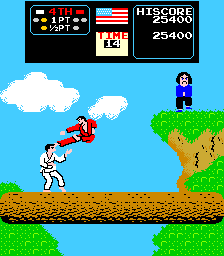
- Karate Champ (1984) and Yie Ar Kung Fu (1985) aren't the first fighting games, but they may be the first ones that are worth playing.
1987-1989:
- After Street Fighter is released in 1987. Takashi Nishiyama, the director, and Hiroshi Matsumoto, the planner, leave Capcom and move to SNK where they start work on Street Smart, released in 1989.
1990:
- Neo-Geo makes its debut, but there are no fighting games among this year's releases. (Baseball Stars, Blue’s Journey, Cyber-Lip, Magician Lord, Mahjong, Nam 1975, Ninja Combat, Puzzled, Riding Hero, The Super Spy, and Top Players Golf)

1991:
- Street Fighter II takes arcades by storm.
- Fatal Fury, which had been developed concurrently, is released later that year. (Although many people would consider King of the Monsters to be the first Neo-Geo fighting game.)
1992:
- Street Fighter II is released on the Super NES, and two new versions are released in the arcade. (More if you count bootleg versions.)
- Either Art of Fighting or World Heroes is in every Neo-Geo cabinet you pass. (This is just anecdotal, but I'm sure my experiences at two different Godfather's Pizzas are universal.)
- Fatal Fury 2 ditches the Southtown charm of the original in favor of a bland Street Fighter II-inspired international tournament.
- Mortal Kombat offers a Western take on the fighting genre.
- Time Killers, which was developed by the company that goes on to make the arcade version of Street Fighter the Movie, is laughably terrible.
- Also: King of the Monsters 2: The Next Thing, Battle Blaze (Sammy)

1993:
- Capcom releases its new CPS2 hardware with Super Street Fighter II.
- SNK begins toying with crossovers by putting Ryo Sakazaki in Fatal Fury Special. (and they put Geese Howard in Art of Fighting 2 the next year) More importantly, Fatal Fury Special plays a million times better than Fatal Fury 2.
- Fighter's History, Power Instinct, and Martial Champion are Data East, Atlus, and Konami's attempts at riding the band wagon, and they are all ported to home consoles.
- Capcom and SNK release the wrestling games Slam Masters and 3 Count Bout within a few months of each other.
- Sega introduces the 3D fighting genre with Virtua Fighter.
- Also: Samurai Shodown, World Heroes 2
1994:
- SNK releases King of Fighters '94, mixing characters from Fatal Fury, Art of Fighting, Ikari Warriors, Psycho Soldier, and some of their sports games. It begins what eventually becomes their most-prolific franchise, receiving annual updates through 2003.
- Capcom broadens its scope by releasing X-Men: Children of the Atom and Darkstalkers, both of which feature cartoony graphics and over-the-top special moves.
- 3D fighters Virtua Fighter 2 and Tekken dominate arcades and build interest for the upcoming Saturn and Playstation consoles.
- Rare's Killer Instinct arcade game is treated as a way to preview the upcoming Nintendo 64, although since it is a 2D fighting game with lots of pre-recorded music and video, it is a very inaccurate representation of what the system will offer. In its attract mode there is even an announcement that it will be available for your home in 1995 on Nintendo Ultra 64, which is false for at least three reasons.
- The Neo-Geo CD is released, offering arcade-quality games at an affordable price for those willing to wait through minute-long load times.
- Also: Art of Fighting 2, Samurai Shodown 2, Power Instinct 2, Fighter's History Dynamite, World Heroes 2 Jet, Aggressors of Dark Kombat (ADK), Golden Axe: The Duel (Sega - The first game for Sega's Saturn-based ST-V hardware), Primal Rage (Atari)

1995:
- Capcom reboots the Street Fighter series with Street Fighter Alpha.
- SNK releases a record five fighting games in one year with Fatal Fury 3, Savage Reign, King of Fighters 95, Samurai Shodown 3, and the MVS version of Real Bout Fatal Fury. There is a noticeable increase in quality over the year.
- Game magazines are more concerned with the awful games based on Street Fighter the Movie.
- Also: Night Warriors: Darkstalkers Revenge (Vampire Hunter in Japan), Marvel Super Heroes (Capcom), Power Instinct Legends, Cyberbots (Capcom), Dragoon Might (Konami, arcade-only), Far East of Eden Kabuki Klash (for Neo-Geo - Hudson), Galaxy Fight (Sunsoft), Double Dragon (for Neo-Geo - Technos), World Heroes Perfect, Outlaws of the Lost Dynasty (Data East - On ST-V hardware)
1996:
- X-Men vs Street Fighter is Capcom's first Marvel crossover game. (although Gouki from Super Street Fighter II Turbo is a hidden character in 1994's X-Men: Children of the Atom)
- Red Earth is the first game for Capcom's CPS3 hardware.
- Art of Fighting 3 uses rotoscoping to make some of the nicest animation you'll see of Robert putting his hands in his pockets and kicking his opponent while she's down.
- Sunsoft's Waku Waku 7 is probably the finest 2D fighter that isn't made by SNK or Capcom so far, featuring memorable characters and unique physics with an elastic feel.
- More games: Samurai Shodown 4, KOF '96, Street Fighter Alpha 2, Kizuna Encounter (SNK), Touki Denshou Angel Eyes (Tecmo), Ragnagard (System Vision), Ninja Master's (ADK), Breakers (Visco), Rabbit (Aorn), Virtua Fighter 3, Street Fighter EX

1997:
- Capcom, long lambasted for its inability to count to three, releases Street Fighter III a mere six years after Street Fighter II. It is Capcom’s last internally-developed 2D fighting game to feature completely new animation.
- SNK releases its 3D arcade hardware, Hyper Neo Geo 64, with Samurai Shodown 64. (and Road’s Edge)
- Taiwanese company IGS releases the PGM, an arcade board with interchangeable cartridges similar to the Neo-Geo MVS. It is primarily home to beat-em ups and shooters, but one of the first releases is the one-on-one fighter Killing Blade. (arcade-only)
- SNK releases its new 19th-century weapons-based fighter The Last Blade, introduces a brighter art style in Real Bout Fatal Fury Special, and wraps up the Orochi story arc in King of Fighters '97.
- Darkstalkers 3 (Vampire Savior in Japan) is followed by two alternate versions, Vampire Savior 2 and Vampire Hunter 2, four months after the original release.
- Also: Pocket Fighter, Marvel Super Heroes vs. Street Fighter, Street Fighter III 2nd Impact, Groove on Fight (Power Instinct 3 - on ST-V hardware)
1998:
- Capcom and SNK release the final iterations of their Saturn-era series. (Although these iterations later received small updates such as Street Fighter Alpha 3 Upper and KOF 98 Ultimate Match.)
- Street Fighter Alpha 3 makes its arcade debut (It was later re-released with more characters from the home versions.)
- SNK's 2D fighters are essentially all encores of 1997's games, two of which are "dream matches" without any story: Last Blade 2, Real Bout 2, and King of Fighters '98. (It was believed that KOF 98 would be the last in the series, and its Dreamcast port is actually called King of Fighters: Dream Match 1999.) Neo-Geo collectors are initially miffed by the scant differences between these three games and the versions from the previous year, but the games are eventually recognized as some of the system's all-time best.
- Arc System Works releases the first Guilty Gear game exclusively on the Playstation. It was created by Daisuke Ishiwatari, who left SNK after working on The Last Blade.
- Psikyo releases Daraku Tenshi: The Fallen Angels. (only in arcades) It is rumored that the final version of the game is incomplete, and that after some of the development staff moved to SNK, they based the KOF '99 characters K' and Maxima on Cool and Harry from this game.
- SNK releases the initial black and white version of the Neo-Geo Pocket.
- Also: Marvel vs Capcom (on CPS2), Astra Superstars (Sunsoft - on ST-V hardware), Jojo's Bizarre Adventure (Capcom), Rakuga Kids (Konami - for the Nintendo 64!), Asura Blade (Fuuki - arcade only), Samurai Shodown 2: Warriors Rage (for Hyper Neo-Geo 64)

1999:
- Capcom releases Third Strike and SNK releases Mark of the Wolves, both of which are tournament mainstays for many subsequent years as 2D fighter development wanes even more quickly after their releases.
- SNK relaunches the KOF series with King of Fighters '99, introducing a new story arc, the striker system, six new characters and several newly-animated returning characters.
- Fatal Fury Wild Ambition and Buriki One (arcade-only) are the last Hyper Neo Geo 64 games. (of seven total)
- Neo-Geo Pocket Color is released, with SNK vs Capcom Match of the Millenium released later this year.
- Also: JoJo's Bizarre Adventure: Heritage for the Future (Capcom - The last CPS3 game), Super Smash Bros (N64), Power Stone
2000:
- Guilty Gear X features high-resolution character sprites made to look crisp in a 640x480 display.
- Marvel vs Capcom 2 features one of the largest rosters in a fighting game. The character sprites in all of Capcom's Naomi games are still drawn at CPS-level resolutions.
- Capcom vs SNK... Everybody rumored. Nobody believed.
- All three of these games are released on Sega's Dreamcast-based Naomi arcade hardware.
- Dimps is founded by Takashi Nishiyama, the director of Street Fighter and producer of Fatal Fury, Art of Fighting, and the first six KOF games. He is joined by many other Capcom and SNK alumni.
- SNK is purchased by Aruze, which is more interested in making pachinko machines with SNK characters than funding video game development.
- Also: King of Fighters 2000, Asura Buster (Fuuki - arcade-only)
2001:
- Capcom vs SNK 2 is released. In the following years Capcom's arcade release schedule is nearly empty.
- SNK's founder, Eikichi Kawasaki, and a number of other important staff leave SNK to start the new companies Playmore and Brezzasoft, shortly before Aruze bankrupts SNK. Playmore and Brezzasoft set to work obtaining the rights to SNK's intellectual property after the bankruptcy.
- King of Fighters 2001 is developed in Korea by Eolith.
- Also: Capcom vs SNK Pro, Virtua Fighter 4, Tekken 4

2002:
- Guilty Gear XX is released on Naomi hardware. During one of the most stagnant times for Capcom and SNK, the Guilty Gear series sees newly-tweaked annual iterations for six consecutive years.
- King of Fighters 2002 (And Metal Slug 4) are developed in Korea.
- Rage of the Dragons for Neo-Geo is designed by Evoga, one of the only dedicated video game companies in Mexico, and developed in Japan by Noise Factory.
- Also: Soul Calibur 2
2003:
- Playmore wins the legal battle to use the name SNK in Japan, and changes its name to SNK Playmore.
- Hyper Street Fighter II: The Anniversary Edition allows players to choose different renditions of the characters from all five iterations of Street Fighter II, taking the mashup so far as to change the voices and sound effects depending on the character chosen. The arcade version runs on CPS2 hardware!
- To fight piracy, KOF 2003, SNK vs Capcom Chaos, and Metal Slug 5 were released as stand-alone PCBs as well as MVS carts.
- Samurai Shodown V is made by Yuki Enterprise.
- Guilty Gear X ver 1.5 is released on Sammy's new Atomiswave hardware (arcade-only), while Guilty Gear XX #reload is made for Naomi.
- Also: Power Instinct Matrimelee (Noise Factory - on Neo-Geo)
2004:
- SNK Playmore releases the last official Neo-Geo game, Samurai Shodown V Special, developed again by Yuki Enterprise.
- SNK Playmore releases its first Atomiswave game, KOF NeoWave. Despite Atomiswave's higher display resolution, the character sprites in all of SNK's Atomiswave games are still drawn at Neo-Geo resolutions.
- SNK Playmore also releases the 3D fighter KOF Maximum Impact on the Playstation 2. (The 3D KOF series does not see an arcade iteration until KOF Maximum Impact Regulation A in 2007)
- Capcom Fighting Jam mashes 20 characters from Street Fighter, Darkstalkers, and Red Earth together. It runs on the Namco System 246 board.
- The Rumble Fish, an Atomiswave game from Dimps, features smooth vector-based animation where the characters' limbs are all rotated separately.
- Guilty Gear Isuka introduces 4-player madness to the series, running on Atomiswave hardware.
- KOF '94 Rebout for Playstation 2 is a remake with higher-resolution graphics, but extremely dated gameplay.
- Chaos Breaker is the last game from Korean developer Eolith. (arcade-only)
2005:
- SNK Playmore releases King of Fighters XI, Neo-Geo Battle Coliseum, and Samurait Shodown VI on Atomiswave hardware.
- The Melty Blood fighting games, which started with a doujin PC game released in 2002 by development circles Type-Moon and French-Bread, see a full arcade release in Melty Blood Act Cadenza, published by Sega and developed by Ecole.
- Hokuto no Ken, developed by Arc System Works, is published by Sega on Atomiswave.
- Also: Guilty Gear XX Slash (on Naomi), The Rumble Fish 2 (on Atomiswave)
2006:
- SNK Playmore begins porting groups of Neo-Geo games to other consoles on budget-priced compilation discs
- Guilty Gear XX Accent Core is the last Guilty Gear game released in arcades.
- Arcana Heart is made by Examu, formerly Yuki Enterprise. (the developers of Samurai Shodown V)
- Also: KOF Maximum Impact 2 (console-only), Virtua Fighter 5
2007:
- Battle Fantasia from Arc System Works sets a high standard for using 3D graphics while still maintaining smooth 2D-style gameplay.
- Sengoku Basara X made by Arc System Works is published by Capcom.
- Capcom and SNK begin releasing their classic fighting games on console download services.
- Also: KOF Maximum Impact Regulation A
2008:
- Super Street Fighter II Turbo HD Remix, developed by the American company Backbone Entertainment, is a downloadable release on PS3 and Xbox 360. The Canadian artwork and fan-created music lead some players to question its status as an "enhanced" remake.
- Capcom resumes making fighting games in earnest with Street Fighter IV released on Taito's Type X2 hardware, and Tatsunoko vs Capcom (developed by Eighting) released on custom Wii-based hardware. Ryota Niitsuma, who worked on both games, mentions later that Capcom has no further plans for fighting games with 2D characters but plans to continue mixing 3D graphics with 2D gameplay.
- BlazBlue: Calamity Trigger from Arc System Works is a brand-new game featuring high-definition 2D artwork.
- Also: KOF 98 Ultimate Match, Guilty Gear XX Accent Core Plus (only on home consoles), Samurai Shodown Sen (developed by K2 LLC), Arcana Heart 2, Melty Blood Actress Again

2009: A Resurgence of Fighting Fervor as Street Fighter IV, KOF XII, and Blazblue are released on PS3 and Xbox 360
- KOF XII is the first new 2D SNK fighting game since 2005, and the first internally-developed game with all-new animation since 1999. Although it is widely criticized for the size of its character roster, the only 2D fighting games from any company to feature as many newly-animated characters are KOF '94 and KOF '96.
- BlazBlue Continuum Shift
- Also: KOF 2002 Unlimited Match, Daemon Bride (Examu - arcade-only, running on the eX-BOARD), Arcana Heart 3, Gouketsuji Ichizoku: Matsuri Senzo Kuyou (arcade-only)
2010: Return of the Incremental Updates!
- Super Street Fighter IV is initially released on home consoles with ten more characters than the original Street Fighter IV. The upcoming arcade version will have more characters.
- KOF XIII features more characters (divided into teams!) and a story, but it also has substantial changes to the fighting system which make it more than just "the completed version of KOF XII."
- BlazBlue Continuum Shift II is an arcade release that features the updates from the home version of Continuum Shift, as well as further changes.
Future games:
- Marvel vs Capcom 3 features 3D graphics and 2D gameplay, released straight to consoles.
- Street Fighter x Tekken is a tag-team crossover game developed by Capcom with 3D graphics and 2D gameplay similar to Street Fighter IV.
- Tekken x Street Fighter is being developed by Namco.